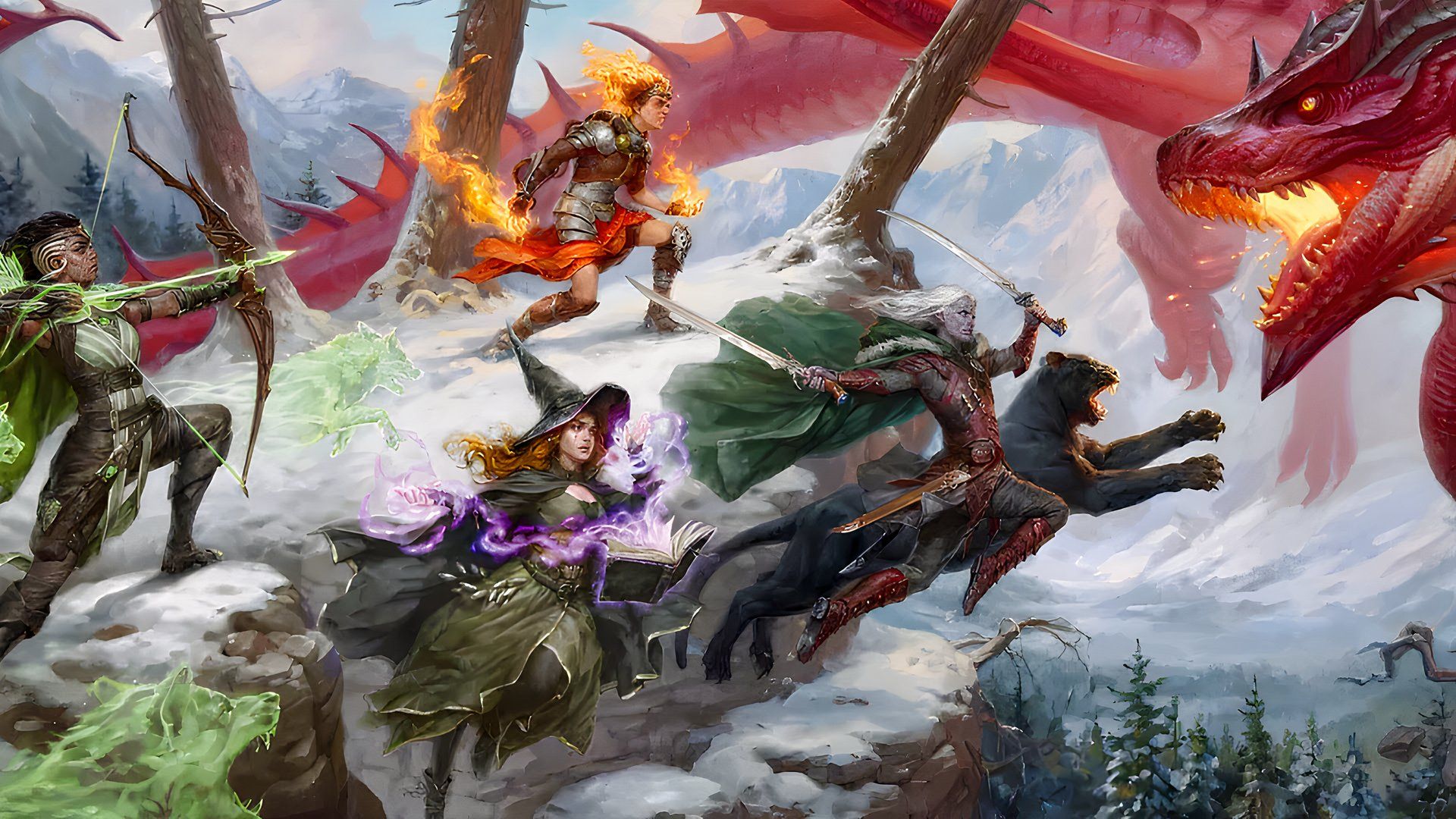
Battles are a major part of most Dungeons & Dragons games, and they’re particularly enjoyable for players who create powerful characters that excel in combat, whether with spells or in close-quarters fighting. The upcoming 2024 Revised Edition (or 5.5e) is updating many of the core rules of Fifth Edition D&D, which means players have plenty of choices – but also some limitations – when deciding how their characters act in a fight.
Even experienced Dungeons & Dragons players can get bogged down by the increasing complexity of the rules, especially when figuring out how combat mechanics work. With the 2024 Revised Edition offering even more options during fights, it’s worth asking: what combat rules do players often misunderstand, and what’s the right way to understand them?
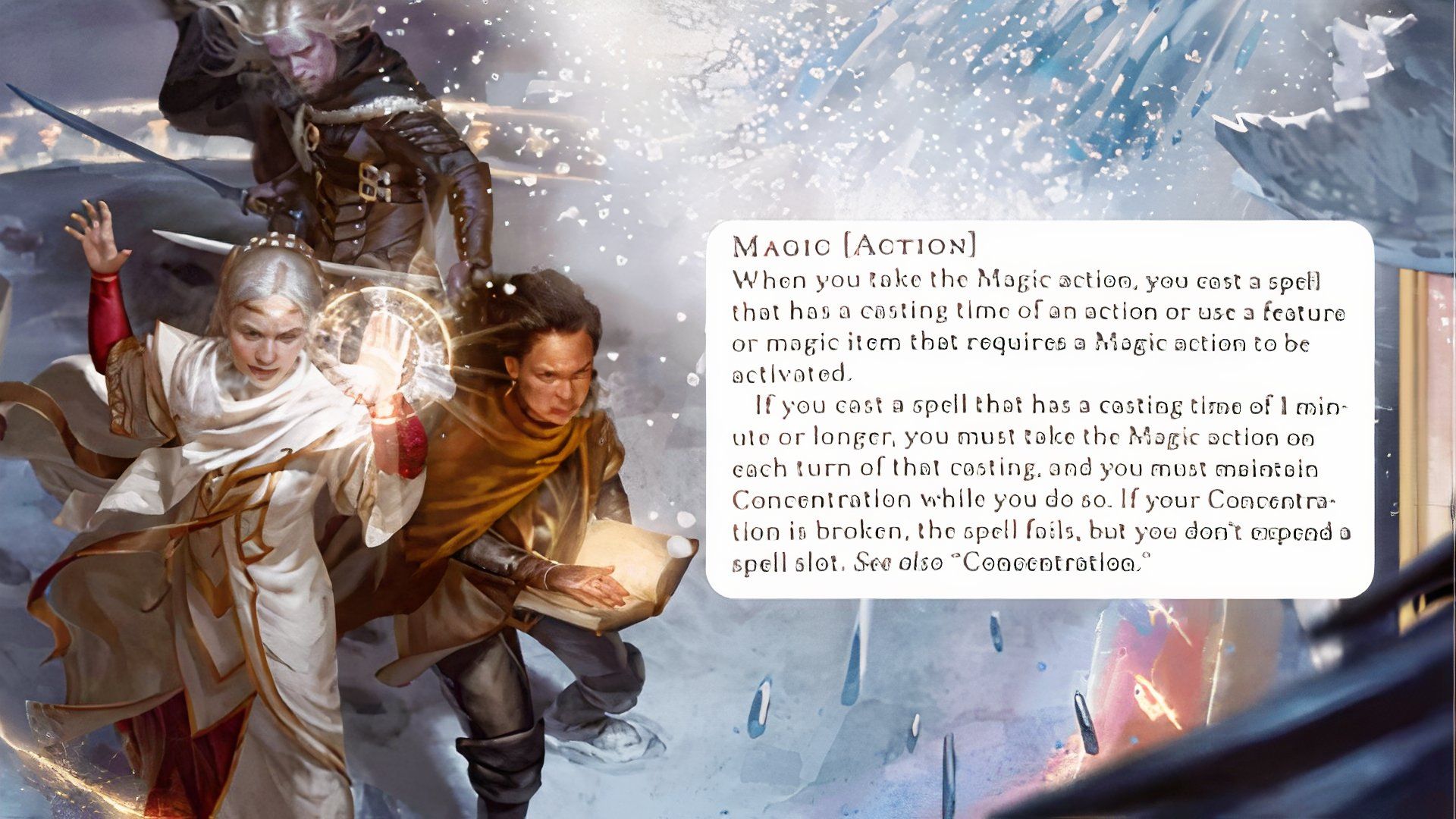
Spells Now Interact Differently With Magic Actions
Not All Spells Can Be Cast Freely
| THE INTERPRETATION | THE REALITY |
| Players can cast any Spell – Leveled or not – as long as their Action Economy permits it, and have the resources (Components, Spell Slots) to pull them off | Depends on the edition in question, either:
|
Spells are essential for any spellcaster, and choosing the right ones for different situations – especially during fights – is crucial. Many players think a good mix of damaging, helpful, and movement spells is best, like using a powerful attack followed by a quick escape. However, this approach isn’t actually the most effective way to cast spells in this game.
Both the 2014 Fifth Edition and the updated 2024 Revised Edition of the game use different spellcasting rules, all designed to create a fairer and more balanced experience. Here’s a look at how they differ:
- Fifth Edition: One Leveled Spell and one Cantrip per turn
- Revised Edition: One Leveled Spell per turn, but as many Cantrips and “free” castings as the Action Economy permits
Games like Baldur’s Gate 3 let players cast spells frequently, which can sometimes lead to confusion when they then play the tabletop role-playing game. These rules exist mainly to keep encounters fair – letting players cast spells constantly, even with extra actions, can quickly use up their magical resources.
Help Has To Be Very Explicit
The Bonus Can Only Be Applied With Specific Conditions
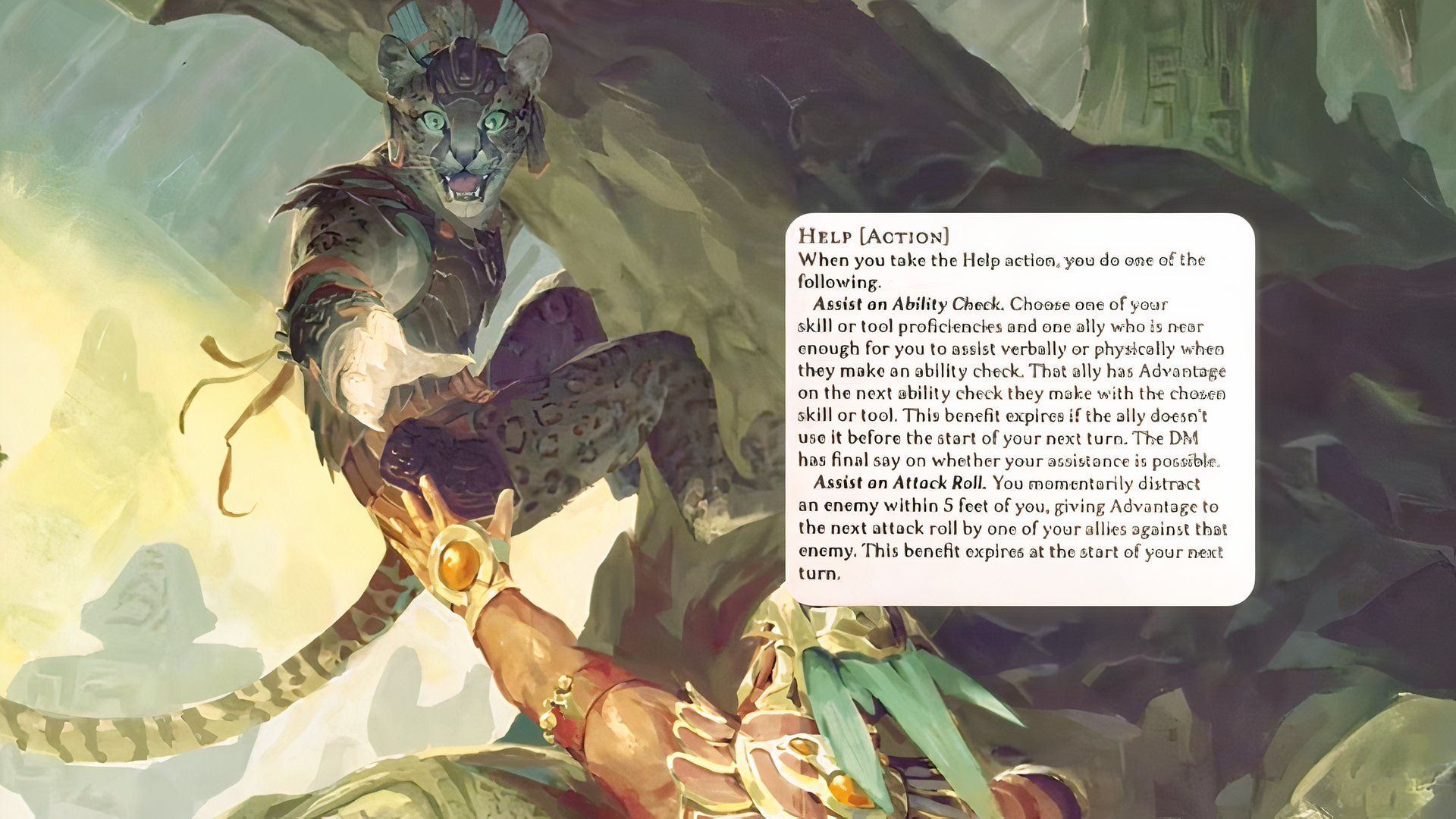 Image Source Revised Edition Player’s Handbook
 | THE INTERPRETATION | THE REALITY |
| As long as the doer of the Help Action is close to an ally, they can automatically give Advantage to any Ability Check or Attack Roll they do | The player needs to explicitly state their intent to do the Help Action, declare which ally to help, and declare which specific action to grant Advantage on |
Even though many players create impressive characters with detailed histories in Dungeons & Dragons, it’s still a game about working together. Beyond exploring and completing quests, success depends on teamwork. The game even has a specific action called Help, which lets one player assist another, giving them a better chance of succeeding on a roll.
A common misunderstanding is that the Help action is automatically available whenever an ally is about to act. However, this isn’t true. Help doesn’t just happen automatically when an ally is nearby and about to make a skill check or attack. Instead, the Help action specifically grants an ally advantage on their next ability check or attack roll, and only when certain conditions are met.
- When Helping an Ability Check, they need to be close enough to help the ally physically or verbally.
- Helping with an Attack Roll requires the doer to be 5 feet away from the target. Both conditions require the specificity of the action that Help will be cast on.
Readying A Spell Is Very Sensitive
Breaking Concentration When Readying A Spell Also Uses The Spell Slot
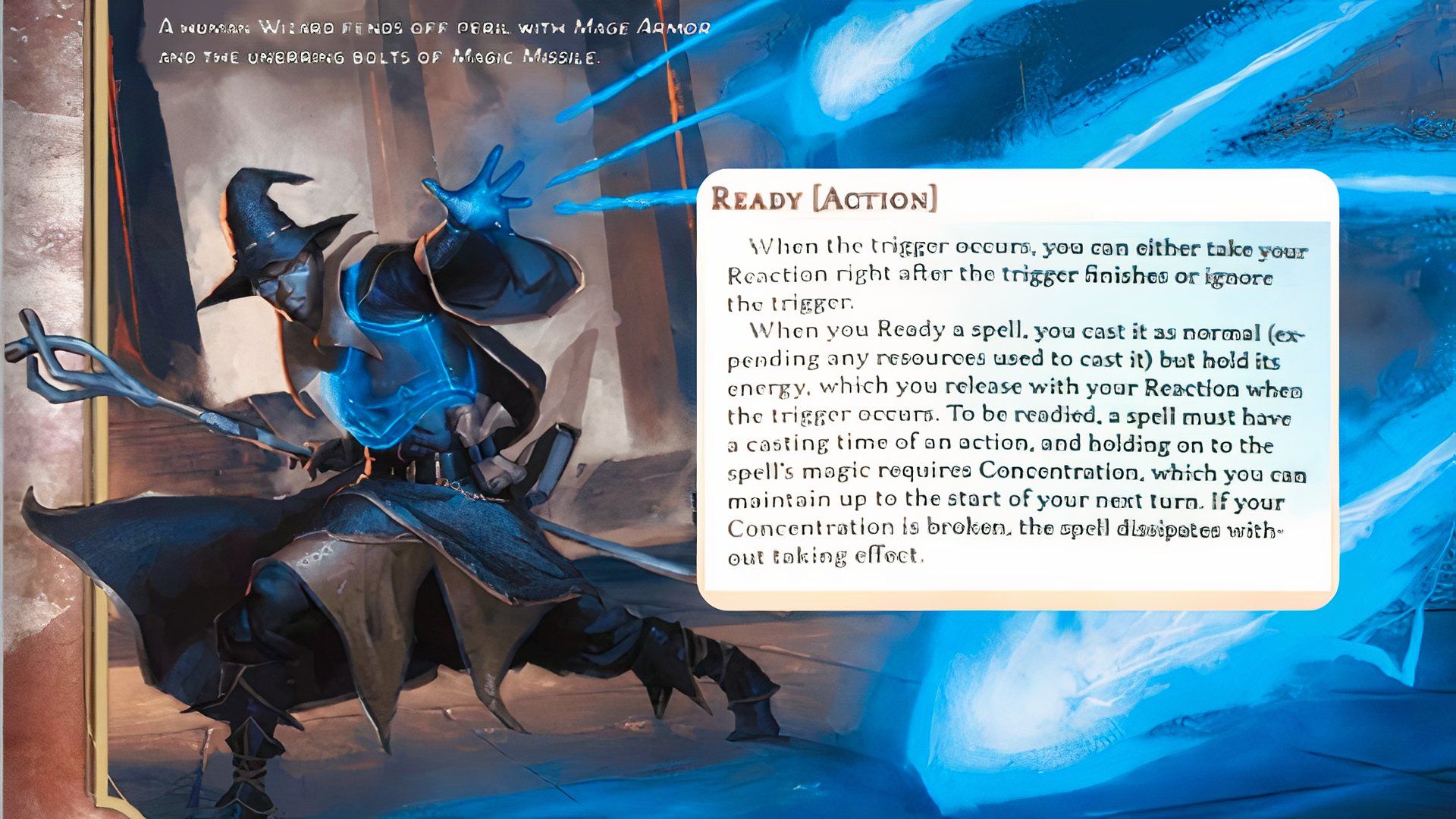 Image from Revised Edition Player’s Handbook
 | THE INTERPRETATION | THE REALITY |
| Readying a Spell is an Action that consumes the needed resources to “charge” the Spell with Concentration. If successful, the Spell is cast as a Reaction. If Concentration is broken, the Spell stops, and the resources are returned. | The same, but when Concentration is broken, the resources – including the Spell Slot – are consumed. |
A clever feature in Dungeons & Dragons is the Ready action. It lets players plan ahead for specific situations and set up a response. Typically, a player uses their action to decide what they’ll do – like attacking or using an item – and then that happens automatically as a reaction when a certain event occurs.
It seems straightforward until players begin using this with Spells. The core idea is that using a Ready action lets players prepare a Spell to cast instantly when something specific happens. But there are a few things to remember:
- Readying a Spell requires Concentration, and breaking Concentration cancels the Readied Spell
- Readying a Spell consumes Components as normal, and they are consumed regardless of the Readied Spell’s success
- Readying a Spell is only successful if cast as a Reaction via the trigger, or before the start of the character’s next turn.
A key point many players miss is that if your Concentration is broken, or you otherwise fail to cast a spell you’ve prepared, you won’t get back the components you used – including the spell slot itself. This is because preparing the spell essentially does cast it; Concentration only holds off the spell’s effect until you’re ready to release it.
There Is No Surprise Round, At Least Not Formally
There Is Only The Surprised Condition
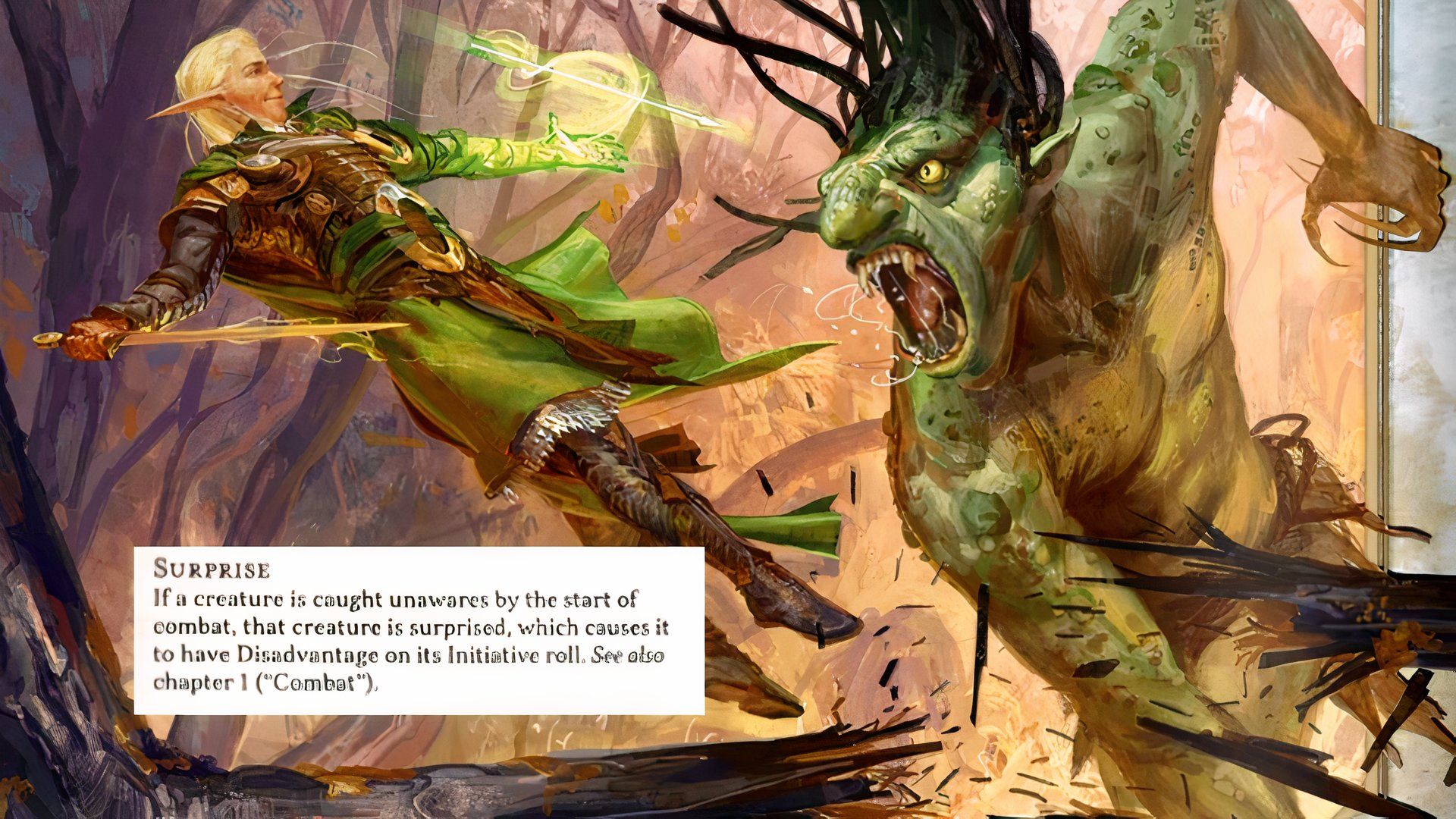 Image from Revised Edition Dungeons and Dragons
 | THE INTERPRETATION | THE REALITY |
| If a creature can be Surprised, it’s generally assumed all of its companions are also Surprised. Ergo, they share all the effects of Surprised in a Surprise Round. | Not all creatures can be Surprised, ergo, they have a “turn” where they suffer from its effects. |
It’s frustrating when your Dungeons & Dragons party gets ambushed, especially if they’re caught off guard. Many players experience a scenario where they walk into a bandit camp, get surprised, and lose a whole turn, leaving them vulnerable to the first attack. Initiative rolls don’t happen until the bandits act, meaning the party can’t react immediately. Often, the party’s Rogue doesn’t get a chance to strike back until after the bandits have already moved. While this feels familiar to many players, it’s actually a misunderstanding of how the game’s rules work.
In Dungeons & Dragons, being surprised is a status that affects creatures, and what happens as a result changes depending on which version of the game you’re playing.
- Original (2014): A Surprised creature cannot Move, make Actions, and Reactions until the start of their next turn
- Revised (2024): A Surprised creature rolls initiative at a Disadvantage
The key point is whether or not a creature can not be surprised – meaning, not all creatures are necessarily affected. Dungeon Masters can decide how to handle the Surprised condition, but if a group wants to use a ‘Surprise Round’ rule, the rules from 2014 might offer a clearer way to determine which creatures are actually surprised.
Temporary HP Cannot Be Stacked
Only One Source Can Be Chosen At Any Given Time
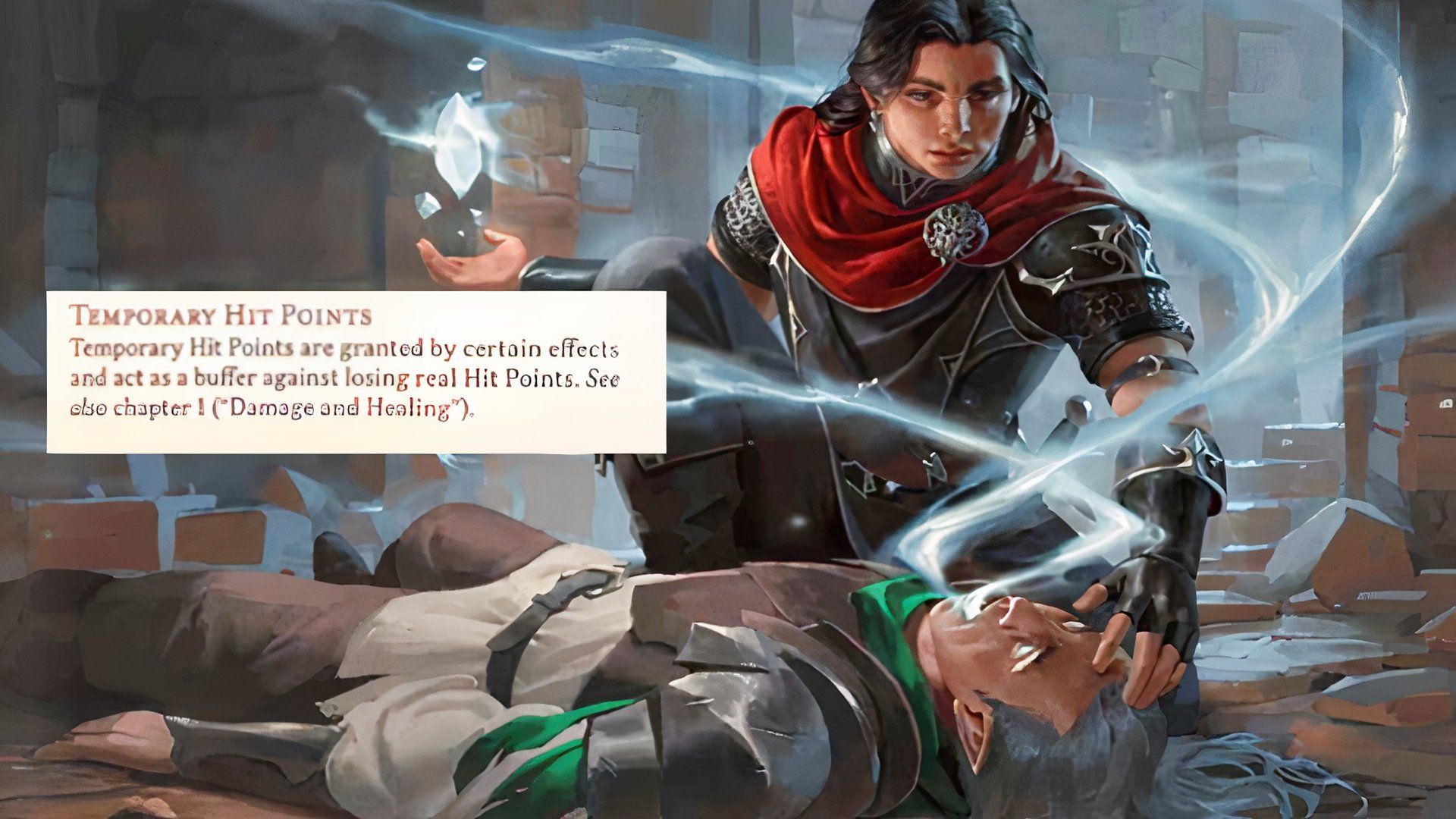 Image from Revised Edition Dungeons and Dragons
 | THE INTERPRETATION | THE REALITY |
| If Temporary HP comes from different sources, they can be combined to form a larger Temp HP pool. | Temporary HP cannot be stacked regardless of their sources. |
As a big fan of playing support in Dungeons & Dragons, I’ve learned that healing isn’t always as simple as just restoring hit points. Some abilities actually give you temporary hit points, which are amazing because they act like a shield, soaking up damage before it affects your main health. It’s really cool how many different ways there are to get those extra temporary hit points – from spells and magical effects to even finding the right items!
A frequent error players make with temporary hit points (Temp HP) is trying to combine multiple sources of it. Many assume Temp HP can’t get very high, like into the 20s or more. However, that’s not how it works. Because Temp HP is already a temporary addition to your health, you can’t stack it from different abilities or spells. The good news is you can repeatedly use those abilities to gain Temp HP, providing a consistent damage buffer during battles.
The 5-Foot Step Rule Does Not Exist In 5e
Disengage Is Still The Best Way To Safely Avoid Opportunity Attacks
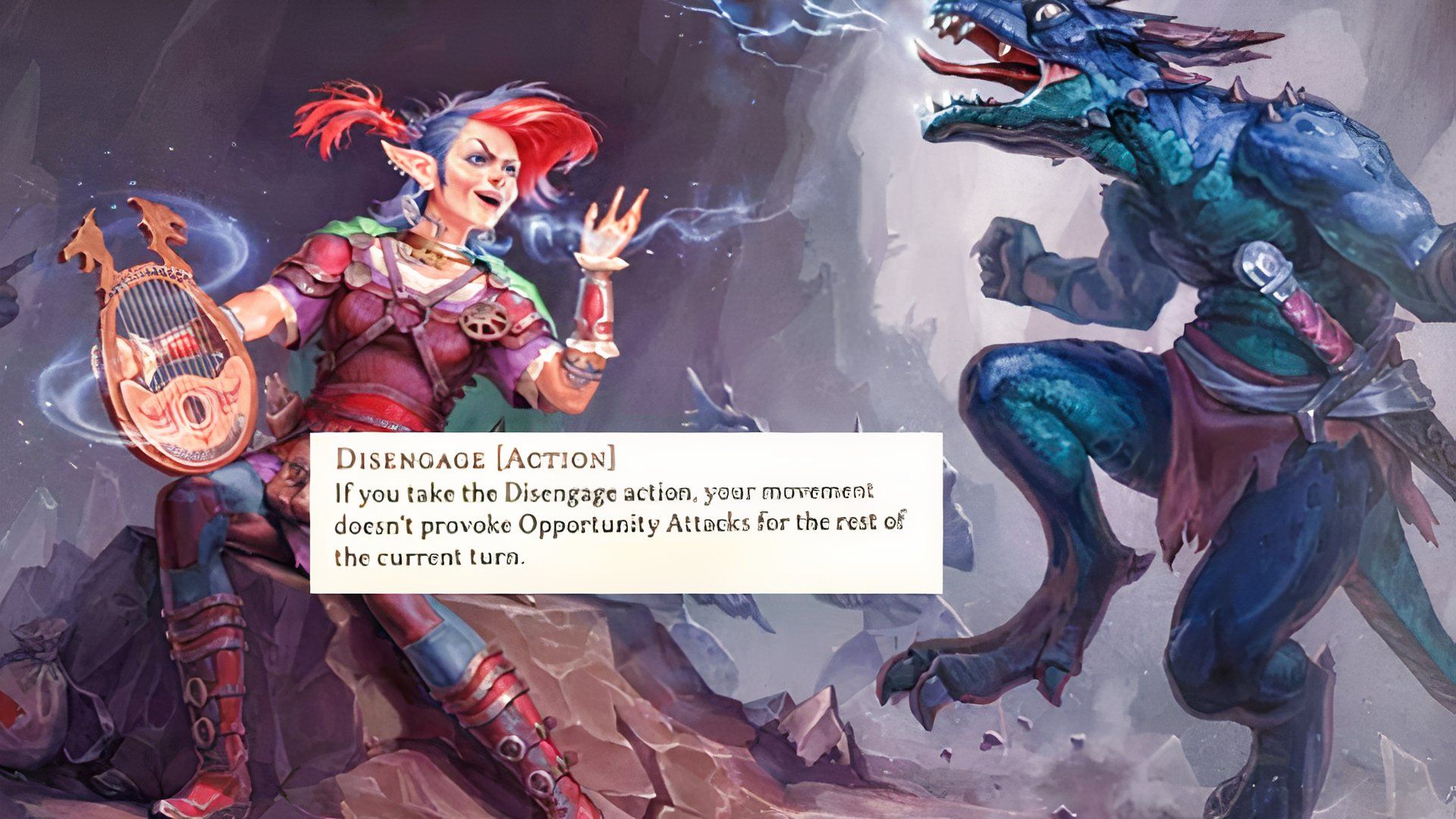 Image from Revised Edition Player’s Handbook
 | THE INTERPRETATION | THE REALITY |
| There is a 5-Foot Step Rule, where a character can make a deliberate 5-Foot Step Action to disengage from a foe safely. | The 5-Foot Step Rule is actually something from D&D 3.5e and taken to Pathfinder, and Disengage is the only Action in recent editions that can be done to get into an enemy’s space without triggering an Opportunity Attack. |
In Dungeons & Dragons, Opportunity Attacks can be very dangerous, particularly for characters fighting up close. A strong fighter might be defeated not by a powerful boss, but by weaker enemies when simply moving around the battlefield. Luckily, some players use a tactic called the 5-Foot Step. This involves only moving five feet and then stopping, which avoids triggering Opportunity Attacks and allows them to create some safe distance from nearby enemies.
The 5-Foot Step rule comes from two popular tabletop role-playing games: Dungeons & Dragons 3.5e and Pathfinder. It’s a core mechanic in both games, allowing characters to move a short distance without triggering attacks of opportunity. However, some groups prefer to play by stricter rules and may not allow the 5-Foot Step. In those cases, the safest way to avoid attacks while moving away from enemies is to use the Disengage Action – which means a character moves without taking any other action, allowing them to pass through enemy spaces unharmed.
Counterspell Is Not Limited
Not All Counterspells Must Come From Targets
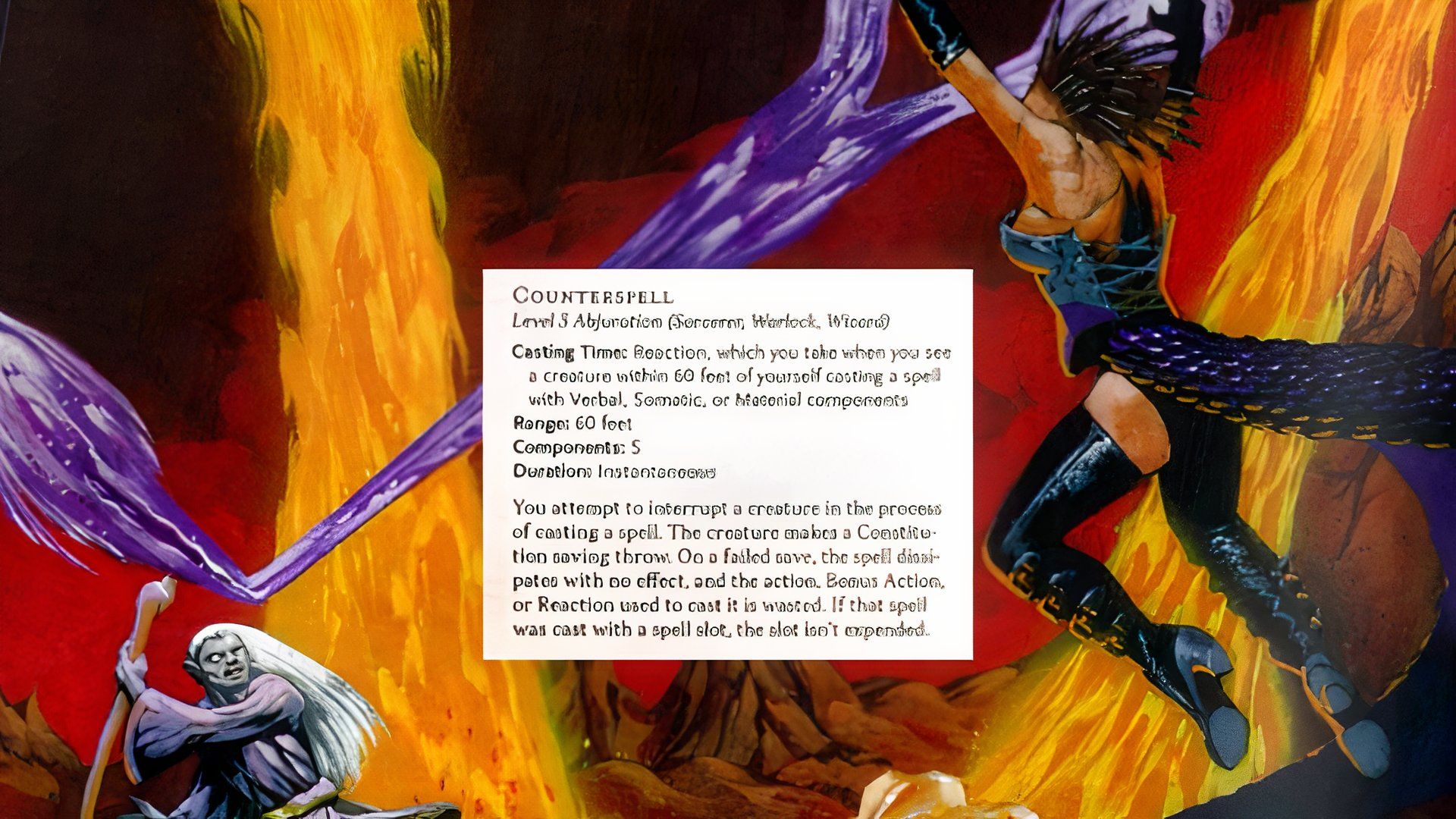 Image from Complete Arcana 3.5e
 | THE INTERPRETATION | THE REALITY |
| A target of a Spell is the only one able to cast a Counterspell against it, and the caster of the original Spell is the only one who can Counterspell said counter. | Anyone with a Counterspell can interrupt a duel by spellcasting another Counterspell. |
Counterspell is a special ability in Dungeons & Dragons that lets you interrupt another creature’s spell by using one of your own spell slots. Skilled spellcasters, like Warlocks, can use it to defend against powerful enemy attacks. If an enemy tries to counter your Counterspell, you’ll need another one ready to maintain the advantage.
This isn’t always how it works, though. Games like Baldur’s Gate 3 show that any spellcaster within range can actually interrupt another’s spell – even a Counterspell! The key is having the ability and enough magical energy available to use Counterspell in that moment. A group made entirely of spellcasters might have enough Counterspells to effectively respond to any interruptions.
Moving Through Creatures Is Not Completely Illegal
Move Through Enemies With A Condition
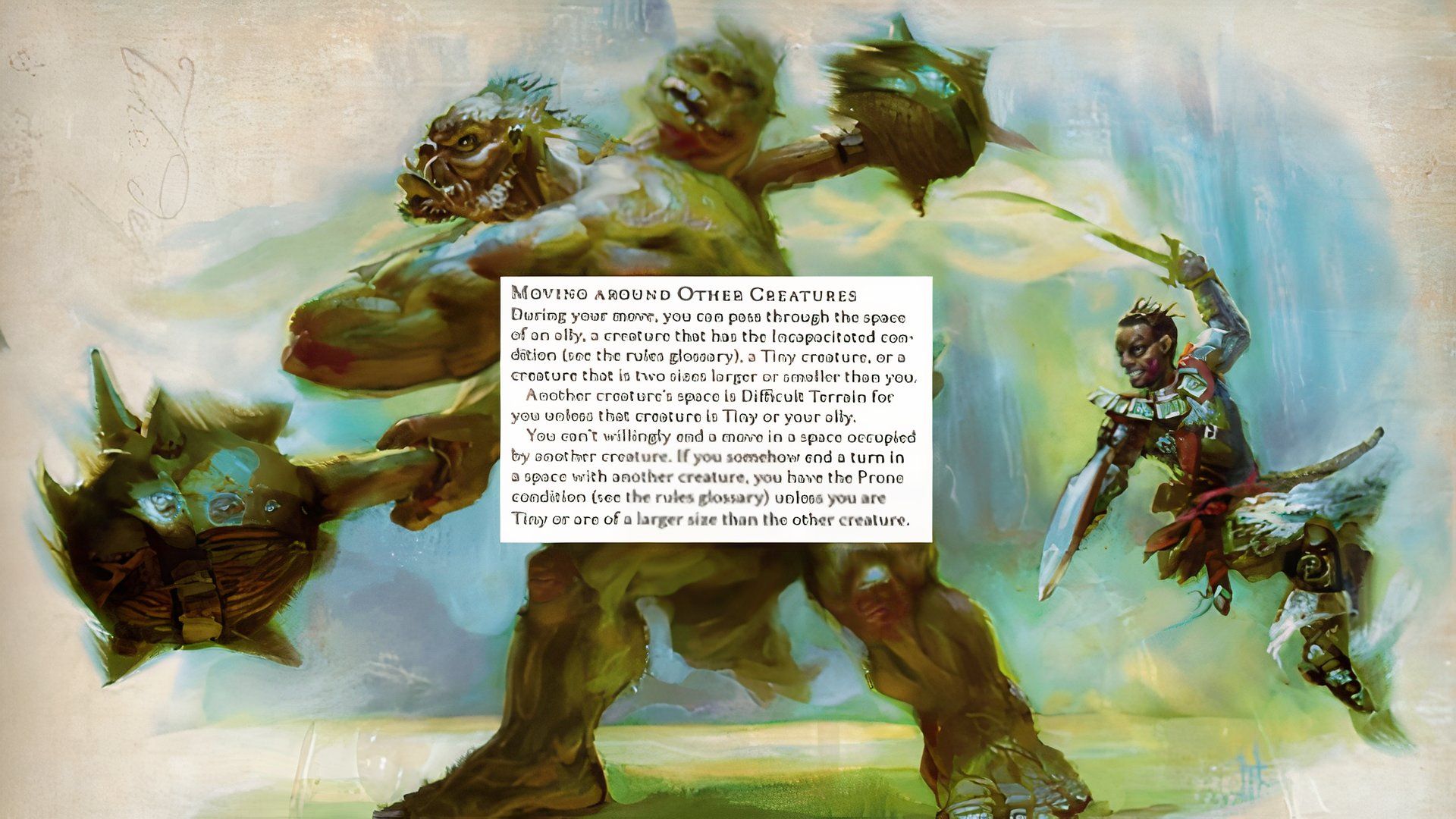 Image taken from Dungeon Masters Guide of 3.5e
 | THE INTERPRETATION | THE REALITY |
| A creature occupies its space completely, so other characters have to move around it. | Characters can move through an ally’s space or pass through enemies that are twice as large or twice as small as them. |
In Dungeons & Dragons, movement is key to combat, particularly when using a grid to track character positions and actions. Players usually need to move around other characters, and thankfully, most can move about six spaces at a time. However, in crowded battles, players might even be able to move through creatures, as long as certain conditions are met.
Players can move through the spaces occupied by their allies without penalty, as if those allies are kindly making room. They can also move through enemy spaces, but only if they are significantly smaller or larger than the enemy – think of squeezing past a giant creature or stepping over a tiny one.
Fall Damage Isn’t As Fatal As One Would Seem
D&D Has An Equivalent For Terminal Velocity
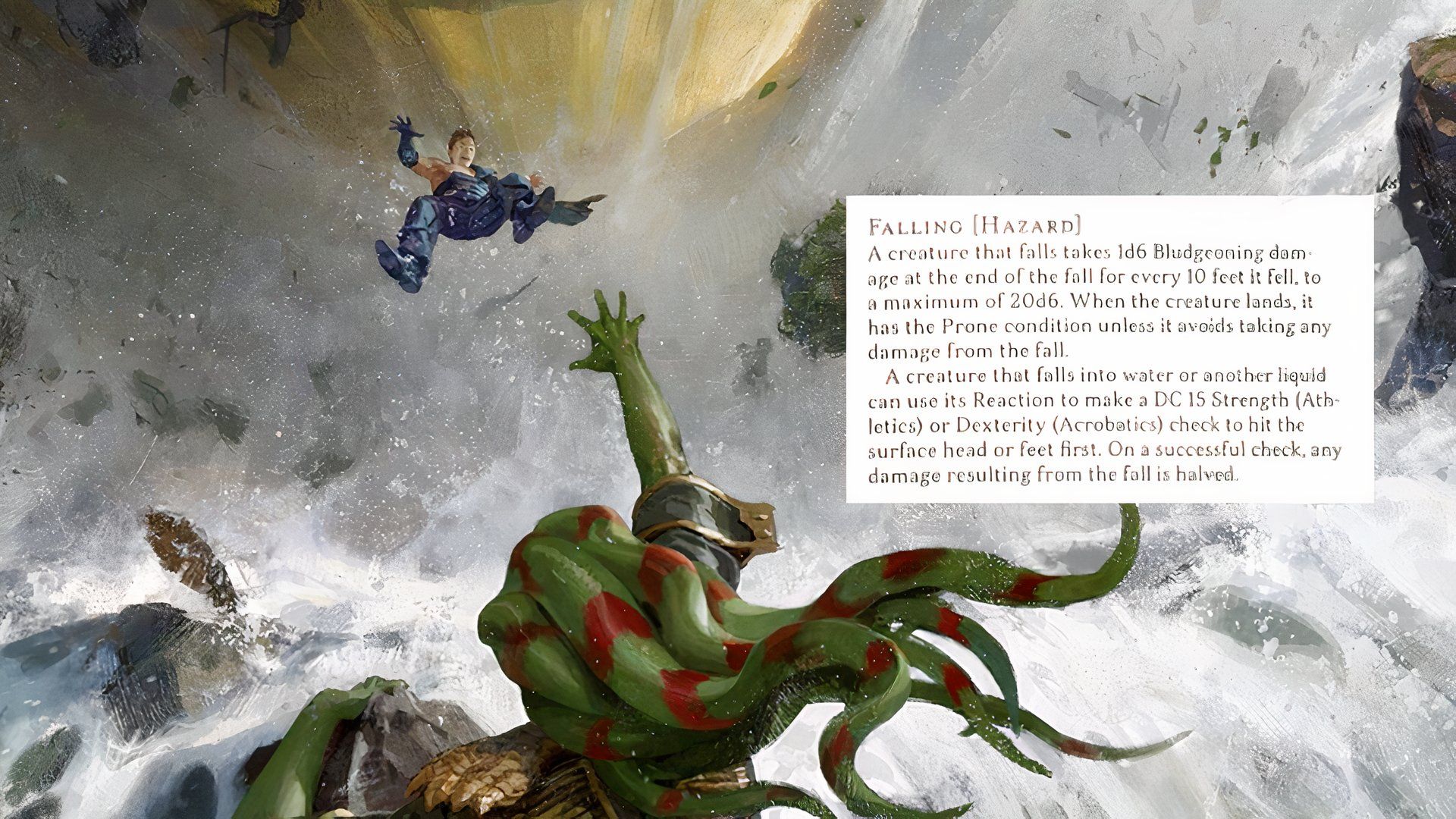 Image taken from Perilous Voyage card of Magic the Gathering
 | THE INTERPRETATION | THE REALITY |
| Falling from a specific height can equate to the death of a character | If being specific about the rules, Fall damage caps at 20d6 Bludgeoning, so averaging 60 to 120 Damage |
Okay, so Dungeons & Dragons is full of magic and monsters, but surprisingly, it actually tries to be realistic in some ways. I mean, if your character takes a tumble, they don’t just bounce – they actually take damage based on how far they fall. We’re talking a potential for serious injury, even from a huge height! That’s why spells like Feather Fall are absolutely essential for anyone playing a spellcaster – they can literally save your life if you’re not careful where you step.
While falling can be dangerous, it’s actually possible to survive in this game with the right preparation. Characters take 1d6 bludgeoning damage for every 10 feet they fall, but the damage caps at 20d6 (averaging 69, with a maximum of 120 damage). This means height doesn’t matter after a certain point, which isn’t realistic, but it’s how the game works. A well-prepared character, like a Level 12 Fighter with a high Constitution (+3) and the Tough feat (bringing their total HP to around 138), could potentially withstand a fall from any height.
Diplomacy Doesn’t Stop At Combat
There’s Always Room For Negotiation Until There Isn’t
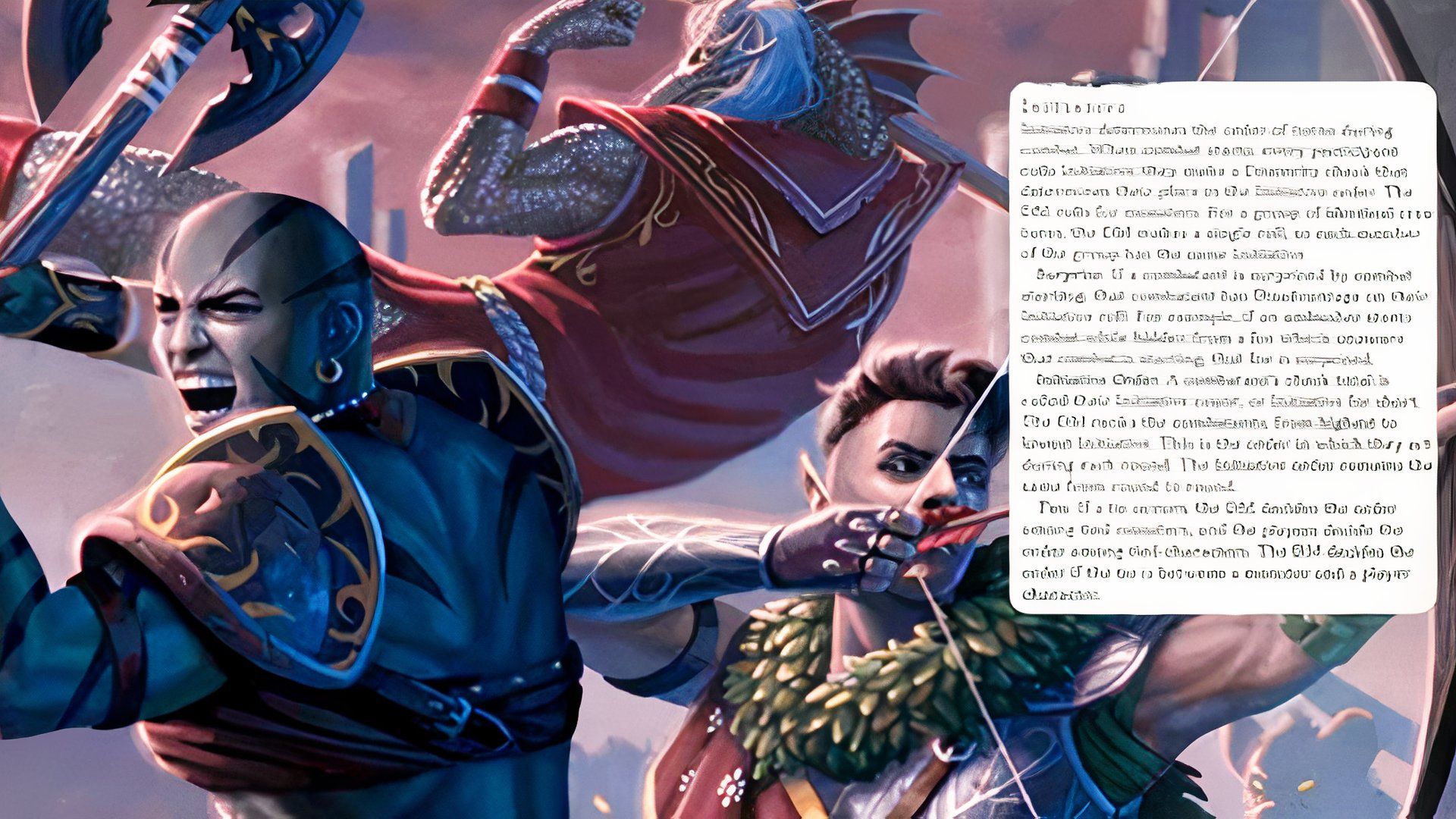 Image from the Revised Edition Player’s Handbook
 | THE INTERPRETATION | THE REALITY |
| When the DM asks to roll for Initiative, it’s always a battle to the death | Regardless of whether or not the team is in combat, anyone can still try to initiate dialogue with the enemies – especially if they are intelligent |
Every Dungeons & Dragons player understands that their Dungeon Master puts in effort to plan for different situations that could occur during a game, particularly when it comes to battles and the statistics of the creatures the players will face. Sometimes, though, those battles become so difficult that the players are nearly defeated or even have characters killed.
Players can often avoid conflict if they remember they can always try to negotiate – but only until it’s no longer an option. Instead of immediately fighting smart enemies, try reasoning with them or finding a compromise. If your Dungeon Master allows it, this could even lead to a new and exciting part of the story. At the very least, it might surprise your DM and make the encounter more interesting.
Read More
- All Skyblazer Armor Locations in Crimson Desert
- One Piece Chapter 1180 Release Date And Where To Read
- How to Get the Sunset Reed Armor Set and Hollow Visage Sword in Crimson Desert
- All Shadow Armor Locations in Crimson Desert
- How to Beat Stonewalker Antiquum at the Gate of Truth in Crimson Desert
- All Golden Greed Armor Locations in Crimson Desert
- Cassius Morten Armor Set Locations in Crimson Desert
- Grime 2 Map Unlock Guide: Find Seals & Fast Travel
- Marni Laser Helm Location & Upgrade in Crimson Desert
- Amber Alert Secrets & CDs In Crime Scene Cleaner Act 2
2026-02-09 02:40