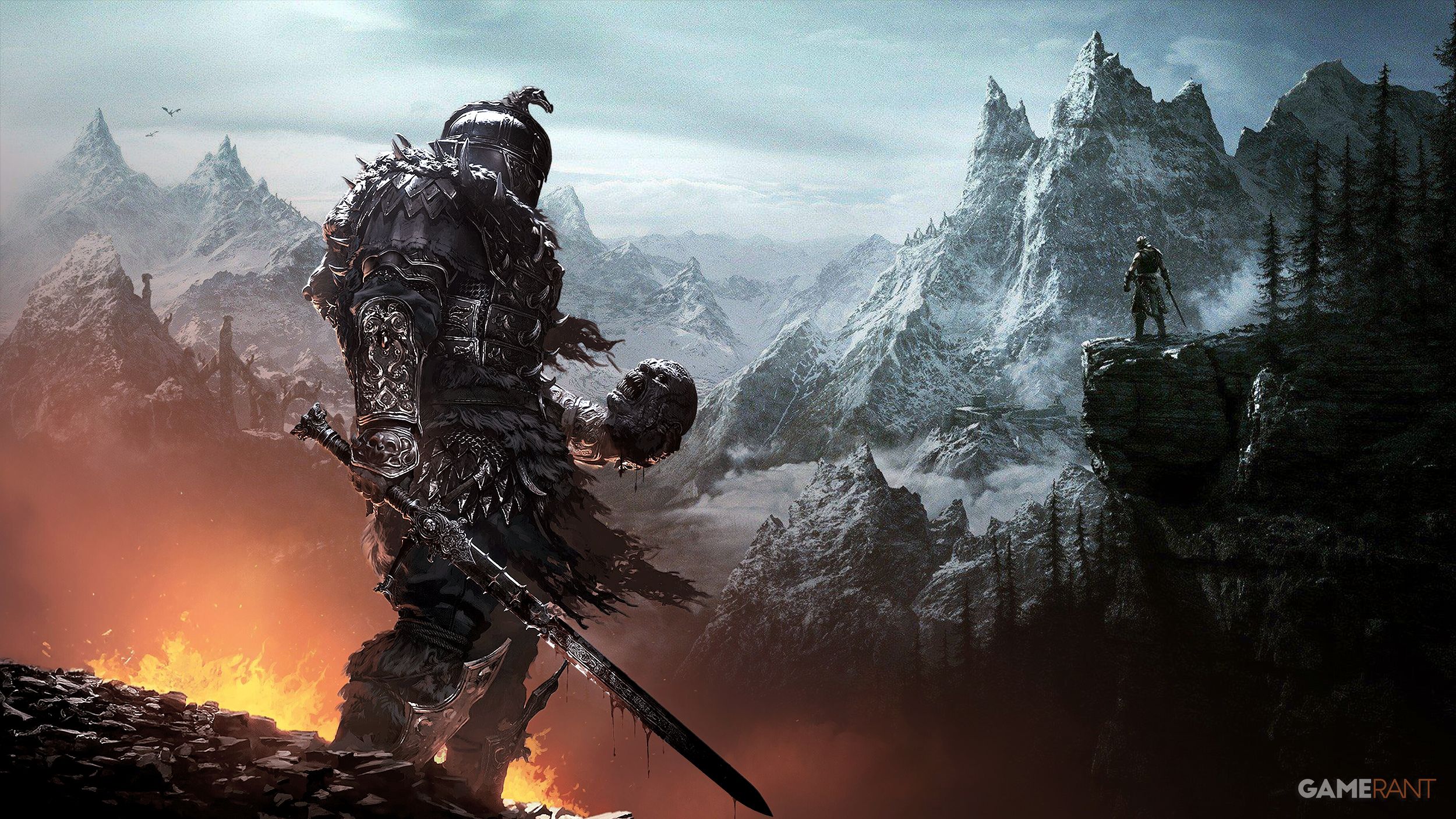
Given the massive success and influence of The Elder Scrolls 5: Skyrim, it’s no surprise other game developers try to create similar experiences. Skyrim’s huge open world, the freedom it gives players, and its lasting popularity essentially created the modern fantasy open-world genre, inspiring many games and remaining popular even today. Often, even if developers don’t acknowledge it, you can see Skyrim’s influence in their work, especially when the games share noticeable similarities. The new game Fatekeeper, developed by Paraglacial and THQ Nordic, is a prime example of this, with many people already drawing comparisons to Bethesda’s iconic RPG.
Fatekeeper is a new action RPG played from a first-person perspective. Players will explore a beautifully crafted fantasy world featuring ruins, caves, forests, and ancient temples. The game combines sword fighting with magic, offering dynamic, challenging combat against a variety of enemies. You can also customize your character with different skills and spells to create your own unique playstyle. Fatekeeper is planned for release on PC in Early Access in 2026. While not directly aiming to be the next Skyrim, it shares some similar design elements and might appeal to fans of that game.
Why People Are Comparing Fatekeeper to Skyrim
It’s understandable why people are constantly comparing Fatekeeper to Skyrim. Its fantasy graphics immediately evoke a similar feeling and atmosphere to Bethesda’s popular game. While the comparisons mainly come from the visuals, the gameplay and exploration also play a role. Some players feel the game’s atmosphere and world-building are more reminiscent of Dark Messiah of Might and Magic, but at first glance, Fatekeeper appears like a modern take on Skyrim, as if it were released in 2026.
Fatekeeper’s Skyrim-Like Features
- FIRST-PERSON FANTASY — It’s a first-person fantasy RPG in the same subgenre that Skyrim helped define, including swords, spells, and exploration.
- ENVIRONMENTAL MOTIFS — Its detailed ruined landscapes, forests, and ancient locales are similar to the aesthetics of Skyrim‘s world.
- COMBAT WITH SWORDS AND MAGIC — The mix of melee fighting and magic evokes the combat style many associate with Skyrim.
- RPG PROGRESSION SYSTEM — Rich character progression and build options give players customization depth similar to classic RPGs in Skyrim‘s vein.
- EXPLORATION-ORIENTED DESIGN — Though not fully open world, the emphasis on exploration through handcrafted areas draws comparisons to open fantasy adventures like Skyrim.
The game Skyrim was incredibly influential in shaping open-world fantasy RPGs, known for its huge world, freedom in completing quests, and emphasis on exploration. While Fatekeeper doesn’t perfectly copy Skyrim, its Steam page promises a similar focus on discovery within a carefully designed world. It describes environments ranging from old battlefields and deep caves to peaceful forests and ruined temples, all filled with secrets, lost artifacts, and surprising events. This design, combined with the game’s art style, gives off a strong Skyrim vibe, though Fatekeeper does have its own unique elements.
It’s understandable why people are constantly comparing Fatekeeper to Skyrim. The game’s fantasy-inspired graphics strongly evoke the same atmosphere and style as Bethesda’s popular title.
The game’s blend of sword fighting and magic really emphasizes the feeling of freedom, especially because of how its progression system works. Like Skyrim, Fatekeeper lets players create unique characters and playstyles instead of forcing them into specific classes. You can focus on powerful melee attacks, devastating spells, or a mix of both. Your equipment, stat improvements, and combat skills all contribute to making your character truly your own – a key element of Bethesda RPGs. While Fatekeeper is a bit more focused than the open world of Skyrim, its commitment to letting players customize their builds and play however they want makes it feel very similar.
What Fatekeeper Does Differently
When a hugely popular game like Skyrim is released, it raises the bar for the entire industry, and subsequent games are inevitably compared to it. This is happening with Fatekeeper, which shares a similar look and feel with Skyrim. However, once you start playing, the differences become clear. Fatekeeper feels like a more contemporary action RPG in almost every way – from combat and dialogue to world design. While it’s tempting to think of Fatekeeper as what Skyrim might be if it were made today, it actually carves out its own distinct identity. In fact, the developers have publicly stated they plan to incorporate elements of this newer style into The Elder Scrolls 6, showing just how much Fatekeeper is innovating.
How Fatekeeper Distinguishes Itself From Skyrim
- NON-OPEN-WORLD DESIGN — Unlike Skyrim‘s massive open world, Fatekeeper uses focused, handcrafted levels with exploration built into curated paths rather than full sandbox roaming.
- TACTICAL MELEE COMBAT — Combat emphasizes reactive and strategic sword strikes, dodges, and enemy patterns, offering a more skill-based feel than Skyrim‘s simpler targeting system.
- VISUAL IMPACT AND BRUTALITY — Battles are designed to be viscerally impactful and gritty, with Fatekeeper leaning into a darker, more intense fantasy tone than Skyrim‘s broader fantasy palette.
- RICH PROGRESSION SYSTEM — Character progression supports distinct build choices and deeper specialization rather than Skyrim‘s more generic skill leveling.
- NARRATIVE-DRIVEN PATHS — The game leans toward story focus and linear narrative beats, contrasting Skyrim‘s freeform questing and open narrative structure.
While Fatekeeper shares a similar look and feel with the world of Skyrim, it’s not a completely open-world game like Skyrim. It guides players along a main story, though there’s still encouragement to explore. This is a key difference, as Skyrim is famous for letting players freely roam and discover things on their own. So far, Fatekeeper seems to focus more on carefully designed levels and exploration that’s closer to the experience of playing a first-person Dark Souls.
With each sword fight, conversation, and new area you discover, Fatekeeper feels more like a recent action RPG compared to Skyrim.
Okay, so one of the biggest differences between Fatekeeper and Skyrim is definitely how the combat works. It’s way more intense – darker, grittier, and honestly, bloodier than anything in Skyrim. You really have to focus on dodging and mastering your skills, almost like playing Avowed. And the way you level up is totally different too. Skyrim lets you do pretty much whatever you want with your skills, but Fatekeeper pushes you to specialize a bit more. You can still create a unique character, but it’s not quite as open-ended; it feels like you have to really commit to a specific build.
It’s easy to see why people are comparing Fatekeeper to Skyrim, but those comparisons don’t capture the whole picture. While Fatekeeper shares some common fantasy elements and RPG features, it feels different thanks to its carefully crafted world, combat that relies on player skill, and a system that encourages you to really focus on specific abilities. Instead of trying to be as huge and open as Skyrim, Fatekeeper seems to be aiming for more focused battles and a more thoughtful way to improve your character. Whether this approach works well remains to be seen during Early Access, but it’s already clear that Fatekeeper is establishing its own identity in a genre that Skyrim made popular.
Read More
- All Shadow Armor Locations in Crimson Desert
- How to Get the Sunset Reed Armor Set and Hollow Visage Sword in Crimson Desert
- Best Bows in Crimson Desert
- All Golden Greed Armor Locations in Crimson Desert
- Wings of Iron Walkthrough in Crimson Desert
- How to Craft the Elegant Carmine Armor in Crimson Desert
- All Helfryn Armor Locations in Crimson Desert
- How To Beat Ator Archon of Antumbra In Crimson Desert
- Keeping Large AI Models Connected Through Network Chaos
- Sakuga: The Hidden Art Driving Anime’s Stunning Visual Revolution!
2026-02-19 19:05