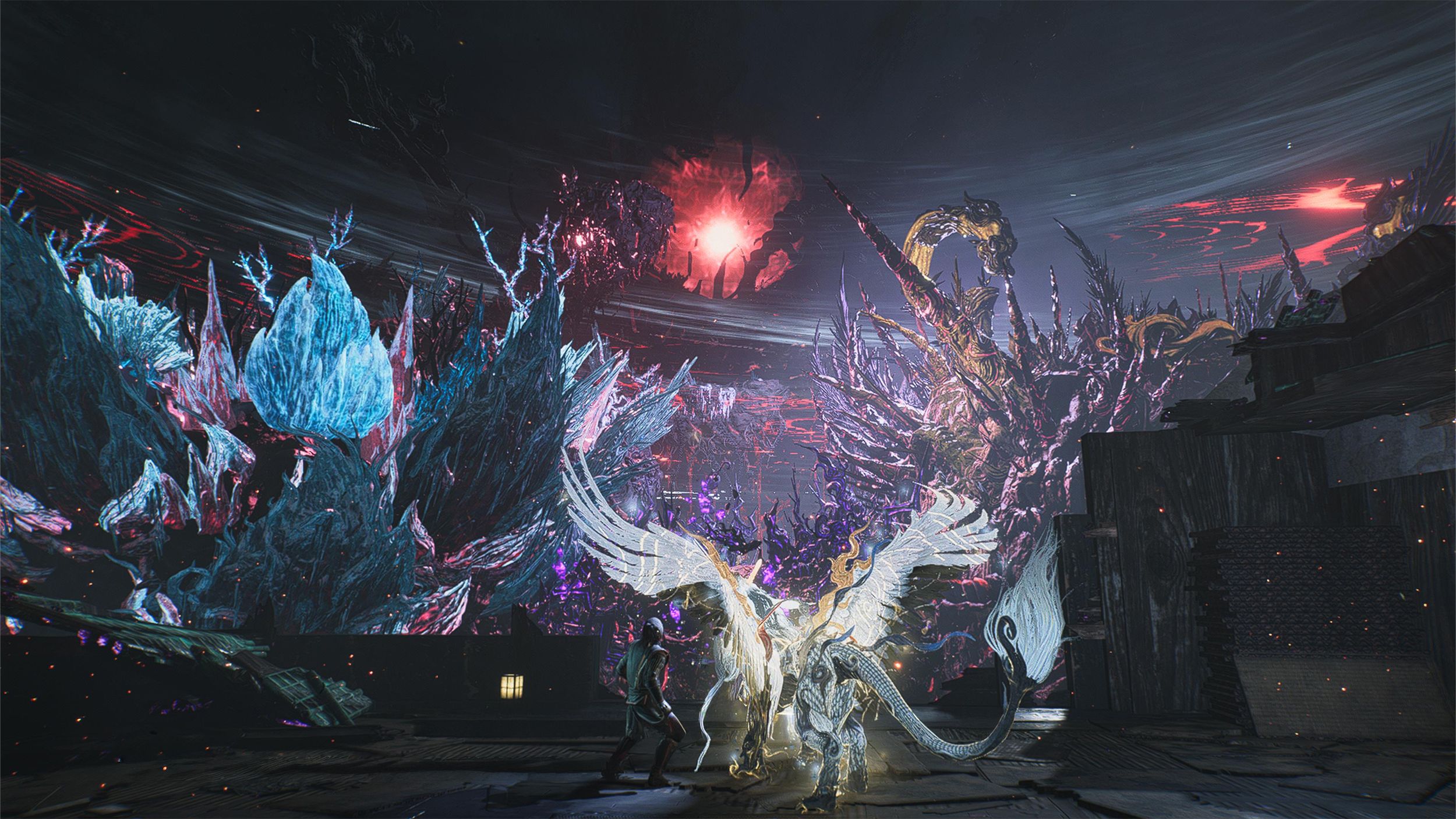
The following contains MAJOR spoilers for Nioh 3.
The story of Nioh 3 jumps between different periods in Japanese history, but it all leads to one final showdown. After completing many missions to deal with supernatural outbreaks throughout time, the game focuses on the conflict between Tokugawa Takechiyo and his brother, Kunimatsu, who originally caused the disruptions to the timeline.
As a big fan of the Nioh series, I was really invested in how Nioh 3 wrapped things up. The final part of the game directly addresses the central conflict, leading to a tough final boss and a decision I get to make that actually changes the ending! The gameplay and extra stuff after you beat the story are still the same, but there are two different endings depending on what happens with Takechiyo and Kunimatsu. It’s pretty cool because the seeds of how it all ends are actually planted way back at the very beginning of the game with a choice Kunimatsu makes.
Events Leading Up to Nioh 3’s Ending
So, as I played through Nioh 3, I found out that Takechiyo’s little brother, Kunimatsu, was actually the one pulling strings behind the scenes, trying to change history to benefit himself. He was super bitter about not being chosen as the next shogun, and things got really bad when he started teaming up with some seriously powerful yokai. This caused all sorts of problems with time, creating rifts that let the yokai run wild and mess everything up.
Takechiyo is sent through different periods of Japan’s past by a guardian spirit, tasked with stopping dangerous supernatural creatures called yokai. As he travels, he uncovers how much influence a figure named Kunimatsu has over the yokai and how deeply this corruption has affected history. Although Takechiyo manages to bring peace to specific areas, he realizes the yokai threat won’t truly end as long as Kunimatsu is still at large.
The ending of Nioh 3 shows that Kunimatsu has completely given in to yokai power. He’s not just pulling strings from the shadows anymore; he’s the main cause of all the problems with the timeline.
The Final Mission and Boss Battle
The final mission of Nioh 3 has Takechiyo facing off against Kunimatsu. This battle serves as a culmination of everything players have learned throughout the game. Kunimatsu has transformed, now calling himself Huriko, and relies heavily on yokai powers, showcasing the extent of his corruption.
The last boss fight in Nioh 3 is a really challenging and lengthy battle. Huriko combines human fighting styles with attacks from yokai, and uses a variety of elements and status effects players have faced throughout the game. This fight is the final stand against the yokai that are threatening to destroy history. After defeating Huriko, a cutscene plays to determine the game’s ending based on the player’s choices.
Nioh 3’s Standard Ending
In the normal ending of Nioh 3, Takechiyo defeats and kills Kunimatsu. This eliminates the root cause of the yokai corruption that was distorting time. With Kunimatsu gone, the strange supernatural events throughout history start to fade, and the game suggests that the damage he caused is slowly fixed, bringing peace back to the world. Takechiyo then returns to his proper place in the past and continues on his path to become shogun.
This ending offers the clearest and most complete conclusion to the story of Nioh 3, though it feels rather sudden. With it, Kunimatsu’s power is gone, the yokai are contained, and the timeline becomes stable. The final moments depict Japan rebuilding and moving forward, free from the supernatural issues surrounding the fight for the throne.
Nioh 3’s Alternate Ending
If Takechiyo decides to show mercy and spare Kunimatsu after their final fight, a different ending occurs. Instead of striking the final blow, Takechiyo lowers his sword and offers Kunimatsu his hand in forgiveness. In this version, Kunimatsu is freed from the yokai’s control and survives, resolving the immediate supernatural threat. However, his future remains unclear.
Instead of presenting a clear resolution where everything falls into place, this ending concentrates on what happens immediately after the final battle. With Kunimatsu defeated, the post-credits scene implies he’s taken on the task of eliminating yokai – a role previously held by Takechiyo. This allows Takechiyo to focus on his responsibilities as shogun. The story ends with the idea that history can now proceed naturally, though this version of events is slightly less definitive than other endings.
How Nioh 3’s Ending Fits the Overall Story
The ending of Nioh 3 neatly wraps up the game’s time-travel story by resolving the initial conflict that sent Takechiyo through history. Instead of introducing a new problem or leaving things open-ended, the game focuses on settling the power struggle that caused the yokai outbreaks. This conclusion feels more complete than those in previous Nioh games, which often hinted at larger, world-spanning events. Even with an alternate ending that allows for some speculation, the story primarily centers on Takechiyo and Kunimatsu, bringing everything back to where it began, a departure from the series’ tendency to broaden its scope.
Okay, so I just finished the game, and it’s awesome! Even after the credits roll, you can keep playing! You can jump back into missions, tackle side stuff, and even start a New Game Plus called Shogun’s Journey, which is way harder. The best part? Whatever ending you pick doesn’t actually change anything in the game. You still get access to everything, and it doesn’t affect what loot you find or what missions are available. Basically, the ending is just for the story – you can still keep enjoying the gameplay after that!
Read More
- All Skyblazer Armor Locations in Crimson Desert
- One Piece Chapter 1180 Release Date And Where To Read
- How to Get the Sunset Reed Armor Set and Hollow Visage Sword in Crimson Desert
- All Shadow Armor Locations in Crimson Desert
- All Golden Greed Armor Locations in Crimson Desert
- How to Beat Stonewalker Antiquum at the Gate of Truth in Crimson Desert
- Cassius Morten Armor Set Locations in Crimson Desert
- Grime 2 Map Unlock Guide: Find Seals & Fast Travel
- USD RUB PREDICTION
- Marni Laser Helm Location & Upgrade in Crimson Desert
2026-02-09 17:38