Open-world games are popular now, but the concept didn’t begin with the well-known titles everyone remembers. While games like GTA 3, Skyrim, and The Witcher 3 are often highlighted, developers were creating expansive, interactive worlds with player freedom long before those games existed.
Let’s explore some of the first video games that laid the groundwork for today’s open-world experiences. Even with limited technology, these early titles created a sense of freedom by letting players explore, discover secrets, and navigate environments at their own speed. They used simple graphics – like basic lines, tiles, or scrolling screens – to create a feeling of a large, explorable space.
Hydlide
Release Date: 1984
- A proto action-RPG open world where the player can roam freely, enter different areas at will, and return to previous zones.
- Jim is on a mission to rescue Princess Ann and defeat Varalys by finding three magic jewels hidden across the open world.
Hydlide is an early example of an open-world action-RPG, focusing on exploring a connected world and engaging in straightforward, real-time battles. Unlike many games of its time, it doesn’t force you to follow a set path – you’re free to roam and discover things at your own pace.
The gameplay feels like a very early version of what we now expect from open-world games. Players basically explore areas, deal with enemies, find an item to unlock new parts of the map, and then go back to explore those previously unreachable areas. Released first on Japanese home computers and then on MSX and Famicom, Hydlide became popular in Japan and set the stage for many real-time action RPGs that followed.
Adventure
Release Date: 1980
- A small but freely explorable map lets players grab items, dodge roaming dragons, and figure out their own route.
- Players control a square avatar on a quest to return the stolen Enchanted Chalice, using items scattered across the map.
Adventure was groundbreaking for its time, offering players a sense of exploration more akin to a small, open world than a series of separate levels. While the game’s map is small by modern standards, its interconnected rooms allowed players to freely roam and experiment without a strict order.
The game feels like a miniature, living world that responds to your actions. Unlike many games of its time, dropped items remain where you leave them, creatures roam freely, and the world continues even when you move to a new area. This level of freedom was remarkable for a game created in 1980. Despite its simple graphics – blocky shapes and bright colors – Adventure established many of the core principles found in the expansive open-world games we play today.
Elite
Release Date: 1984
- A procedurally generated galaxy made of thousands of star systems, where each system can be visited in any order, and travel is open-ended.
- Lets players shape the game through trading, combat, or exploration rather than following set levels.
Elite began as a small project created by Ian Bell and David Braben while they were students at Cambridge University. It first appeared on the BBC Micro and quickly impressed players with its smooth, 3D wireframe graphics and a unique, open-ended gameplay style. Players could choose their own path in space, becoming traders, bounty hunters, pirates, or explorers. The game cleverly used procedural generation to create a vast universe despite being limited by the small amount of memory available on 32K machines – it felt incredibly large even then.
I first got into Elite because the basic idea was so cool: you fly a spaceship! But it quickly became clear it was way more than just simple fun. You’re in the cockpit, seeing everything in this cool wireframe style, and you can land at stations, trade goods to make money, take on missions, and even get into awesome dogfights. It wasn’t just a hit on the BBC Micro either – Elite showed up on pretty much every home computer in the mid-80s! I remember playing it on the Commodore 64, and I know people who loved it on the Amstrad CPC, Apple II, and even the NES. It really reached a ton of people, and honestly, it’s had a huge impact on space games and open-world design ever since.
Ultima (later titled Ultima: The First Age of Darkness)
Release Date: 1981
- A tile-based overworld that connects towns, castles, and dungeons into a single map open for free exploration.
- Persistent world state and NPC locations allow return visits and non-linear progress through outdoor and dungeon areas.
Released during the early days of computer role-playing games, Ultima was ambitious. Despite the limited power of the Apple II, it offered players a vast, open world to explore, rather than forcing them down a linear path. The game’s story centers around a quest to defeat Mondain, a wizard who uses a magical gem to achieve immortality. While the ultimate goal is clear – destroy the gem and Mondain – players have considerable freedom to roam the land, earn money, battle enemies, buy equipment, and explore dungeons at their own pace.
I really loved how this game changed perspectives – you’d explore the world from above, but when you went into a dungeon, it switched to a first-person view which was so cool! But it wasn’t just a neat trick; this game, the very first Ultima, actually laid the groundwork for so many RPGs that came after it. It really set the standard for how developers built worlds, created quests, and let players do their own thing – it’s amazing to think how influential it was!
The Portopia Serial Murder Case
Release Date: 1983
- An investigation-style open world.
- Exploration is procedural and player-directed.
Even today, people discuss Portopia for its huge impact on Japanese adventure games, and some believe a remake might happen. It pioneered the idea of a truly open and player-driven mystery, well before visual novels became popular. The game lets you explore a city and investigate as a detective, following leads wherever your curiosity takes you. The story changes based on where you go and what clues you find.
Before creating the popular Dragon Quest series, Yuji Horii developed Portopia, a game designed to make players feel like genuine detectives, free to investigate rather than simply follow a predetermined story. It originally launched on Japanese computers like the NEC PC-6001, and was later released for the PC-8801, FM-7, MSX, and Sharp X1. The game gained wider recognition in 1985 with its release on the Famicom, which simplified the controls from typing commands to using easy-to-navigate menus, making it accessible to a broader audience.
The Legend of Zelda
Release Date: 1986
- A unified top-down overworld full of hidden caves, secret exits, and optional zones that can be explored in many sequences.
- Item-based access and discoverable shortcuts encourage backtracking and reward curiosity across the same continuous map.
As a huge fan, I’ve always loved how The Legend of Zelda lets you just wander and explore. It’s a classic top-down adventure where the world really feels open, even if it’s not massive by today’s standards. What’s amazing is that Nintendo made it so you could feel that same sense of discovery that Shigeru Miyamoto felt as a kid, exploring in the woods. They didn’t want to hold your hand; they built a world that trusts you to figure things out on your own, and that’s what makes it so special.
I’ve been playing The Legend of Zelda for years, and it’s amazing how it’s shown up on pretty much every Nintendo system – from the original NES and even those old Famicom Disk System games, all the way to the Virtual Console, the NES Classic, and now Nintendo Switch Online. What’s really cool is that no matter which system you play it on, it still feels like Zelda. It’s always been a game that really makes you want to explore, and you’re always rewarded for being curious. Even after all these years, it still feels so inviting and fun!
Panorama Toh (Panorama Island)
Release Date: 1983
- A continuous island environment with footpaths and vehicle routes connecting different zones.
- Areas can be revisited at any time, and exploration reveals new routes.
Panorama Toh was a daring game for its time, and one of the first of its kind from Japan. Unlike many computer games of the era, it let players freely roam a small island. Developed by Nihon Falcom for the NEC PC-8801, it marked an early step for the studio towards the action-RPG games they would later become known for.
Though not massive in size, the game’s island feels like a genuine location that players can explore, return to, and gradually learn. Panorama Toh isn’t famous internationally, but it’s an important early example of open-world design and influenced the action-RPG style that Falcom would later perfect.
Courageous Perseus
Release Date: 1985
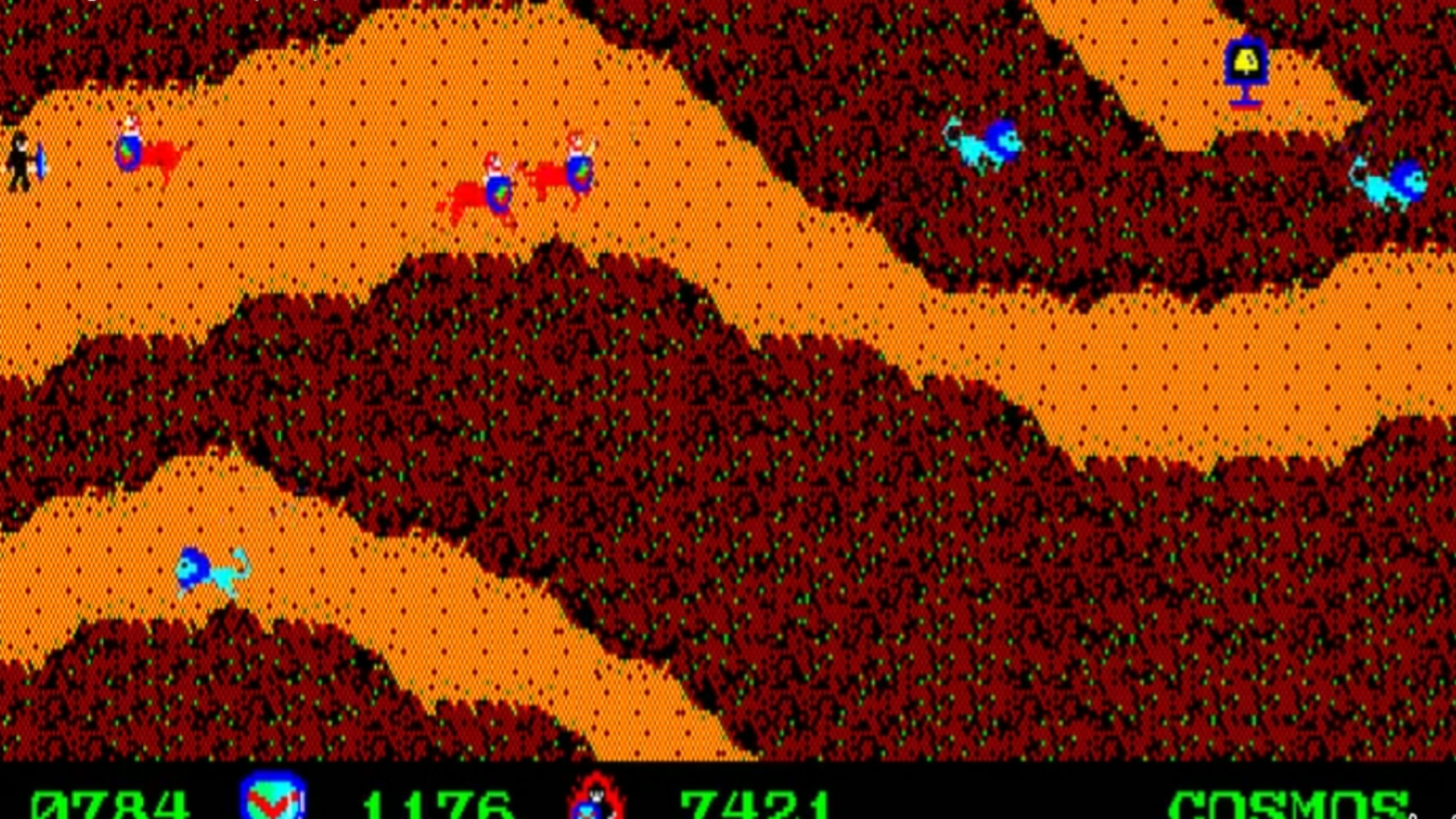
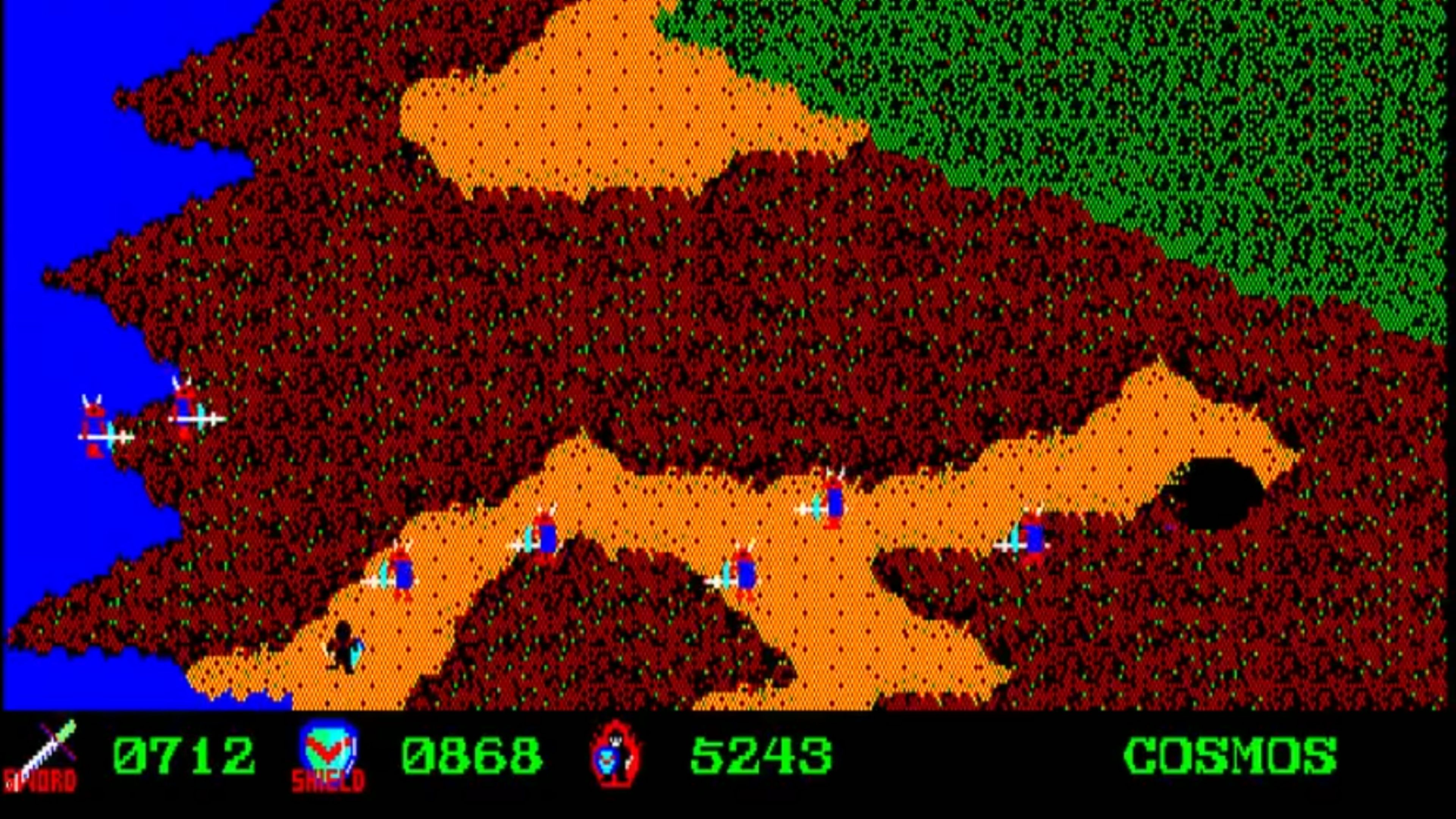
- A scrolling landscape where villages, caves, and outdoor regions link into one connected world.
- The game retells the Perseus myth with exploration, combat trials, and item-based progression across its connected map.
Courageous Perseus was a groundbreaking RPG from the early 1980s, demonstrating how open-world exploration and real-time battles could be combined effectively. While simple and a bit unpolished, it was remarkably ambitious for its time. The game begins with Perseus shipwrecked on an island, which players can immediately begin exploring.
What’s enjoyable about looking back at Courageous Perseus is its seamless blend of action and exploration. Unlike many games of the time, it doesn’t break things up into separate screens or levels. The island is designed so you can freely move between areas – step away from a tough challenge, improve Perseus’s abilities, and come back when you’re stronger. This design approach was later perfected in other action RPGs, but Courageous Perseus presented it in a remarkably simple and accessible way.
Riglas
Release Date: 1986
- An interconnected 2D world mixing outdoor zones and interior spaces.
- Exploration is non-linear, with routes opening based on what players have discovered.
As a fan, I’d say Riglas is a really interesting mix of fast-paced action and a sprawling RPG where you can explore pretty much anywhere. It feels like one of the first games to really try out open-ended gameplay in a JRPG, letting you wander and make choices before that became the norm. It’s like seeing the seeds of modern open-world RPGs in an older game – a cool glimpse at how developers were experimenting back then!
The game takes place in a world of bizarre creatures and confusing labyrinths. Players control Riglas as he explores various zones, battles enemies, and collects items to aid his survival. It’s designed to be a deliberate experience, rewarding players who move slowly and carefully as they uncover the secrets of each area.
Mercenary
Release Date: 1985
- A full 3D vector planet with surface regions, cities, and underground bases all existing in one space.
- Players can walk, drive, or fly anywhere, including reaching high platforms and distant structures freely.
Released in 1985, Mercenary can feel a little unusual when you first start playing. However, once you get used to it, the game world becomes genuinely enjoyable to explore. It’s presented from a first-person perspective using simple, clean lines, making the planet Targ look like a massive wireframe play area. It doesn’t aim for realism, but this straightforward style creates a world that feels both expansive and easy to navigate.
Despite its simple, unfinished appearance, the game encourages players to explore, experiment, and find clever ways to progress. The combination of a first-person perspective, a vast, seamless world, and the freedom to travel on foot or in vehicles – whether on the ground or in the air – is what originally made the game feel like a genuine, interactive 3D open world back in the 1980s.
Read More
- All Skyblazer Armor Locations in Crimson Desert
- All Shadow Armor Locations in Crimson Desert
- How to Get the Sunset Reed Armor Set and Hollow Visage Sword in Crimson Desert
- Marni Laser Helm Location & Upgrade in Crimson Desert
- All Golden Greed Armor Locations in Crimson Desert
- All Helfryn Armor Locations in Crimson Desert
- Best Bows in Crimson Desert
- Keeping Large AI Models Connected Through Network Chaos
- All Icewing Armor Locations in Crimson Desert
- How to Craft the Elegant Carmine Armor in Crimson Desert
2025-12-03 08:37