Lots of open-world games come out every year, and many of them are excellent. It often feels like there’s at least one, if not several, that are worth playing, adding huge new worlds and tons of side quests to our to-play lists. But not all of them succeed. Sometimes, an open-world game receives mixed reactions or launches with technical problems, leading people to describe it as just “okay” or “average.”
The term ‘open-world game’ can sometimes be inaccurate. Many great open-world games were initially ignored due to issues like poor performance, negative reviews, or ineffective marketing. Players quickly moved on to more hyped titles. But, once people actually gave these overlooked games a chance, they discovered how good they were. As a result, most have become beloved cult classics. Those that haven’t may simply need a larger audience to appreciate them.
Deadly Premonition
It’s Not Exactly Scary, But It’s Undeniably Unique
Deadly Premonition is an unusual game that blends horror with surreal and often silly elements. While it aims to be scary, it leans more towards the strange and campy side of things, reminiscent of the quirky atmosphere of Twin Peaks. The game is particularly known for its goofy protagonist, Francis York Morgan, and his memorable, often absurd dialogue – like when he describes a bizarre sandwich as ‘self-inflicted punishment’.
Many players were disappointed with the game, feeling it didn’t deliver on its promises. The launch was also plagued with technical problems like awkward controls, slow performance, crashes, and long loading screens, though most of these were eventually fixed. However, if you approach Deadly Premonition for what it is, it’s surprisingly great. It’s definitely not a conventional horror game, but that’s part of its charm. It’s truly unique and occupies a niche all its own – there’s really nothing else quite like it.
Days Gone
Surprisingly Heartfelt For How Macho It Is
The zombie game market is crowded, especially with open-world titles, so new games need a special feature to get noticed. Days Gone initially tried to do this by highlighting its unique ‘horde’ mechanic – sudden, massive attacks from 25 to 500 realistically-simulated zombies, called ‘freakers’, if you venture into dangerous areas. Unfortunately, when it first launched, the game was criticized for a story that felt overly focused on tough-guy tropes, uninspired shooting, and a number of technical problems.
After the initial issues were fixed, players discovered that many of the early complaints about the game weren’t very significant. While the shooting isn’t groundbreaking, it’s still enjoyable. The way you upgrade and operate the bike is particularly rewarding. The story starts out very focused on tough, masculine themes—perhaps overly so—but if you continue playing, Days Gone gradually reveals a surprisingly emotional core, even questioning that initial tough-guy approach.
No Man’s Sky
Even In The Early Days, There Was Nothing Like It
No Man’s Sky also had a rocky start, but its problems weren’t primarily technical, though some technical issues existed. The main issue was that the game didn’t live up to the incredibly ambitious promises Hello Games made before its release. They had advertised a vast, seamless universe filled with planets, alien life, and intriguing secrets, along with an online world where you might occasionally encounter other players. Features like giant sandworms and spaceship battles were also heavily promoted. When the game launched, it did generate a randomized universe, but many of these promised features were missing, and players quickly found there wasn’t much to actually do.
The story around No Man’s Sky has improved significantly for two main reasons. First, the developers, Hello Games, have released an impressive 27 large updates, all free to players, adding content that was originally promised and entirely new features. Second, after the initial hype settled, many new players discovered that while the game didn’t have a ton of structured activities, the experience of simply exploring the universe in No Man’s Sky is unmatched. It took time, but the game evolved into a truly immersive sci-fi experience, and remains the best in its class as a relaxing, open-world space exploration game.
Cyberpunk 2077
Bugs And Crashes Didn’t Affect The Fantastic Writing
The launch of Cyberpunk 2077 was plagued by far more technical problems than any other game on this list. Beyond simple crashes and glitches, the game was nearly unplayable on older consoles – so much so that Sony removed it from the PlayStation Store and offered refunds to PS4 owners. While CD Projekt Red managed to turn things around with extensive updates, similar to what No Man’s Sky did, the initial criticism wasn’t just about the bugs; it quickly broadened to criticisms of the game’s overall quality.
Honestly, even when Cyberpunk 2077 first came out, the story was incredible. As a huge RPG fan, I genuinely think it’s the best first-person storytelling I’ve ever experienced in a game – it might even be better than classics like Fallout: New Vegas. I remember those of us with PS5s or powerful PCs back in 2020 knew it was special, despite all the bugs. Now that the updates are out and the game is running smoothly, everyone else is finally seeing what we saw all along. It wasn’t that Cyberpunk 2077 was a bad game, it was just really broken at launch.
Mad Max
How Does Any Game Compete With Metal Gear Solid?
It really stinks when an amazing game comes out at the wrong time and nobody notices. That’s what happened with Mad Max, and it’s a shame! As a fan of the movies, I loved diving into that world and playing as Max, driving through a seriously brutal post-apocalyptic desert. You spend a lot of time upgrading your car, which reminded me a bit of Days Gone, but with a cool, gritty, dieselpunk vibe. The combat is super fluid, like the Arkham games, and the open world feels truly alive – sandstorms roll in, you stumble across enemy bases, and there are always convoys roaming around. It’s just one of those games that totally delivers on its promise and feels really unique because of it.
The biggest problem for Mad Max was its release date – September 1st, 2015 – which was the same day as Metal Gear Solid 5: The Phantom Pain. Even though people were talking positively about Mad Max, the excitement for the first new Metal Gear Solid game in seven years, and Hideo Kojima’s last game at Konami, completely overshadowed it. Is Mad Max as good as The Phantom Pain? Probably not, and that’s a tough comparison. However, Mad Max is still a fantastic open-world game and deserves another look now that it’s no longer competing with such a massive release.
Outward
Just Because It’s Unforgiving Doesn’t Mean It Isn’t Great
Outward is a challenging RPG that doesn’t simplify things for you. While it looks like a typical action RPG, it’s actually a tough survival game where you need to manage your temperature, hunger, and health. Quests don’t always have happy endings, and your choices can drastically change the game world. Plus, the game doesn’t let you easily undo mistakes with frequent autosaves, and even dying can land you in unexpected places – sometimes rescued in town, other times in jail. If you want to play as a magic user, be prepared for a challenge; spells are rare and expensive, and even basic combat skills require significant effort to acquire. Everything in Outward is demanding, and success isn’t guaranteed.
Many players were turned off by these aspects of the game, which isn’t really a surprise. It’s not just that it’s difficult; the game doesn’t offer much guidance to help you succeed. The complex systems require a lot of experimentation and patience, and some players simply don’t have the time for that. But for those who stick with it, Outward offers a uniquely rewarding experience in the action RPG genre. It’s particularly enjoyable when played with a friend in co-op mode, as tackling the game’s complexities as a team makes it less frustrating and more fun.
Homefront: The Revolution
It’s Not Medal Of Honor; It’s Something New
Open-world first-person shooters are relatively rare, with Far Cry being a notable exception. Most FPS games follow a set path to carefully manage combat – things like where enemies appear, where cover is located, and where you find weapons. This approach has worked well for years, but games like Homefront: The Revolution demonstrate that trying something different can be equally successful.
While the story itself isn’t particularly memorable – a common criticism – the game’s core idea is compelling: fighting to free a futuristic Philadelphia controlled by the Korean army. It really shines with its well-designed levels, fantastic weapon customization, and immersive world. Although the game had technical problems when it first launched, most of those have been fixed. If you’re looking for something different from the usual yearly Call of Duty games, Homefront: The Revolution offers a refreshing change of pace.
Gotham Knights
Just Don’t Expect Arkham
It’s impossible to talk about a new game set in the world of Arkham without comparing it to the acclaimed Batman: Arkham series. This happened with both Suicide Squad: Kill the Justice League and Gotham Knights. However, while Suicide Squad felt empty and focused on ongoing service updates, Gotham Knights is more of a Batman-style role-playing game—except without Batman. A key difference is that Gotham Knights doesn’t use the smooth, flowing combat that made the Arkham games so popular, which was a disappointing decision and a major problem when it first launched. Despite this, Gotham Knights offers a compelling story and a richly detailed version of Gotham City, and it lets you switch between four different playable characters whenever you like.
Unlike the fighting in the Arkham series, Gotham Knights plays more like a beat ’em up. Enemies have health bars and get tougher as you do, which can make battles feel a little easy, but the different fighting styles, character upgrades, and loot keep things engaging. Each hero – Robin, Nightwing, Batgirl, and Red Hood – also moves around the city in a unique way, encouraging you to switch between them. The game also introduces two new villains not seen in the Arkham games: Clayface and The Court of Owls. Gotham Knights isn’t as polished as the Arkham trilogy, but it’s still an enjoyable experience if you approach it as its own thing.
Mafia 3
It Doesn’t Really Feel Like Mafia, But That’s Why It’s So Refreshing
I’ve always been a bit fascinated by the Mafia games, even though they get a lot of flak. It’s a four-game series of open-world titles that, honestly, don’t quite feel like typical open-world games. Because of that, people have always compared them unfavorably to GTA. You can wander around, drive, and enjoy the scenery, but there isn’t a ton to do outside the main story. That is, except for Mafia 3. It’s a real departure from the classic mafia stories. You play as Lincoln Clay, a Vietnam vet who comes back to New Bordeaux to protect his family from the local mafia. It’s a much different vibe!
Compared to previous games, Mafia 3 offers a lot more to do outside the main story. You can take over territories, dismantle enemy hideouts, participate in races, and complete loyalty missions. The combat is improved too, with the familiar third-person shooting of the Mafia series, but now with greater emphasis on stealth. This makes the protagonist, Lincoln, feel more like a skilled soldier, unlike previous characters like Vito. However, the game’s biggest strength is its story – a compelling tale of revenge that avoids clichés. Lincoln is driven and focused, and that determination is felt throughout the entire game.
Dragon’s Dogma
Weird, Obtuse, Unwelcoming, And Somehow It’s A Masterpiece
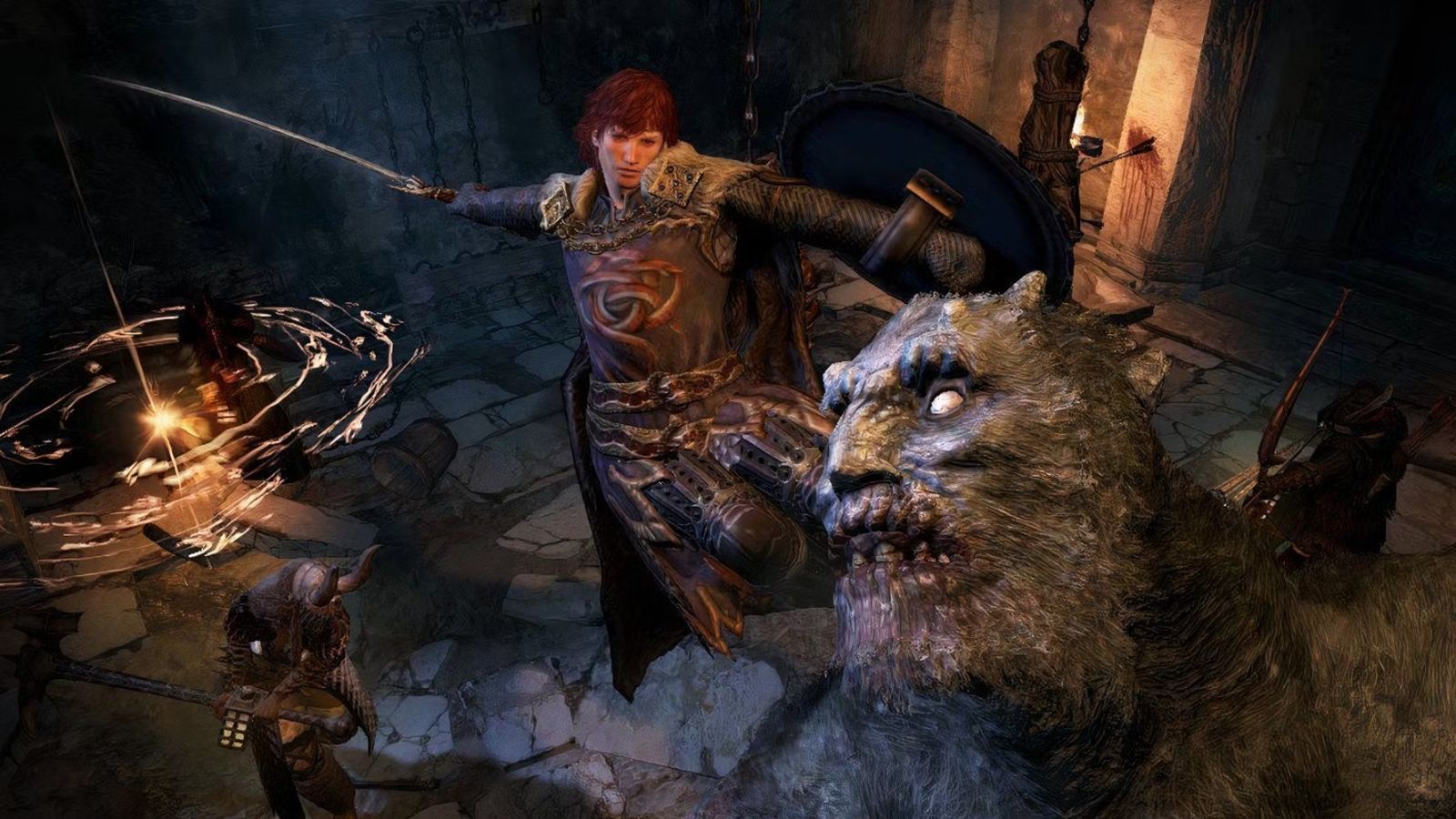
Released just months after the massive hit The Elder Scrolls 5: Skyrim, Dragon’s Dogma faced a tough start, and that was before people even began playing it. This isn’t your typical RPG. For example, you need a special item to travel quickly, and it’s rare, meaning you’ll spend a lot of time walking. Instead of a traditional party, you create a companion called a Pawn who fights and travels with you. And be warned: nighttime is truly dark, and enemies are much more dangerous when the sun goes down.
The combat in Dragon’s Dogma is truly exceptional. It leans heavily into fast-paced action, with every hit feeling powerful. Strong characters can send enemies flying, while ranged fighters need to constantly move to stay safe and find good angles for attack. Magic users unleash spectacular, devastating spells. What really sets Dragon’s Dogma apart is the ability to climb onto large enemies – a frantic, Shadow of the Colossuslike experience. This is incredibly fun when fighting giants like cyclops, but be careful – climb on the wrong creature, like a griffon, and you might end up going for an unexpected flight! Dragon’s Dogma doesn’t follow many traditional RPG formulas, but it does everything it does* incredibly well, which is why it still has such a dedicated fanbase after almost 15 years.
Read More
- All Shadow Armor Locations in Crimson Desert
- Jujutsu Kaisen Season 3 Episode 12 Release Date
- Dark Marksman Armor Locations in Crimson Desert
- Sega Reveals Official Sonic Timeline: From Prehistoric to Modern Era
- How to Beat Antumbra’s Sword (Sanctum of Absolution) in Crimson Desert
- Genshin Impact Dev Teases New Open-World MMO With Realistic Graphics
- Top 5 Militaristic Civs in Civilization 7
- Where to Pack and Sell Trade Goods in Crimson Desert
- Keeping AI Agents on Track: A New Approach to Reliable Action
- Enshrouded: Giant Critter Scales Location
2026-01-23 08:37