Author: Denis Avetisyan
A new deep learning framework leverages the power of multiple expert networks to accurately forecast how long lithium-ion batteries will last.

RUL-QMoE, a Mixture-of-Experts approach with quantile regression, delivers probabilistic Remaining Useful Life predictions for diverse battery chemistries.
Accurate prediction of lithium-ion battery lifespan remains a significant challenge due to the variability introduced by differing cathode materials and operational conditions. This paper introduces RUL-QMoE: Multiple Non-crossing Quantile Mixture-of-Experts for Probabilistic Remaining Useful Life Predictions of Varying Battery Materials, a novel deep learning framework employing a Mixture-of-Experts architecture and quantile regression to provide probabilistic Remaining Useful Life (RUL) predictions across diverse battery chemistries. By integrating specialized expert networks and quantifying prediction uncertainty, RUL-QMoE demonstrably improves upon existing approaches to battery health estimation. Could this material-aware probabilistic framework pave the way for more reliable and cost-effective battery management systems in electric vehicles and energy storage applications?
Predicting Battery Lifespan: A Foundation for Reliable Energy Systems
The ability to accurately predict the Remaining Useful Life (RUL) of Lithium-ion Batteries (LIBs) is paramount to their safe and efficient integration into modern technologies. As LIBs power everything from portable electronics to electric vehicles and grid-scale energy storage, knowing when a battery is nearing the end of its functional lifespan is critical for preventing catastrophic failures and ensuring operational reliability. A precise RUL estimate enables proactive maintenance scheduling, optimizes battery replacement strategies, and minimizes downtime, all of which translate to significant cost savings and enhanced system performance. Furthermore, accurate predictions are vital for maximizing the economic value of these energy storage systems and fostering greater public confidence in their long-term viability. Ultimately, a robust RUL prediction capability isn’t merely a technical advancement – it’s a fundamental requirement for the widespread adoption and sustainable utilization of Lithium-ion battery technology.
Predicting when a lithium-ion battery will reach the end of its functional life-its Remaining Useful Life (RUL)-using traditional physics-based models presents significant challenges. These models, while theoretically sound, rely on complex equations that detail the electrochemical processes occurring within the battery. Solving these equations demands substantial computational resources, making real-time predictions impractical for many applications. Furthermore, accurately capturing the nuanced behavior of a battery requires a vast number of parameters-characteristics like diffusion coefficients, reaction rates, and internal resistance-that are difficult and time-consuming to determine precisely for each individual battery and its specific operating conditions. This extensive parameterization process introduces uncertainty and limits the models’ ability to generalize effectively, ultimately hindering their widespread adoption in real-world scenarios where batteries experience diverse and often unpredictable usage patterns.
Despite their computational advantages, data-driven approaches to predicting battery Remaining Useful Life (RUL) frequently encounter limitations when faced with operational scenarios not represented in the training data. These methods, reliant on patterns gleaned from historical data, can exhibit diminished accuracy when subjected to variations in temperature, charge/discharge rates, or even subtle differences in battery manufacturing. Furthermore, a significant challenge lies in the lack of inherent uncertainty quantification; predictions are often presented as single point estimates without conveying the degree of confidence or potential range of outcomes. This absence of probabilistic forecasting is particularly problematic in safety-critical applications where understanding the risk associated with a given RUL estimate is paramount, as it hinders informed decision-making regarding maintenance scheduling and system operation. Consequently, researchers are actively exploring techniques to enhance the generalization capabilities of data-driven models and incorporate robust uncertainty estimation frameworks.
Introducing a Probabilistic Framework: RUL-QMoE
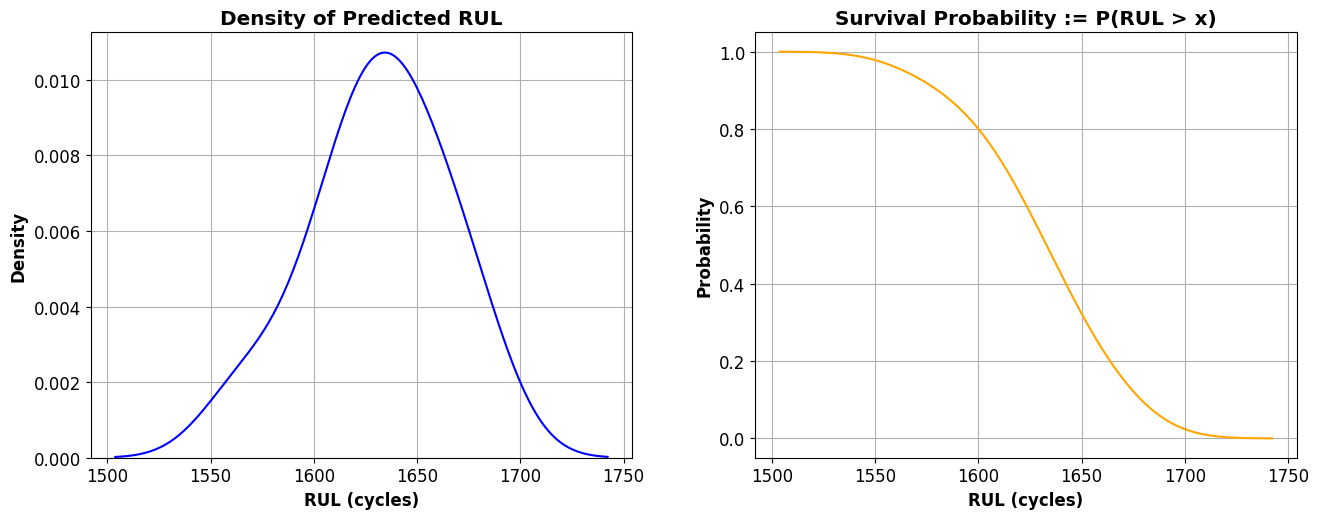
RUL-QMoE is a novel framework for predicting the Remaining Useful Life (RUL) of lithium-ion batteries that combines Mixture-of-Experts (MoE) with Quantile Regression. The MoE architecture partitions the RUL prediction task across multiple expert networks, each potentially specialized to different battery chemistries or operating conditions. Crucially, RUL-QMoE moves beyond single-point RUL estimates by producing a full probabilistic distribution of the RUL via quantile regression, allowing for assessment of prediction uncertainty. This approach generates multiple quantile predictions representing different confidence levels for the RUL, offering a more comprehensive and informative output than traditional deterministic methods.
RUL-QMoE employs a Mixture-of-Experts (MoE) architecture wherein the prediction task is distributed across multiple specialized neural networks, termed ‘expert networks’. These experts are specifically trained on data representing distinct battery chemistries – such as Lithium Iron Phosphate (LiFePO4), Nickel Manganese Cobalt (NMC), or Lithium-ion Polymer (LiPo) – allowing each expert to develop a focused understanding of the unique degradation patterns associated with its assigned chemistry. This partitioning of the learning process contrasts with single-model approaches, which attempt to learn from all chemistries simultaneously and may suffer from reduced accuracy due to the inherent variability between them. By assigning specialized networks to each chemistry, RUL-QMoE aims to improve prediction accuracy and generalization performance across diverse battery types.
RUL-QMoE employs quantile regression within its Mixture-of-Experts framework to generate a complete probabilistic distribution of Remaining Useful Life (RUL). Unlike traditional regression methods that predict a single point estimate, quantile regression predicts multiple quantiles of the RUL distribution, representing different confidence levels. These quantiles, ranging from the lower bounds representing pessimistic estimates to upper bounds indicating optimistic projections, fully characterize the uncertainty associated with the RUL prediction. This complete distribution facilitates more nuanced risk assessment and enables informed decision-making by allowing users to select RUL estimates aligned with their specific risk tolerance and operational requirements. For example, a conservative strategy might utilize the 5th percentile quantile for maintenance scheduling, while a more aggressive strategy could employ the 95th percentile.
The RUL-QMoE framework incorporates a Non-Crossing Constraint during quantile regression to enforce a monotonically increasing relationship between predicted quantiles. This constraint ensures that higher quantiles consistently predict longer remaining useful life (RUL) than lower quantiles, reflecting the physical behavior of battery degradation. Without this constraint, quantile predictions could cross, resulting in illogical outputs – for example, predicting a 90th percentile RUL shorter than the 50th percentile. By enforcing monotonicity, the Non-Crossing Constraint improves the reliability and interpretability of the probabilistic RUL prediction, providing a more realistic and physically plausible representation of uncertainty.

Rigorous Validation Across Diverse Battery Datasets
RUL-QMoE was subjected to rigorous validation using seven publicly available battery datasets: CALCE, MATR, HUST, HNEI, RWTH, SNL, and UR-PUR. This comprehensive evaluation strategy ensured the model’s performance was assessed across diverse experimental conditions, battery chemistries, and operational profiles. Utilizing these established datasets allowed for direct comparison against existing research and provided a standardized benchmark for evaluating the framework’s predictive capabilities and generalizability. The datasets encompass a range of battery types and degradation patterns, contributing to a robust assessment of RUL-QMoE’s adaptability to real-world scenarios.
Evaluation of the RUL-QMoE framework demonstrates consistent performance gains over traditional data-driven remaining useful life (RUL) prediction models. Comparative analysis across multiple datasets indicates that RUL-QMoE achieves competitive results when benchmarked against physics-based methods. Specifically, the framework yielded improvements of up to 41.8% in Mean Absolute Percentage Error (MAPE) relative to prior state-of-the-art approaches, indicating a substantial reduction in prediction error and increased accuracy in estimating the lifespan of battery systems.
The RUL-QMoE framework demonstrates predictive capability across multiple lithium-ion battery chemistries, including Lithium Cobalt Oxide (LCO), Nickel Manganese Cobalt Oxide (NMC), Nickel Cobalt Aluminum Oxide (NCA), and Lithium Iron Phosphate (LFP). This broad applicability indicates the framework’s generalizability beyond specific battery types. Quantitative results on the HUST dataset show a Root Mean Squared Error (RMSE) of 60 cycles when predicting Remaining Useful Life (RUL), validating the framework’s performance on a publicly available benchmark.
RUL-QMoE provides probabilistic remaining useful life (RUL) predictions, enabling a quantified understanding of prediction uncertainty and supporting the development of risk-informed battery management systems. Performance metrics demonstrate a high degree of accuracy across multiple datasets, with an R2 score of 98.34% achieved when evaluated across all datasets used in testing. Specifically, on the MIX dataset, the model yielded a root mean squared error (RMSE) of 100 cycles, while for battery datasets comprising mixed NMC-LCO chemistries, the mean absolute error (MAE) was calculated to be 10 cycles.

Implications for Battery Management and Future Research Directions
The advent of Remaining Useful Life (RUL) prediction via the Quantile Mixture of Experts (QMoE) framework holds considerable promise across a spectrum of energy-dependent technologies. In electric vehicles, accurate RUL estimations can optimize charging schedules and prevent unexpected battery failures, thereby enhancing range confidence and reducing range anxiety for drivers. Similarly, for grid-scale energy storage systems-critical for integrating renewable energy sources-QMoE enables proactive maintenance planning, minimizing downtime and maximizing the return on investment. Beyond these large-scale applications, the framework’s precision extends to portable electronics, allowing manufacturers to provide more reliable performance guarantees and extend the lifespan of devices ranging from smartphones to laptops, ultimately reducing electronic waste and fostering a more sustainable consumer landscape.
Precise estimations of remaining useful life (RUL), coupled with probabilistic forecasting, fundamentally reshape battery operation through optimized charging and discharging protocols. By anticipating future performance capabilities, systems can intelligently tailor voltage and current limits, avoiding conditions that accelerate degradation – such as prolonged operation at extreme states of charge or high current loads. This proactive approach extends battery lifespan by minimizing stress and maximizing capacity retention over time. Furthermore, probabilistic RUL predictions allow for risk-aware energy management; a system might, for example, opt for a slightly conservative charging strategy if the predicted probability of imminent failure is elevated, prioritizing reliability over maximizing immediate output. The result is a shift from reactive maintenance – addressing issues as they arise – to preventative strategies that preserve battery health and ultimately reduce lifecycle costs.
The RUL-QMoE framework distinguishes itself through a deliberately modular architecture, engineered to minimize disruption when implemented within current battery technologies. This design prioritizes compatibility with existing Battery Management Systems (BMS) by utilizing standardized communication protocols and data interfaces. Rather than requiring a complete overhaul of existing infrastructure, the framework functions as an add-on layer, processing data streams from the BMS and augmenting its capabilities with refined, probabilistic remaining useful life (RUL) predictions. This approach significantly lowers the barrier to entry for adoption, allowing manufacturers and integrators to leverage the benefits of advanced RUL prediction without substantial re-engineering costs or delays, ultimately accelerating the deployment of more efficient and reliable battery-powered systems across diverse applications.
Continued development of the Remaining Useful Life – Quantile Mixture of Experts (RUL-QMoE) framework prioritizes a more nuanced understanding of battery degradation. Future studies aim to incorporate complex chemical and physical processes-such as lithium plating and electrolyte decomposition-that currently limit prediction accuracy. Crucially, researchers intend to move beyond reliance on static datasets by integrating online learning capabilities. This will enable the model to adapt continuously to individual battery characteristics and changing operational conditions, providing increasingly precise and personalized RUL estimations throughout a battery’s lifecycle and ultimately enhancing the performance and longevity of energy storage systems.

The presented RUL-QMoE framework embodies a systemic approach to a complex problem-battery degradation. It isn’t merely about predicting a single point of failure, but rather understanding the distribution of potential lifespans, a crucial nuance often overlooked. This aligns with John Dewey’s assertion that “Education is not preparation for life; education is life itself.” Similarly, accurate Remaining Useful Life prediction isn’t a prelude to battery management, it is integral to it. The architecture’s use of quantile regression within a Mixture-of-Experts model allows for a more holistic understanding of uncertainty, recognizing that a single prediction fails to capture the full scope of potential outcomes. Structure, in this case the model’s composition, demonstrably dictates the behavior-the precision and reliability-of the predictions.
Future Pathways
The introduction of RUL-QMoE represents a logical, if incremental, step toward more robust battery life prediction. The framework’s strength lies in acknowledging the inherent heterogeneity of degradation processes – a principle as old as understanding any complex system. However, the current architecture, while offering probabilistic forecasts, still treats each battery chemistry as a largely independent entity. A true advancement necessitates moving beyond this compartmentalization; a city does not function by optimizing each block in isolation.
Future work should explore methods for transferring knowledge between chemistries. The underlying physics of degradation, while manifesting differently in various materials, share fundamental principles. Can a MoE structure be designed to dynamically route information, allowing insights gained from one battery type to inform predictions for another? The challenge isn’t simply improving accuracy, but building a system that learns the structure of battery failure, not just memorizing its symptoms.
Ultimately, the field must confront the limitations of purely data-driven approaches. While RUL-QMoE elegantly addresses probabilistic forecasting, it remains tethered to the quality and scope of the training data. A more sustainable solution will integrate first-principles models-the established “infrastructure”-with the adaptability of deep learning. Only then can the field move beyond prediction toward true understanding, and design batteries that proactively manage their own decline.
Original article: https://arxiv.org/pdf/2512.23725.pdf
Contact the author: https://www.linkedin.com/in/avetisyan/
See also:
- All Shadow Armor Locations in Crimson Desert
- How to Get the Sunset Reed Armor Set and Hollow Visage Sword in Crimson Desert
- Best Bows in Crimson Desert
- All Golden Greed Armor Locations in Crimson Desert
- Wings of Iron Walkthrough in Crimson Desert
- How to Craft the Elegant Carmine Armor in Crimson Desert
- All Helfryn Armor Locations in Crimson Desert
- How To Beat Ator Archon of Antumbra In Crimson Desert
- Keeping Large AI Models Connected Through Network Chaos
- Sakuga: The Hidden Art Driving Anime’s Stunning Visual Revolution!
2026-01-03 04:59