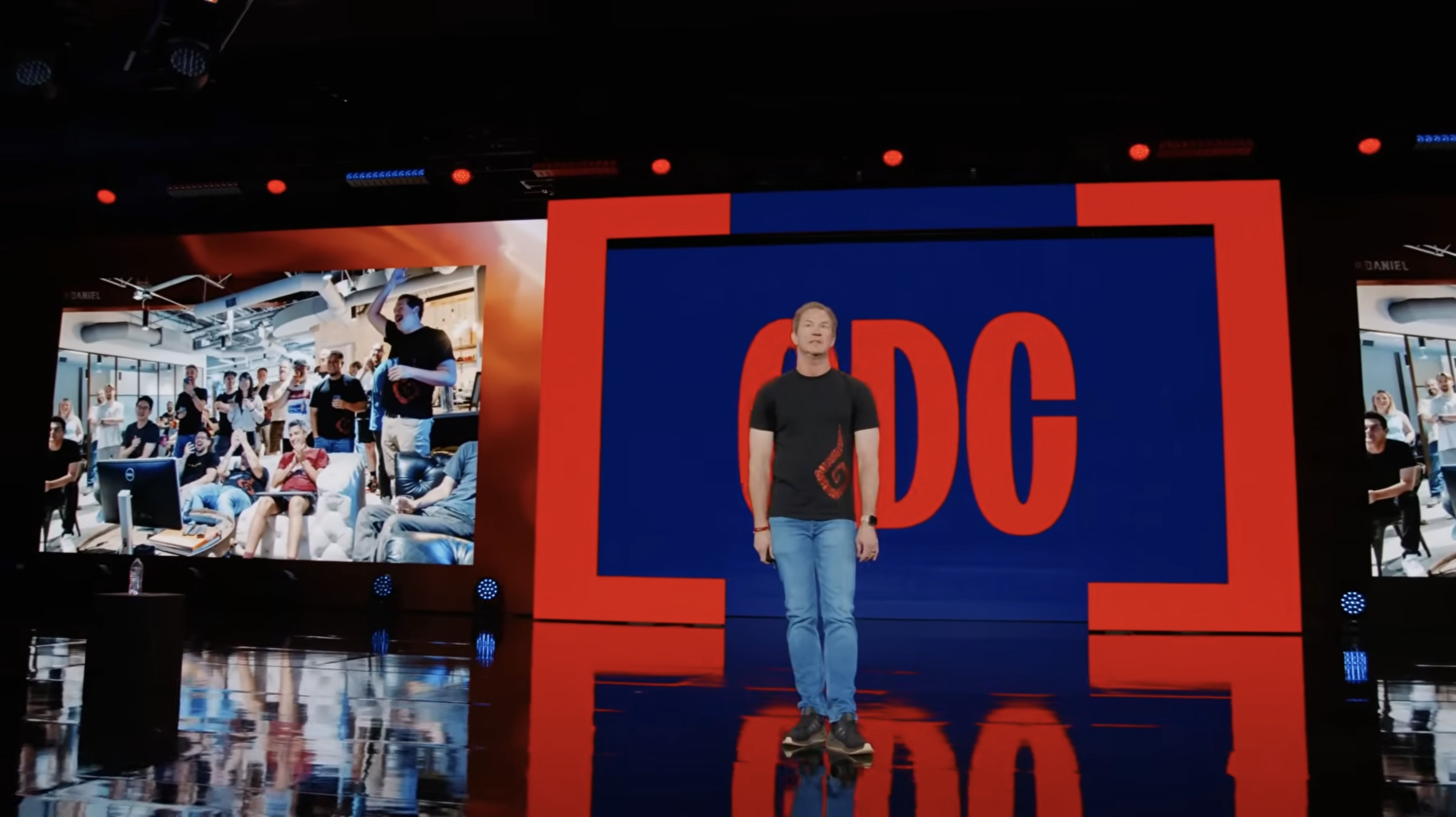
On March 12, 2026, Rob Pardo gave a keynote speech at the Game Developers Conference in San Francisco. Titled “An Odyssey in Building Games That Last,” his talk covered his career, including his time at Blizzard, his work with Bonfire Studios on the game Arkheron, and ended with a message to industry leaders about the impact of layoffs.
The session started at 9:00 a.m. Pacific Time and was broadcast live on the official GDC Festival of Gaming Twitch channel as part of GDC, which ran from March 9th to 13th, 2026.
Pardo started his speech by introducing himself and sharing why it was especially meaningful for him to be back at the conference.
Good morning, everyone at GDC. I know it’s likely been a long night for many of you. My name is Rob Pardo, and I’m the CEO of Bonfire Studios. It’s fantastic to be back speaking at GDC. This event has always felt special to me because it’s a place where game developers freely share their knowledge and help each other improve.
He explained that he wanted to share lessons learned from his work on games that remained popular with players for a long time after they were first launched.
Today, I want to share some valuable lessons I’ve learned from years of experience creating games that stand the test of time.
Pardo has been a part of the gaming world for decades. He started as a game tester at Interplay Productions in 1994, but he truly considers his development career to have begun when he joined Blizzard Entertainment in 1997 to work on the first StarCraft game. He then held several creative leadership positions at Blizzard over the next seventeen years before leaving in 2014.
Throughout his career, he worked on a variety of game types – from fast-paced strategy games and massive online role-playing games to competitive battle arenas. He started as a designer and eventually became an executive producer, leading design teams and overseeing projects. He contributed to iconic titles like StarCraft: Brood War, Warcraft III, StarCraft II, World of Warcraft, and Diablo, ultimately becoming Chief Creative Officer at Blizzard. His significant impact on the gaming industry earned him a spot on Time magazine’s list of the 100 most influential people in 2006.
In 2016, Pardo helped start Bonfire Studios and is now its co-founder and CEO. The studio is working on Arkheron, a competitive team-based PvP game. He announced during a presentation that they recently tested the game and are aiming to release it later in 2024.
My team at Bonfire and I are developing a new game called Arcuron. We recently finished a playtest and are aiming to release it later this year. It’s a really exciting, but also challenging, process. To be honest, it’s been a great learning experience.
Pardo explained that creating Arkheron was a lengthy and challenging process, much like a difficult journey. He also noted that the project’s completion aligns with an important achievement for the studio.
This year marks the tenth anniversary of Bonfire. Building Arcuron has been quite a journey – full of challenging adventures, tough decisions, strong teamwork, and times when its success wasn’t guaranteed.
Pardo shared that he started his career well before working on Bonfire, the game the studio has been developing for years.
“I have been making games for a long time now.”
I was listening to this developer talk, and it really hit home. He was talking about all his past projects and how, even with the games that did succeed, it wasn’t a smooth ride. He explained that we players only see the finished product, but there’s a ton of stuff that happens behind the scenes – failed experiments, things that didn’t work out, and a lot of changing plans. It’s good to remember that even ‘perfect’ games weren’t built in a straight line!
The best games are easy to pick up and play. All the challenges, lessons learned, and guiding ideas that the development team worked through to create the final version are usually hidden from the player.
He noted that almost every project he’s been involved with required the team to step back and reconsider their approach at some point.
I’ve faced challenges with every project I’ve been involved in. We’ve often had to change direction, hit roadblocks, and overcome moments where things just weren’t clicking. It often felt like we were rebuilding the game from scratch multiple times before we finally found the right approach.
I was really fascinated to hear about the early days of Warcraft III – it’s amazing to think back to when Blizzard first announced it in 1999! Apparently, the original idea for the game was very different from what we eventually got. The developers were trying to do something totally new, moving away from the standard real-time strategy formula of StarCraft. They were aiming for a blend of role-playing and strategy, which they called ‘role-playing strategy’ – a really ambitious concept!
Initially, the team prioritized developing heroes and downplayed the gathering of resources. However, after considerable work, they found this wasn’t the right path and decided to shift their focus.
I remember when they were first figuring out Warcraft III, they tried a bunch of different things, but ultimately scrapped the initial plan. Still, it wasn’t a total loss! A lot of the cool ideas they had early on – things like powerful heroes you could develop, gaining levels, and collecting awesome items – actually made Warcraft III what it was. Those things really stuck around and became central to the whole experience.
Pardo shared that challenges and tough times often pave the way for valuable insights and breakthroughs.
Setbacks, challenges, and changes in direction are all normal parts of finding something new and innovative.
He also talked about a game project that was never released, but still impacted future games at Blizzard. While at the company, he oversaw the development of a major project called Titan. Pardo explained that the team tried to do a lot at once – create a completely new game world, develop innovative gameplay, and establish a new franchise – which proved challenging.
He ultimately decided to stop the project. However, a small team continued to explore some of the technology and design concepts that had been developed. This continued work eventually led to the creation of Overwatch.
During the keynote, Pardo emphasized how crucial it is for game developers to truly connect with the games they’re working on. He explained that there’s often a point in development where the team starts focusing more on playing the game than actually making it.
He said that when that happens, developers sometimes have to remind the team to return to work.
During game development, there’s a phase where the team gets so into playing the game they’re creating that they actually enjoy playing it more than building it.
Pardo notes that when players start finding a game enjoyable even though it’s not fully complete, it’s a sign the game is truly captivating.
Creating Arkheron was similar to other projects I’ve worked on. At Bonfire, we started by building the team before deciding what game to make. Everyone shared lots of initial ideas, which we called “seeds.” We ended up with 35 different concepts, from a vampire survival game to a zombie-defense idea inspired by the movie Gladiator, where Maximus comes back as a farmer protecting his farm.
The team started with several ideas, but ultimately chose one they called “Dungeon Royale.” This initial concept went through changes, first becoming a prototype named “Cult,” and finally evolving into the game we know as Arkheron.
In the latest version of the game, fifteen teams of three players compete to reach the top of a mysterious tower. Each team has to conquer each floor and claim a beacon, typically by battling other players. This continues until only two teams remain, and they then face off in a final 3-versus-3 match to determine the winner.
In this game, you play as Echoes – spirits connected to a mysterious tower because they have unresolved issues. The weapons and artifacts within the tower are linked to the memories of powerful beings called Eternals. If you collect all of an Eternal’s items, you can briefly become that hero yourself.
Pardo shared that the team worked on the game’s basic elements for years, experimenting with different ideas before settling on the final design. This included trying out various camera angles, fighting styles, and ways to connect players online.
Towards the close of his presentation, Pardo discussed the current challenges in the gaming industry. He highlighted rising development expenses, the intense competition for players’ time with so many games available, and the recent wave of layoffs affecting game developers. He then directly addressed the business leaders and executives who were present.
Making a game that remains popular for a long time is incredibly challenging. But if you succeed, the payoff can be huge.
He explained that reaching that height of success generally happens when a development team successfully tackles tough problems as a unit.
From what I’ve seen, creating a successful game often means you’ve also assembled a fantastic development team. In fact, I believe that team is even more valuable than the game they create.
He concluded his speech by addressing businesses and offering advice on how they should value the people who make successful projects happen.
Honestly, the team behind this game means everything. We need to really support them and let them keep doing what they’re doing – taking care of us players. Because let’s be real, what made this game awesome from the start wasn’t just the game itself, it was the incredible people who created it.
Read More
- All Shadow Armor Locations in Crimson Desert
- How to Get the Sunset Reed Armor Set and Hollow Visage Sword in Crimson Desert
- All Skyblazer Armor Locations in Crimson Desert
- Best Bows in Crimson Desert
- Marni Laser Helm Location & Upgrade in Crimson Desert
- All Golden Greed Armor Locations in Crimson Desert
- All Helfryn Armor Locations in Crimson Desert
- Wings of Iron Walkthrough in Crimson Desert
- How to Craft the Elegant Carmine Armor in Crimson Desert
- Keeping Large AI Models Connected Through Network Chaos
2026-03-14 18:18