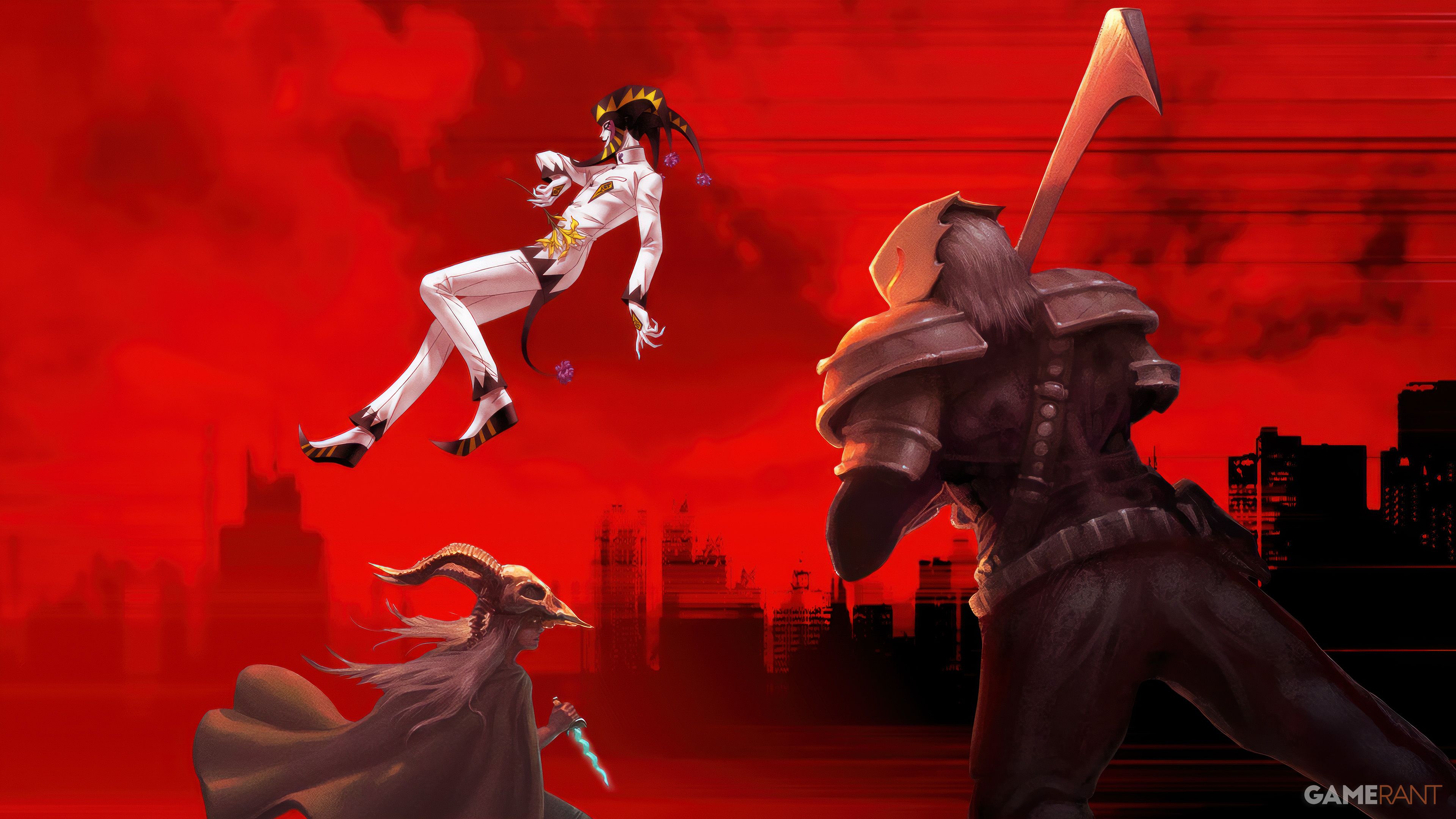
I don’t usually enjoy gacha games, but a new one called Reverse: 1999 has really impressed me. Developed by Bluepoch, it’s a live-service game available on Steam, iOS, and Android. What’s remarkable is how it blends elements of games like Persona and Slay the Spire into its gameplay, visuals, and story – and it does so exceptionally well, exceeding expectations in all areas.
Reverse: 1999 is a fascinating free-to-play RPG on Steam that blends time travel with a compelling story about how society changes throughout the 20th century. It’s a turn-based game where you control a group of characters, and the battle system is similar to the popular deck-building game Slay the Spire. But it’s more than just a strategy game – it also features a rich narrative with unexpected twists. If you’re looking for a new free game on Steam and want something different from popular titles like Genshin Impact or Honkai Star Rail, Reverse: 1999 is definitely worth checking out.
What Is Reverse: 1999 About?
Like games such as Slay the Spire and Persona, Reverse: 1999 also draws inspiration from visual novels like Steins;Gate and The House in Fata Morgana. It tells a large-scale, imaginative science-fantasy story with a wide range of memorable characters. But what’s the story actually about, and what does the mysterious title Reverse: 1999 mean?
At the end of 1999, a strange event called the Storm disrupted the normal flow of time. The most noticeable effect of the Storm is something called Reversal, where people and objects are unexpectedly sent to different points in time—either the past or the future. This creates a story that jumps between the early 1900s and the year 2000, exploring the unique challenges and ideas of each era.
The in-game event ‘The Storm,’ which began in 1999, may have been influenced by the real-life Y2K scare of the late 1990s, although the game doesn’t directly point this out.
Before the arrival of the Storm, people will experience a condition called Storm Syndrome, causing hallucinations and illogical behavior. What’s unusual is that those affected tend to act in ways that reflect the main concerns of their time. For example, people with Storm Syndrome in Europe during the 1940s might become fixated on war, while those in the 1980s could become overly focused on wealth and possessions.
The story unfolds in a reimagined past where humans clash with the Arcanists – beings who appear human but wield incredible powers, much like wizards. This conflict centers on Manus Vindictae, a group of Arcanists determined to use a powerful force called the Storm to create a world exclusively for purebred Arcanists. It falls to Vertin the Timekeeper and her allies to fight back against Manus Vindictae, traveling through different eras to save humanity.
Reverse: 1999’s Tactical Deck-Based Combat Explained
Reverse: 1999 combines an engaging story told through beautiful cutscenes and visual novel-style writing with card-based, turn-based gameplay. It looks and feels similar to games like Slay the Spire and Griftlands, sharing many of the same mechanics. However, instead of building a deck, Reverse: 1999 focuses more on strategically assembling a powerful team of characters, similar to a classic Japanese role-playing game (JRPG).
Battles can include up to four Arcanists, each with a personalized deck of cards. These cards are dealt randomly at the beginning of the battle and after each turn. Cards come in different strengths – tiers 1, 2, and 3 – and you can combine cards of the same tier to create even stronger effects. For instance, consider the Commandment V card.
- Tier 1 Commandment V: deals 220% Reality damage to a single target
- Tier 2 Commandment V: deals 230% Reality damage to a single target, and inflicts the Disarm status effect for one round
- Tier 3 Commandment V: deals 350% Reality damage to a single target, and inflicts the Disarm status effect for two rounds
Like Slay the Spire, Reverse: 1999 lets you improve your cards, but this happens outside of combat. Reverse: 1999 adds a unique strategic element by allowing temporary card upgrades during battles. Players must choose whether to play aggressively or focus on merging and strengthening their cards. As you use or merge cards, characters gain Moxie. When Moxie is full, they can unleash a powerful, character-specific Ultimate ability.
Reverse: 1999 offers a unique take on character progression. Beyond simply leveling up characters, the game features a system called Resonance. This system lets you improve stats by strategically placing Tetris-like blocks on a grid – a fun puzzle that adds a new layer to building your characters. Resonance isn’t just a gimmick; it adds depth and flexibility to the game’s RPG build-crafting, similar to how it works in games like Nier: Automata and Dredge.
Reverse: 1999 Has an Undeniable X-Factor
This is just a quick look at Reverse: 1999. There are plenty of other fun things to discover, including a resource management system that continues as you play and regular in-game events. What really stands out, though, is the game’s unique style and presentation. Like Persona and other games from Atlus, such as Metaphor: Refantazio, Reverse: 1999 pays close attention to detail and adds a lot of visual flair. For example, the menus, mission screens, and stat overviews are all beautifully designed – something that’s often a key part of Atlus games, even if it’s not always noticed.
Beyond these smaller details, the game’s overall design really shines. While the cutscenes aren’t as technically impressive as those in major AAA titles, they’re still visually captivating and work well thanks to a unique blend of art styles, detailed backgrounds, and memorable character designs. These artistic choices make Reverse: 1999 consistently pleasing to look at and experience, even within the simple framework of a visual novel.
Read More
- All Shadow Armor Locations in Crimson Desert
- How to Get the Sunset Reed Armor Set and Hollow Visage Sword in Crimson Desert
- Best Bows in Crimson Desert
- All Golden Greed Armor Locations in Crimson Desert
- Wings of Iron Walkthrough in Crimson Desert
- How to Craft the Elegant Carmine Armor in Crimson Desert
- All Helfryn Armor Locations in Crimson Desert
- All Skyblazer Armor Locations in Crimson Desert
- How To Beat Ator Archon of Antumbra In Crimson Desert
- Keeping Large AI Models Connected Through Network Chaos
2026-01-08 17:05