I’ve been playing open-world games for a long time, and while they’re super popular, they don’t always get it right. I’m a pretty tough critic when it comes to these kinds of games. When an open world really works, though, it’s amazing. Some of my all-time favorites are No Man’s Sky, The Witcher 3, Red Dead Redemption 2, and Kingdom Come: Deliverance. I’ve noticed a trend in the last decade where the best open-world games really let you just explore, instead of giving you a million things to check off a list – something a lot of Ubisoft games struggle with. It’s not that those games are bad, exactly, they just feel a bit…samey. But one game consistently shows everyone how it’s done: Outer Wilds. It’s a perfect example of what truly free exploration should be.
Outer Wilds, created by Mobius Digital, tells a surprisingly deep story with a simple setup. You’re free to explore a solar system, but there’s a catch: everything resets after 22 minutes, sending you back to the beginning. You play as a space explorer trying to figure out why this time loop is happening. The game relies on short, focused explorations and is considered one of the most creative and effective uses of an open world in video games.
In Outer Wilds, Every Single Minute Counts
Twenty-two minutes might not seem like much time to uncover new clues in Outer Wilds, but that’s part of what makes the game so engaging. The story unfolds naturally as you explore, leading you to surprising planets and locations. You’ll discover alien buildings, secret caves, dangerous storms, and hidden pathways – all of which you need to appreciate before the time loop resets. Outer Wilds doesn’t offer much guidance, so players who prefer clear objectives might find the open-ended exploration a little strange at first. However, it’s a truly rewarding world to dive into.
There is No Right or Wrong Path in Outer Wilds
In Outer Wilds, there’s no wrong way to play – the best approach is simply to follow your curiosity. It’s liberating to let the game guide you, but it can be challenging to stop overthinking and just experience the world. This creates a truly authentic sense of exploration, without relying on waypoints or checklists. Just like in real life, you’re free to wander and discover hidden secrets. The game throws puzzles at you unexpectedly, often demanding quick thinking, which is surprisingly intense for such a calm experience. This immersion really puts you in the role of the character as the mystery of the time loop deepens with every new discovery.
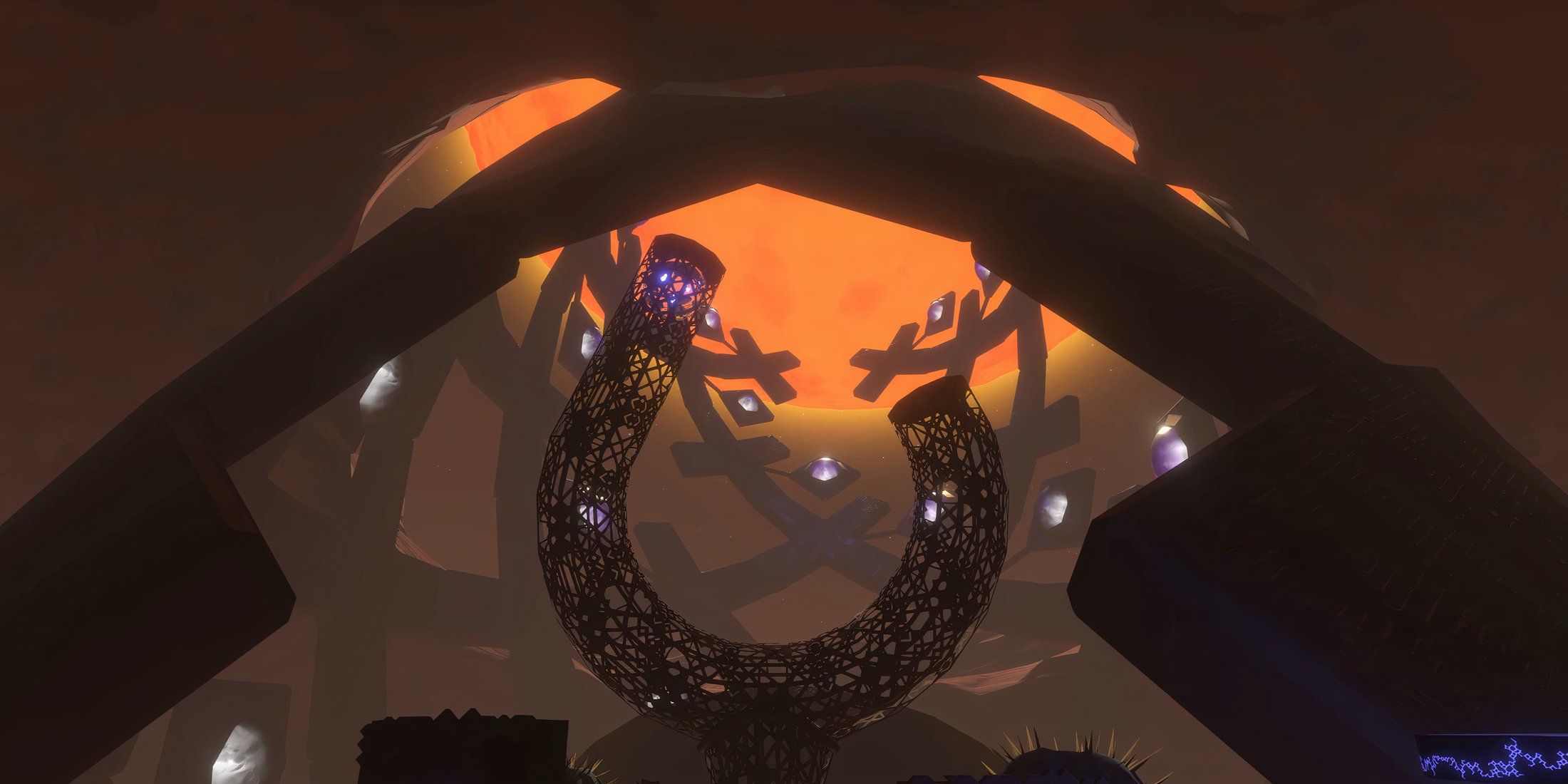 Image via Annapurna Interactive
 Outer Wilds’ Open World Brings an Awe-Inspiring Mystery to Life
One of the main problems with many Ubisoft games is that they don’t feel truly immersive. While games like Ghost of Tsushima also use a system of objectives, they integrate those objectives more seamlessly into the world and story. Ghost of Tsushima, for instance, uses natural elements like the wind to guide players. In contrast, Ubisoft games often rely on on-screen markers and a user interface that pulls you out of the experience. It’s difficult to feel truly lost in the game world when you’re constantly following markers. Assassin’s Creed Shadows showed some improvement, but Skull and Bones went too far with this approach.
In Outer Wilds, you learn by exploring, and there’s no telling where your journey will lead. This makes the game world feel incredibly real and immersive. You uncover mysteries alongside the main character, rather than being told what to do next. It’s rare for open-world games to succeed without maps, but Outer Wilds uses its time loop mechanic to make the feeling of not knowing where to go surprisingly relaxing and enjoyable.
I absolutely love the Signalscope in Outer Wilds. It’s this awesome tool that works like a radio and a telescope all in one. As you explore, you can use it to pick up signals from other travelers around the solar system – usually their music. And music is super important in this game! The Signalscope lets you collect all those little musical snippets and piece them together into a full song. It’s a really cool way to connect the different stories and locations.
Once Outer Wilds’ Puzzle is Pieced Together, Players Get to Experience a Rewarding and Thought-Provoking End-Game
This article discusses Outer Wilds without revealing any key plot points. The game features a unique exploration mechanic tied to a time limit, culminating in a truly amazing ending. It can feel confusing at first to piece everything together, but the story ultimately delivers a thought-provoking and unforgettable conclusion that will leave you pondering big questions. Even with hints, the ending would be powerful, but the fact that you have to discover the answers yourself is what makes Outer Wilds so much more satisfying than most open-world games.
Many open-world puzzle games are enjoyable, but Outer Wilds stands out by using exploration to deepen its emotional story. The game’s narrative truly resonates with players, and wouldn’t be as powerful without the freedom to discover its secrets. Unlike games focused on completing tasks, Outer Wilds makes exploration genuinely rewarding. Even though the time loop limits each exploration session to 22 minutes, it ensures that every moment feels important and impactful.
While not everyone enjoys total freedom in games, those who love exploring and uncovering secrets will find Outer Wilds to be a truly open-world experience. It doesn’t focus on tasks or checklists, but instead lets you freely investigate a captivating mystery.
Read More
- All Skyblazer Armor Locations in Crimson Desert
- All Shadow Armor Locations in Crimson Desert
- How to Get the Sunset Reed Armor Set and Hollow Visage Sword in Crimson Desert
- Marni Laser Helm Location & Upgrade in Crimson Desert
- Best Bows in Crimson Desert
- All Helfryn Armor Locations in Crimson Desert
- All Golden Greed Armor Locations in Crimson Desert
- How to Craft the Elegant Carmine Armor in Crimson Desert
- Keeping Large AI Models Connected Through Network Chaos
- One Piece Chapter 1179 Preview: The Real Imu Arrives in Elbaf
2026-02-02 18:37