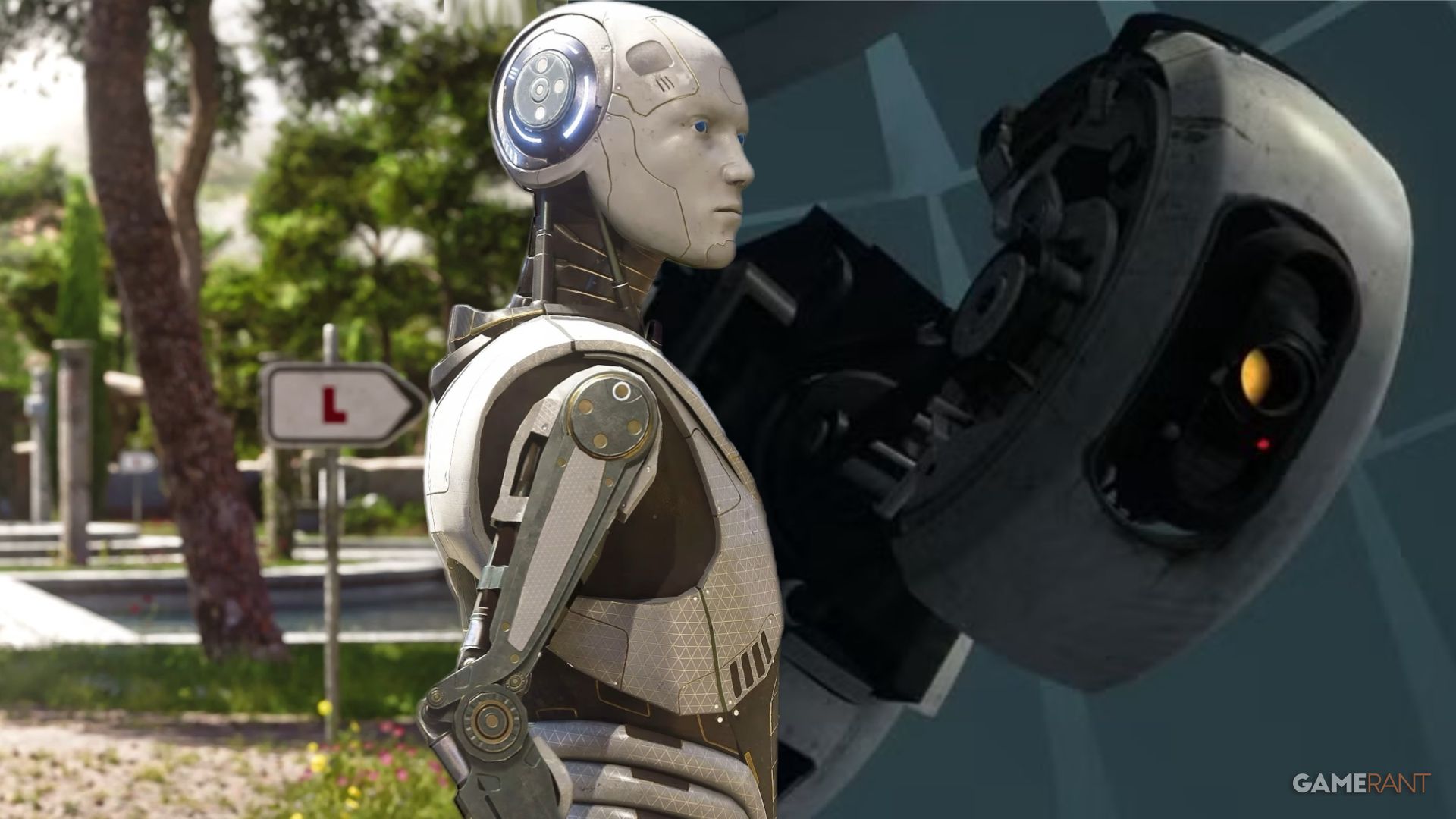
Even after almost 20 years, Portal remains one of the best puzzle platformers ever made. It was a game-changer when it first came out, and it’s still incredibly enjoyable to play today. Portal’s innovative puzzles and unique way of exploring its world have had a huge impact on other games. While truly original games like Portal are rare, titles such as Antichamber, The Turing Test, Superliminal, and The Stanley Parable all show its influence.
While many games are excellent, The Talos Principle best builds upon the puzzle ideas of Portal and creates something truly unique. It’s clear Portal inspired the environmental puzzles in The Talos Principle, but the game is more than just its puzzles. It’s a deeply philosophical story that makes you think about what it means to be human.
The Talos Principle Asks Players to Question Humanity and Consciousness Itself
I really enjoy puzzle platformer games, but what initially attracted me to The Talos Principle was its thought-provoking philosophical themes and allusions to religion. I played it a few years after it came out in 2014, when I was in college studying Philosophy and Religious Studies. It felt like the ideal game for me at the time, and it didn’t disappoint. Even now, The Talos Principle stands out as a truly unique game that I’m glad I discovered. It’s not only one of the best puzzle games available, but it can also offer a new perspective on life.

Critical Mass
Pick games to balance the averages.
Scales
Results
A Thought Exercise That Evolves Into Deep Existentialism
In The Talos Principle, you begin as a nameless robot who awakens in a beautiful, Eden-like world. A mysterious voice named Elohim guides you, having created numerous worlds for you to explore. There’s just one rule: stay away from the large tower in the center. The game quickly draws parallels to the biblical story of Genesis, with a powerful creator, a new being left to explore, and a clearly forbidden place. While many games touch on religious themes, The Talos Principle offers a particularly complex and thoughtful examination.
Every God Needs Its Satan
In The Talos Principle, the robot you control isn’t just guided by Elohim. You can also interact with the Milton Library Assistant, a computer program that essentially plays the role of a devil to Elohim’s god. Milton constantly encourages the robot to doubt Elohim’s instructions. Throughout the game, The Talos Principle explores complex themes like free will, the possibility of a soul, and what it means to be human. The core choice—whether to obey authority or forge your own way—determines which ending you’ll receive.
Even Without Its Heavy Philosophical Questions, The Talos Principle’s Puzzles Are In a League of Their Own
Not everyone enjoys pondering big philosophical or religious questions, and that’s okay. Luckily, The Talos Principle offers some truly excellent puzzles. They’re not only difficult, but also creative, encouraging players to try different things, and feel really satisfying when solved. While the game shares similarities with Portal in this way, it still feels original and avoids simply copying its ideas.
Initially, the puzzles in The Talos Principle might remind you of Portal, particularly with their use of lasers. However, the game quickly establishes its own distinct style. It’s a challenging feat, but The Talos Principle succeeds in creating a unique experience, avoiding feeling like a simple copy. The base game features over 120 puzzles, and players are free to solve them in any order they choose. This open-ended approach reflects the game’s central theme of free will, allowing you to decide which puzzle to tackle next.
The puzzle game The Talos Principle has a challenging expansion called Road to Gehenna. Its sequel, The Talos Principle 2, came out in 2023 and includes its own DLC, Road to Elysium.
The Talos Principle is a Brilliant Reminder That Video Games Are a Great Platform to Tell Deep Stories
When The Talos Principle came out, it looked like a typical, engaging puzzle game. But the creators at Croteam used the genre as a way to explore profound questions about life. It’s an unusual approach to topics like belief and free will, and that’s part of what makes the game so appealing. Increasingly, video games are delivering some of the most insightful storytelling available. These games demonstrate that video games aren’t simply entertainment—they’re a powerful art form capable of exploring the intricacies of the human experience.
Many popular games, like Red Dead Redemption 2, The Last of Us, and God of War, explore serious and complex topics. What sets The Talos Principle apart is that it tackles big, existential questions in a way that’s actually enjoyable and captivating. Even though I’m interested in philosophy, even I sometimes struggle with complex ideas. It’s difficult to combine challenging themes with fun gameplay, but The Talos Principle does it perfectly. The puzzles are challenging and require thought, but they never become frustrating. Instead of feeling like you’re being lectured, The Talos Principle makes you actively participate in exploring these questions. While Portal is a fantastic and innovative puzzle game, players looking for something more difficult and focused on logic might find The Talos Principle a better fit. Portal is fast-paced and exciting, but The Talos Principle encourages players to slow down, think deeply about the puzzles, and consider what it means to be human.
Read More
- All Shadow Armor Locations in Crimson Desert
- All Skyblazer Armor Locations in Crimson Desert
- How to Get the Sunset Reed Armor Set and Hollow Visage Sword in Crimson Desert
- Best Bows in Crimson Desert
- Marni Laser Helm Location & Upgrade in Crimson Desert
- All Helfryn Armor Locations in Crimson Desert
- All Golden Greed Armor Locations in Crimson Desert
- Wings of Iron Walkthrough in Crimson Desert
- How to Craft the Elegant Carmine Armor in Crimson Desert
- Keeping Large AI Models Connected Through Network Chaos
2026-02-20 14:05