Occasionally, a video game is a standout success, offering a truly memorable experience. Other games become popular series, often starting as trilogies. Many of these trilogies maintain, or even improve, their quality across all aspects – from how the game plays to the stories they tell.
The first Mass Effect trilogy is a good example of a series with a controversial ending, but is otherwise considered one of the best trilogies ever created. But what about series that went in the opposite direction? Are there any groups of games that consistently declined in quality, or didn’t maintain a consistent level of design? Let’s look back at video game history to see how some games started strong but finished weak.
There will be spoilers for the Castlevania section only.
Lost Planet: Extreme Condition
Starship Troopers
- Lost Planet: Extreme Condition (2006 Xbox 360)
- Lost Planet 2 (2010 PC, PS3, and Xbox 360)
- Lost Planet 3 (2013 PC, PS3, and Xbox 360)
The Lost Planet series started with Lost Planet: Extreme Condition in 2006, initially a Japan-exclusive for the Xbox 360 before being released in North America the following year. Capcom seemed to be aiming for another successful horror franchise, but Lost Planet took a different turn. Instead of zombies, players battled alien creatures in a snowy setting, using futuristic weapons and even small, transforming mechs – some powerful and heavily armed, others fast and agile. While similar to later Resident Evil games, Lost Planet: Extreme Condition focused more on action than horror, with only campy cutscenes offering any scares. It was a promising new series for the next generation of consoles, but ultimately, the franchise struggled to define its identity.
Released in 2010, Lost Planet 2 shifted the focus to multiplayer gameplay, similar to Capcom’s Monster Hunter. While playable solo, the weak AI companions strongly encouraged playing with others online. Missions were varied and often culminated in large-scale boss battles that matched the intensity of the first game, though the game’s overall structure felt disorganized. Lost Planet 3, a prequel released in 2013, prioritized storytelling, offering a moving narrative about a miner striving to earn money for his family. The action remained similar, but was toned down, losing some of the over-the-top energy of previous installments. From B-movie thrills to multiplayer chaos to a heartfelt family story, the Lost Planet series ultimately struggled to find a consistent identity.
Castlevania: Lords Of Shadow
The Beginnings Of Belmont And Dracula
- Castlevania: Lords of Shadow (2010 PS3 and Xbox 360)
- Castlevania: Lords of Shadow – Mirror of Fate (2013 3DS, PS3, and Xbox 360)
- Castlevania: Lords of Shadow 2 (2014 PC, PS3, and Xbox 360)
I remember when Castlevania: Lords of Shadow came out in 2010 – it hit a ton of consoles! It was actually the first Castlevania game that MercurySteam made for Konami, and it basically told the origin story of Dracula and the Belmont family. You play as Gabriel Belmont, hunting down these powerful baddies called the Lords of Shadow. It was a pretty solid action-adventure game, and honestly, it felt like a mix of a bunch of other games I’d played – think God of War’s combat mixed with the giant boss fights from Shadow of the Colossus. It didn’t get amazing reviews, but it definitely had a following. The biggest thing people talked about, though, was the ending. Now, to really dive into this trilogy, I need to warn you – major spoilers are coming up after this!
Gabriel’s transformation into Dracula completely changed the direction of the Castlevania series. The next installment, Castlevania: Lords of Shadow – Mirror of Fate, initially launched on the 3DS in 2013 before being released on consoles later that year in HD. This game was designed as a classic 2D experience for longtime fans, focusing on characters like Simon and Trevor Belmont, and Alucard. While enjoyable, it didn’t quite reach its full potential. The true conclusion came with Castlevania: Lords of Shadow 2, but it also had its problems. One misstep was the inclusion of stealth sections, which appeared frequently early in the game. The story could also feel overly complicated, and although playing as Dracula was a novel idea, it didn’t deliver the powerful experience some fans hoped for. Ultimately, MercurySteam’s take on Castlevania was an interesting, though flawed, experiment.
Dino Crisis
Resident Dinosaur
- Dino Crisis (1999 PS1
- Dino Crisis 2 (2000 PS1
- Dino Crisis 3 (2003 Xbox)
In 1999, Capcom launched Dino Crisis for the PlayStation, a survival horror game similar to Jurassic Park. The story follows Regina and her team as they investigate a silent island, only to find a research lab where dinosaurs were being experimented on – and have since escaped, killing everyone. Unlike the zombie-filled mansion of Resident Evil, players faced off against dinosaurs in a remote island lab. While not as famous as Resident Evil, Dino Crisis was a strong and thrilling spin-off. A year later, in 2000, Dino Crisis 2 arrived, offering more expansive outdoor environments and a greater focus on action.
Both games are fairly similar in quality, but some players found the sequel less enjoyable due to its lack of suspenseful, slow-burn horror. The series really went off track with Dino Crisis 3 in 2003, which was only released on the original Xbox. The game jumped hundreds of years into the future, featuring agents discovering a spaceship overrun by mutated dinosaurs – a premise so outlandish it feels like something you’d see in a modern, intentionally bizarre game like Goat Simulator or Fight Crab. While it introduced some interesting concepts, such as a jetpack, Dino Crisis 3 wasn’t frightening, and the camera work wasn’t ideal. Ultimately, it’s considered the reason the Dino Crisis series ended, and the game remains exclusive to its original console with no option for backwards compatibility.
Final Fantasy 13
The Lightning Trilogy
- Final Fantasy 13 (2009 PS3)
- Final Fantasy 13-2 (2011 PS3 and Xbox 360)
- Lightning Returns: Final Fantasy 13 (2013 PS3 and Xbox 360)
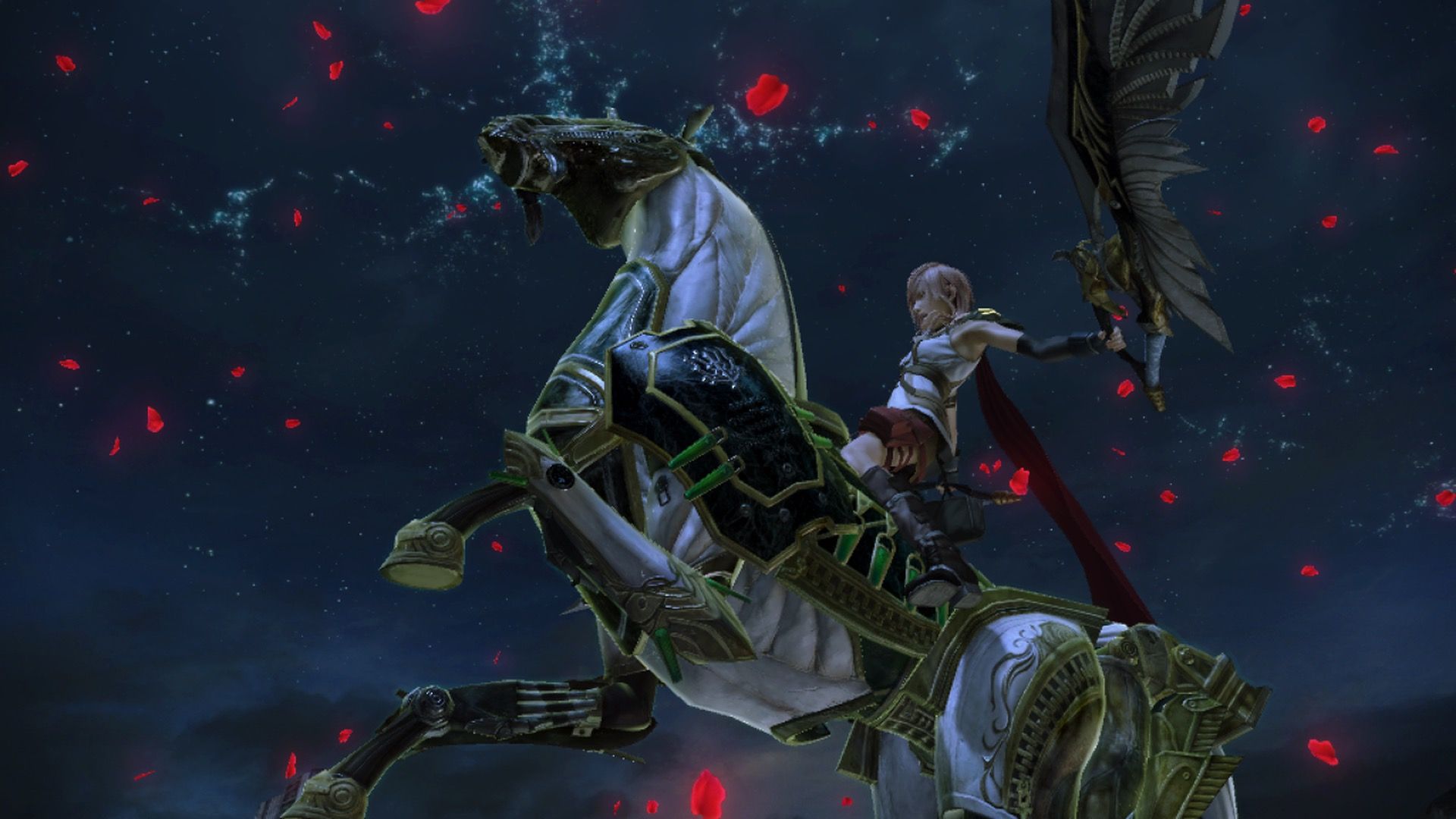
Final Fantasy 13 came out in Japan in 2009 for the PlayStation 3, and in North America in 2010. The game follows Lightning, a soldier who receives a magical curse, and her sister Serah, who is taken from her. It’s a more straightforward game than some fans expected, and it tends to divide players – similar to Final Fantasy 2 and Final Fantasy 8. Despite being linear for much of the game, it’s a large-scale RPG with a fast-paced, turn-based battle system and impressive graphics, backed by a fantastic soundtrack. A sequel, Final Fantasy 13-2, was released in Japan in 2011 and elsewhere in 2012. This continuation of the story focused on a smaller party of just two characters.
The sequel to Final Fantasy 13 saw Serah attempting to save Lightning, aided by a time traveler named Noel. They journeyed through different time periods to correct problems. While the battle system remained turn-based, players could now collect monsters to fight alongside them. Though the concept was interesting, the game felt less polished due to reused elements, and focusing on Serah – a character with little presence in the first game – was a strange decision. The final installment, Lightning Returns: Final Fantasy 13, released in 2013 in Japan and 2014 elsewhere, proved even more divisive. Players controlled Lightning with a strict time limit, which many found frustrating. A countdown clock simply doesn’t fit the spirit of an RPG. Ultimately, building so heavily on the already controversial Final Fantasy 13 was likely a misstep.
Parasite Eve
Not My Brea
- Parasite Eve (1998 PS1)
- Parasite Eve 2 (1999 PS1)
- The 3rd Birthday (2010 PSP)
Released in 1998 for the PlayStation, Parasite Eve arrived during a creatively bold period for Square, a time when they were trying out lots of new ideas. The game combined turn-based RPG elements with action, letting players move around during battles to avoid attacks. When using abilities or weapons, a grid system showed the area of effect. The story unfolded in a modern-day New York City thrown into chaos by a strange event that caused people to dissolve into a strange substance and animals to transform into monsters. Players controlled Aya, a detective at the heart of the mystery, who was a capable and self-assured character supported by a diverse group of allies. Parasite Eve cleverly mixed survival horror – a genre popularized by Resident Evil in 1996 – with RPG mechanics. However, this approach may have backfired, as Square seemed to lean more heavily into Resident Evil’s style of gameplay with the sequel, Parasite Eve 2.
I first got into the series back in 1999 when the original came out on PlayStation in Japan – we got it in North America a year later. It was so cool seeing Aya as an FBI agent, starting the game in L.A. and then heading to this secret lab in the Mojave Desert. The gameplay was a great mix of shooting in real-time with those awesome psychic powers. It was a good game, but honestly, it felt a little strange after loving the New York setting and how the first game blended things. Then came The 3rd Birthday on the PSP. It launched in Japan first, and we got it in the West in 2011. Aya was back, but she could now rewind time with her mind to try and stop another apocalypse in New York. She felt… different, almost like a completely different person. It wasn’t a bad game, but it really moved away from what made the original so special. But honestly, nothing can touch the original Parasite Eve, and I’m still hoping for a return to that world someday.
Read More
- All Shadow Armor Locations in Crimson Desert
- Sega Reveals Official Sonic Timeline: From Prehistoric to Modern Era
- Dark Marksman Armor Locations in Crimson Desert
- Genshin Impact Dev Teases New Open-World MMO With Realistic Graphics
- The Limits of Thought: Can We Compress Reasoning in AI?
- Where to Pack and Sell Trade Goods in Crimson Desert
- How to Beat Antumbra’s Sword (Sanctum of Absolution) in Crimson Desert
- Enshrouded: Giant Critter Scales Location
- Who Can You Romance In GreedFall 2: The Dying World?
- Best Weapons, Armor, and Accessories to Get Early in Crimson Desert
2026-01-22 14:41