Author: Denis Avetisyan
A new testing framework, QEMI, automatically identifies bugs in quantum software by creating and comparing simplified versions of complex programs.

QEMI leverages Equivalence Modulo Inputs to perform dead code analysis and uncover 12 bugs across three major quantum software stacks.
Ensuring the correctness of quantum software stacks remains a significant challenge due to the inherent difficulty in establishing ground truth for verification. This paper introduces ‘QEMI: A Quantum Software Stacks Testing Framework via Equivalence Modulo Inputs’, a novel approach that adapts the classical Equivalence Modulo Inputs (EMI) technique to automatically detect bugs in quantum systems. By generating semantically equivalent quantum programs with and without deliberately introduced dead code, QEMI uncovered 11 crash bugs and 1 behavioral inconsistency across Qiskit, Q#, and Cirq. Does this semantic-preserving approach, moving beyond structural transformations, represent a viable path towards more robust and reliable quantum software development?
The Quantum Realm: A Shift in Computational Foundations
Quantum computing represents a paradigm shift in computational power, moving beyond the classical bits that represent 0 or 1 to utilize qubits. These qubits exploit the principles of superposition and entanglement to perform calculations in fundamentally new ways. Superposition allows a qubit to represent 0, 1, or a combination of both simultaneously, vastly increasing the potential computational states. Entanglement, meanwhile, links two or more qubits together, so they become correlated; measuring the state of one instantaneously reveals information about the others, regardless of the distance separating them. This interconnectedness, combined with superposition, enables quantum computers to explore numerous possibilities concurrently, offering the potential to solve complex problems currently intractable for even the most powerful classical computers – problems in fields like drug discovery, materials science, and financial modeling. The potential speedup isn’t merely incremental; for certain algorithms, the difference is \text{exponential} , promising breakthroughs previously confined to theoretical speculation.
Quantum systems, unlike their classical counterparts, operate on the principles of superposition and entanglement, creating a computational landscape ripe with novel vulnerabilities. These aren’t simply scaled-up versions of existing software bugs; the very nature of quantum information processing introduces entirely new classes of errors. For instance, subtle environmental disturbances – even stray electromagnetic radiation – can induce decoherence, leading to incorrect computations without any immediately apparent error signal. Furthermore, the probabilistic nature of quantum mechanics means that verifying the correctness of a quantum program requires repeated execution and statistical analysis, making deterministic debugging incredibly difficult. These complexities extend to the control systems themselves; imperfections in pulse shaping or gate calibration can introduce errors that are difficult to isolate and correct, ultimately creating a significant challenge for ensuring the reliability of quantum software.
Conventional software testing methodologies, designed for the deterministic nature of classical computing, falter when applied to quantum programs. These programs exploit probabilistic phenomena – superposition and entanglement – introducing non-deterministic behaviors that defy traditional validation techniques. A quantum bit, or qubit, unlike a classical bit, exists as a combination of 0 and 1 simultaneously, making it impossible to predictably trace execution paths or reliably reproduce errors. Furthermore, the very act of observing a quantum state – akin to debugging – can alter its behavior, invalidating test results. Consequently, standard approaches like unit tests, integration tests, and fuzzing prove inadequate, necessitating the development of entirely new testing paradigms tailored to the unique characteristics and inherent uncertainties of quantum computation. The field requires innovative strategies focused on probabilistic verification, quantum property testing, and the exploration of quantum-specific error models to ensure the reliability and security of emerging quantum software.
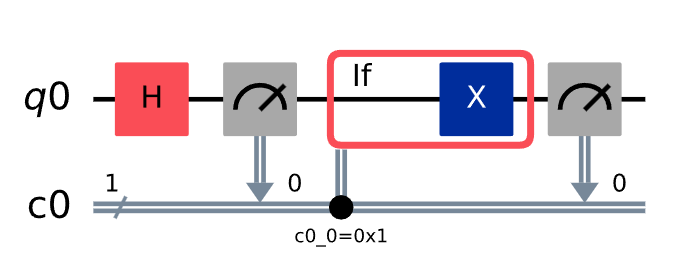
Automated Validation: Laying the Foundation for Quantum Reliability
Random program generation is a technique for creating test cases by automatically constructing programs from a defined grammar. This approach systematically explores the input space of a software system, generating a diverse set of programs that can be used to evaluate functionality and identify potential errors. Unlike manually crafted tests which may focus on expected behaviors, random generation aims for broad coverage, increasing the probability of discovering edge cases and unexpected interactions. The effectiveness of this method relies on the ability to define a grammar that accurately reflects the valid program structures and operations of the target system, enabling the creation of a statistically significant and representative set of test inputs.
Automated testing tools such as Csmith and Yarpgen utilize randomized program synthesis to generate a large volume of test cases for classical software. Csmith, specifically, employs a statistical approach to randomly generate C code, while Yarpgen focuses on generating programs based on a specified grammar. These tools have demonstrated significant success in identifying previously unknown bugs, including memory safety violations, buffer overflows, and assertion failures, in a variety of software projects. Their effectiveness stems from the ability to explore a vast program state space far exceeding manual testing capabilities, and their use has been integrated into continuous integration pipelines for proactive bug detection.
Successfully applying automated test generation to quantum software necessitates a departure from classical approaches due to the unique characteristics of quantum computation. Quantum control flow differs significantly from classical branching, involving superposition and entanglement, which require test generation tools to account for probabilistic outcomes and state vector manipulation. Furthermore, the nuances of quantum operations – such as unitarity, hermitianity, and the no-cloning theorem – impose constraints on valid test case construction. Classical tools cannot directly verify these properties; therefore, adaptation involves modeling quantum states and operations within the test generator, and incorporating quantum-specific assertions to validate the correctness of quantum algorithms and circuits. This includes verifying properties like state purity, entanglement fidelity, and the preservation of unitarity under gate operations.
Beyond Randomness: Advanced Techniques for Quantum Verification
Metamorphic testing and differential testing are software verification techniques that do not rely on pre-defined expected outputs. Metamorphic testing identifies inconsistencies by verifying that certain program transformations preserve the relationship between inputs and outputs; if a transformation is applied to an input, the corresponding transformation should also be applied to the output. Differential testing, conversely, compares the outputs of multiple implementations of the same functionality for a given input; discrepancies indicate potential errors. Both approaches are particularly valuable when creating test oracles-methods for determining the correctness of a program-is difficult or impossible, as they focus on identifying inconsistent behavior rather than verifying absolute correctness.
QDiff and MorphQ are testing techniques adapted for quantum programs that build upon metamorphic and differential testing principles. These methods function by applying semantics-preserving transformations to a quantum program – alterations that change the program’s structure without affecting its intended outcome. Multiple versions of the program are then generated through these transformations, and their outputs are compared. Discrepancies in output, even without a known correct answer, indicate potential errors in the program’s implementation. The core principle relies on the expectation that semantically equivalent programs, even with structural differences, should yield equivalent results when executed, allowing for bug detection through comparative analysis of quantum states or measurement outcomes.
The Quantum Error Mitigation and Integration (QEMI) framework employs random quantum program generation coupled with specialized testing methodologies to identify software defects. Across evaluations of Qiskit, Q#, and Cirq, QEMI has detected 12 previously unknown bugs. The framework’s state comparison utilizes Hellinger distance, a metric suitable for quantifying the similarity between quantum states, and incorporates an early stopping strategy during testing. Performance benchmarks demonstrate a 53.83% speedup for programs utilizing 6 qubits and a 72.21% speedup for those utilizing 8 qubits when employing this early stopping mechanism.
Targeted Fuzzing: Probing the Quantum Control Flow
Quantum computing’s reliance on delicate control flow – the precise ordering of operations on qubits – presents unique security and reliability challenges. QuteFuzz addresses these by pioneering targeted fuzzing specifically designed for quantum software. Unlike traditional fuzzing which relies on random inputs, QuteFuzz leverages the properties of quantum operations – such as superposition and entanglement – to intelligently generate test cases. This approach significantly increases the likelihood of exposing vulnerabilities within the quantum control flow, uncovering bugs that might otherwise remain hidden. By focusing on the core logic governing qubit manipulation, QuteFuzz represents a critical advancement in ensuring the dependability of emerging quantum technologies and establishing a proactive approach to quantum software security.
QuteFuzz distinguishes itself from conventional fuzzing techniques by capitalizing on the inherent properties of quantum computations. Unlike classical software, quantum programs rely on superposition and entanglement, allowing for a vast and complex state space with nuanced behaviors. This fuzzer generates test cases specifically designed to probe these quantum characteristics, focusing on operations like qubit manipulations and measurements. By intelligently crafting inputs that exploit the probabilities and interference patterns central to quantum mechanics, QuteFuzz is able to explore edge cases and potential error conditions that would likely be missed by random, generic fuzzing approaches. Consequently, the system achieves a higher rate of vulnerability discovery, pinpointing flaws unique to the implementation of quantum algorithms and control flow.
The development of the QEMI framework marked a crucial validation of targeted fuzzing techniques for quantum software. By combining random program generation – creating diverse and unexpected quantum circuits – with systematic fuzzing, the framework successfully identified 12 distinct bugs within real-world quantum software. Significantly, the impact extended beyond mere detection; 11 of these vulnerabilities were subsequently fixed or confirmed as genuine issues by the software’s original developers. This high rate of confirmation underscores the practical efficacy of QEMI, and demonstrates that fuzzing isn’t simply a theoretical exercise, but a valuable tool for bolstering the reliability and security of emerging quantum technologies, paving the way for more robust and trustworthy quantum computations.
The pursuit of robust quantum software necessitates a relentless simplification of complexity. This work, introducing QEMI, embodies that principle by leveraging Equivalence Modulo Inputs to identify dead code within quantum software stacks. The framework doesn’t seek to add layers of verification; rather, it strips away the superfluous to reveal fundamental errors. As Blaise Pascal observed, “The eloquence of angels is no more than the silence of reason.” QEMI operates on a similar logic – the absence of expected behavior, signaled by the dead code, speaks volumes about the program’s integrity. The discovery of twelve bugs across major Quantum Software Stacks highlights the efficacy of this approach, demonstrating that true understanding-and effective testing-comes not from increasing intricacy, but from achieving crystalline clarity.
Further Refinements
The demonstrated efficacy of QEMI against existing quantum software stacks (QSSes) merely establishes a baseline. The twelve identified bugs, while significant, represent known unknowns. The true challenge lies in uncovering the unknown unknowns – the subtle errors born from the complex interplay of quantum mechanics and software engineering. Future iterations should address the limitations of current dead code analysis techniques, particularly regarding the scalability to larger, more intricate quantum algorithms. Current approaches treat quantum circuits as opaque blocks; a refinement toward a more granular analysis, respecting the unique characteristics of quantum entanglement and superposition, is essential.
The framework’s reliance on semantically equivalent program transformations introduces a potential for combinatorial explosion. Minimizing the search space without sacrificing the thoroughness of testing demands further investigation. Perhaps a fusion with formal verification methods, leveraging mathematical proofs of correctness, could offer a more rigorous, albeit computationally expensive, pathway. Unnecessary is violence against attention; a balance between exhaustive testing and computational feasibility is paramount.
Ultimately, the field requires a shift in perspective. Testing should not be viewed as an afterthought, a corrective measure applied to finished code. Rather, it must be integrated into the development lifecycle, a continuous process of validation and refinement. Density of meaning is the new minimalism; the goal is not simply to detect bugs, but to prevent them from manifesting in the first place.
Original article: https://arxiv.org/pdf/2602.09942.pdf
Contact the author: https://www.linkedin.com/in/avetisyan/
See also:
- All Shadow Armor Locations in Crimson Desert
- Sega Reveals Official Sonic Timeline: From Prehistoric to Modern Era
- Genshin Impact Dev Teases New Open-World MMO With Realistic Graphics
- The Limits of Thought: Can We Compress Reasoning in AI?
- Dark Marksman Armor Locations in Crimson Desert
- Where to Pack and Sell Trade Goods in Crimson Desert
- How to Beat Antumbra’s Sword (Sanctum of Absolution) in Crimson Desert
- Enshrouded: Giant Critter Scales Location
- Who Can You Romance In GreedFall 2: The Dying World?
- Best Weapons, Armor, and Accessories to Get Early in Crimson Desert
2026-02-11 19:51