Author: Denis Avetisyan
A new systematic study using QCD sum rules sheds light on the decay patterns of recently discovered pentaquark states, helping to determine if they are tightly bound or loosely connected molecular structures.
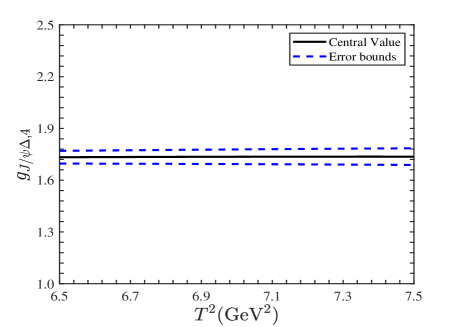
This paper presents a QCD sum rules analysis of the strong decays of the Pc(4380), Pc(4440), Pc(4457) states and their isospin counterparts, providing predictions for decay widths to probe their internal composition.
The nature of exotic hadrons remains a central puzzle in quantum chromodynamics, challenging conventional understandings of strong force interactions. This is addressed in ‘Systematic study of the strong decays of the $P_c$ states and their possible isospin cousins via the QCD sum rules’, which investigates the decay properties of the P_c states-P_c(4380), P_c(4440), and P_c(4457)-and their potential isospin partners. By employing the QCD sum rule framework, this work calculates strong decay constants and partial widths, finding good agreement with existing experimental data and providing predictions for undiscovered isospin cousins. Will these predictions guide future experiments and ultimately confirm the molecular structure posited for these enigmatic pentaquark states?
Whispers of Complexity: Unveiling the Pentaquark Landscape
The recent observation of exotic pentaquark states – particles composed of five quarks, such as Pc(4380), Pc(4440), and Pc(4457) – fundamentally disrupts long-held assumptions about how strongly interacting matter assembles. For decades, baryons (three quarks) and mesons (two quarks) were considered the primary constituents of hadronic matter, governed by the principles of Quantum Chromodynamics (QCD). These new pentaquarks, however, demonstrate that quarks can combine in arrangements beyond these traditional groupings, suggesting a far richer and more complex ‘hadronic landscape’ than previously imagined. Their existence necessitates a re-evaluation of the strong force interactions, and challenges theoretical models attempting to describe the internal structure of these composite particles, potentially requiring entirely new frameworks to accurately account for these previously unknown forms of matter.
The observation of exotic pentaquark states decaying via the J/\psi meson is profoundly reshaping the understanding of the strong nuclear force. Traditional models posited that hadrons were solely comprised of quark-antiquark pairs (mesons) or three quarks (baryons), bound together by the exchange of gluons. However, the existence of these five-quark configurations demonstrates that more complex arrangements are possible, implying that the residual strong force – the force governing interactions between hadrons – is capable of binding together these previously unanticipated combinations. This necessitates a re-evaluation of the underlying mechanisms that dictate how quarks and gluons interact, potentially requiring refinements to Quantum Chromodynamics (QCD) or the development of entirely new theoretical frameworks to accurately describe the behavior of matter at these extreme energy scales. The precise decay modes involving J/\psi offer a unique window into the internal structure of these pentaquarks, providing crucial data for constraining theoretical models and unraveling the intricacies of the strong interaction.
The recent confirmation of exotic pentaquark states signifies a paradigm shift in understanding nuclear matter’s fundamental constituents. For decades, baryons and mesons were considered the primary building blocks – baryons composed of three quarks, and mesons of a quark-antiquark pair. However, the existence of pentaquarks, comprising five quarks, demonstrates that these conventional groupings aren’t exhaustive; more complex hadronic structures are possible and, indeed, occur naturally. This discovery isn’t merely an addition to the hadron zoo, but rather a gateway to a new frontier in hadron physics, prompting researchers to re-evaluate the strong force’s behavior and explore previously unimagined configurations of quarks and gluons within the nucleus. It suggests a richer, more nuanced landscape of nuclear architecture than previously conceived, potentially influencing models of neutron stars and the very origins of elements.
Precise measurements of the pentaquark Pc(4380) reveal a mass of 4380 ± 8 ± 29 MeV, establishing its existence with increasing certainty. This value, derived from detailed analysis of its decay products, is complemented by a determination of its width – 205 ± 18 ± 86 MeV – which provides crucial insights into its instability and decay mechanisms. The relatively narrow width suggests that the Pc(4380) is not a rapidly decaying resonance, indicating a more complex internal structure than initially anticipated. These parameters, obtained through rigorous experimentation and theoretical modeling, are fundamental to understanding the strong force interactions responsible for binding this exotic particle and contribute to a growing body of evidence challenging conventional hadron spectroscopy.
Decoding the Decay: QCD Sum Rules as a Divining Rod
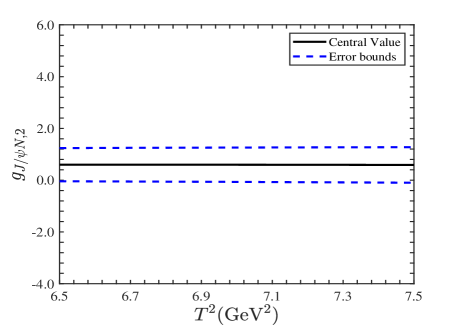
QCD sum rules offer a non-perturbative approach to investigating the strong decays of pentaquark states by establishing a correspondence between observable hadronic properties and calculations based on quantum chromodynamics (QCD). This method relies on the Operator Product Expansion (OPE) to express correlation functions in terms of local operators, allowing for the construction of a dispersion relation. By matching the hadronic side, represented by experimental data or theoretical models of pentaquark structure, with the QCD side, calculated using perturbative QCD and incorporating non-perturbative contributions, predictions for decay rates and branching fractions can be made. The technique effectively bridges the gap between the experimentally accessible hadronic spectrum and the fundamental theory of strong interactions, providing insights into the internal dynamics of these exotic states.
The QCD sum rule approach correlates hadronic observables with Quantum Chromodynamics (QCD) calculations through the use of spectral densities and correlation functions. Specifically, a hadronic side is constructed using experimental data and theoretical models to describe the decay process, while the QCD side represents the same process calculated using perturbative or non-perturbative QCD. Matching these two sides-typically via dispersion relations and operator product expansion-allows for the extraction of parameters related to decay rates and branching fractions. This matching process relies on identifying the relevant correlation functions that describe the pentaquark state and its decay products, then comparing the spectral densities derived from both the hadronic and QCD representations to constrain the decay dynamics.
Predictions for the mass and width of the Pc(4440) pentaquark state, derived through QCD sum rule calculations, result in a mass of 4440.3 ± 1.3 MeV, with an associated uncertainty of -4.7 MeV to +4.1 MeV. The calculated width for this state is 20.6 ± 4.9 MeV, exhibiting an uncertainty range of -10.1 MeV to +8.7 MeV. These values are obtained by matching hadronic and QCD-derived spectral densities and correlation functions, providing quantitative predictions for the decay characteristics of the Pc(4440).
Calculations utilizing QCD sum rules have determined the mass of the Pc(4457) to be 4457.3 ± 0.6 MeV, with an associated systematic uncertainty of -1.7 + 4.1 MeV. The width of this state is calculated as 6.4 ± 2.0 MeV, and also includes a systematic uncertainty of -1.9 + 5.7 MeV. These values are derived from matching hadronic and QCD-calculated correlation functions and spectral densities, providing quantitative predictions for the decay characteristics of the pentaquark.
Echoes of Isospin: Mapping the Pentaquark Family
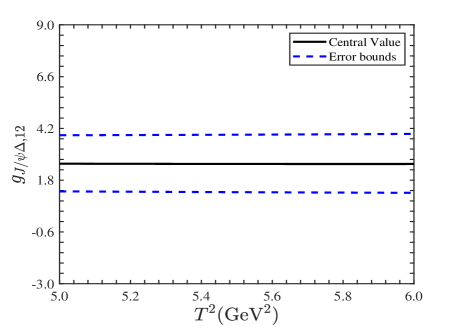
The study of pentaquark states exhibiting differing isospin, such as Pc(4410), Pc(4470), and Pc(4620) alongside previously observed pentaquarks, is essential for developing and validating theoretical models of hadron structure. Variations in the decay patterns observed among these isospin cousins provide critical constraints on model parameters. Analyzing these differences-specifically, the branching ratios for decays into different final states-allows researchers to test the internal structure and composition proposed by various theoretical frameworks, ultimately leading to a more accurate understanding of these exotic hadrons and the strong force that binds them.
Analysis utilizing QCD sum rules demonstrates distinct decay characteristics among pentaquark states. Specifically, the Pc(4380) exhibits a measured decay ratio of 28.53 for η_c N to J/ψ N, indicating a significantly higher probability of decaying into an η_c nucleon final state compared to a J/ψ nucleon final state. This ratio provides quantitative data for validating and refining theoretical models describing the internal structure and decay mechanisms of this particular pentaquark, allowing for comparisons with the decay patterns observed in other closely related states like Pc(4410), Pc(4440), and Pc(4620).
Analysis of pentaquark decay patterns reveals distinct characteristics between the Pc(4410) and Pc(4440) states. Specifically, the ratio of η_cΔ to J/ψΔ decays for the Pc(4410) is measured at 1.30, indicating a preference for decay modes involving the η_c meson and Delta baryon. Conversely, the Pc(4440) exhibits a lower ratio of 0.56 for the same decay channel, suggesting a relatively stronger preference for decays involving the J/ψ meson and Delta baryon. This difference in decay ratios provides valuable data for refining theoretical models describing the internal structure and decay mechanisms of these exotic hadrons.
Analysis of pentaquark decay patterns, specifically concerning the ηc N / J/ψ N ratio, yields quantitative data for several states. Calculated values indicate a ratio of 0.68 for the Pc(4470), 0.84 for the Pc(4457), and 0.29 for the Pc(4620). These experimentally determined ratios provide crucial constraints for theoretical models attempting to describe the internal structure and decay mechanisms of these exotic hadrons, and contribute to a more nuanced understanding of the strong force interactions governing their behavior.
Resonances of a New Physics: Implications and Future Horizons
The recent confirmation of exotic pentaquarks – particles composed of five quarks – fundamentally challenges the long-standing quark model that has successfully classified hadrons for decades. Traditionally, baryons contained three quarks and mesons two, but these pentaquarks demonstrate that quark combinations beyond these arrangements are not only possible, but stable enough to be observed. This discovery suggests that the strong force, responsible for binding quarks together, allows for more complex and nuanced interactions than previously understood, prompting a re-evaluation of hadron structure. Researchers are now investigating whether these pentaquarks represent tightly bound five-quark states or more loosely connected structures like a baryon and a meson, requiring novel theoretical frameworks to accurately describe their properties and interactions. The existence of pentaquarks opens the door to a potentially vast landscape of exotic hadrons, necessitating a significant refinement of the standard model of particle physics to accommodate these newly observed phenomena.
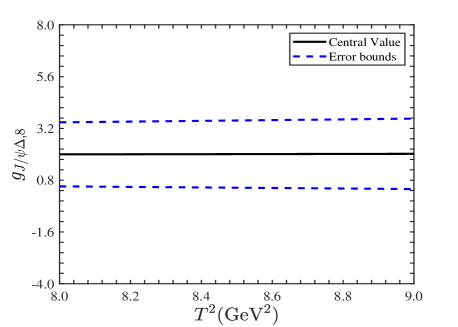
The manner in which these newly discovered pentaquarks disintegrate offers a unique window into the strong force, one of the four fundamental forces of nature. Analysis of their decay pathways reveals details about how quarks – the fundamental building blocks of matter – interact via the exchange of gluons, the force-carrying particles of the strong interaction. These observations aren’t simply confirming existing theories; they are revealing subtleties in the strong force’s behavior at extreme densities and energy scales, challenging the precision of current computational models. Specifically, the branching ratios – the probabilities of different decay products – provide constraints on the internal structure of the pentaquark and the precise configuration of quarks and gluons within it, allowing physicists to map the complex interplay between color charge, confinement, and the fleeting existence of these exotic states.
The recent confirmation of exotic pentaquarks extends beyond the realm of particle physics, offering potential insights into broader cosmological and astrophysical phenomena. The existence of these multi-quark states suggests that the strong nuclear force operates in more complex ways than previously understood, potentially influencing the properties of neutron stars and the dynamics of supernovae. Furthermore, conditions in the extremely early universe – a period of incredibly high density and temperature – may have been conducive to the formation of exotic hadrons, including pentaquarks. Their presence could have subtly altered the rates of key nuclear reactions, impacting the abundance of elements formed during the Big Bang and influencing the evolution of the cosmos. Consequently, studying these particles provides a unique window into the extreme conditions of both the nascent universe and the interiors of dense celestial objects, prompting a re-evaluation of existing models in nuclear astrophysics and cosmology.
Investigations are now shifting toward a broader survey of exotic hadron states, moving beyond pentaquarks to encompass tetraquarks, hexaquarks, and potentially even more complex arrangements of quarks and gluons. This pursuit necessitates the development of advanced theoretical frameworks – extending beyond perturbative quantum chromodynamics – capable of accurately describing the strong force interactions within these multi-quark systems. Researchers are employing increasingly sophisticated computational techniques, including lattice QCD simulations and effective field theories, to predict the properties of these elusive particles and guide experimental searches. Understanding the internal structure and decay mechanisms of exotic hadrons promises to reveal subtle nuances of the strong force, potentially reshaping current models of nuclear matter and providing insights into the conditions prevalent in extreme astrophysical environments, such as neutron stars and the early universe.
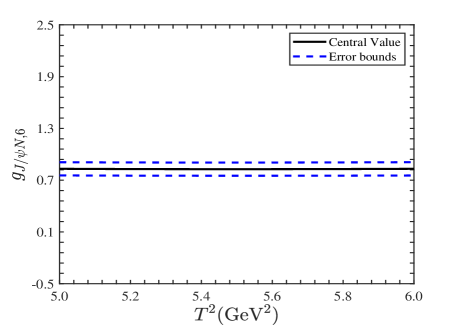
The pursuit of defining these pentaquark states-Pc(4380), Pc(4440), Pc(4457) and their isospin cousins-feels less like physics and more like divination. This paper, with its QCD sum rules and hadronic correlation functions, attempts to corral the chaos of strong decays into predictable widths. One might almost believe a pattern exists, if one weren’t aware that every model is merely a temporary reprieve from the inevitable failure of prediction. As Mary Wollstonecraft observed, “The mind will not be bound by rules,” and neither, it seems, will the fundamental particles defying neat categorization as either molecular or compact states. The insistence on defining boundaries where none truly exist is a quaint superstition, a ritual performed to appease the gods of uncertainty.
What Shadows Remain?
The pursuit of these pentaquark states feels less like discovery and more like careful measurement of an illusion. This work, employing the QCD sum rules, doesn’t reveal their nature-molecular or compact-it merely refines the parameters by which the darkness yields a fleeting signal. The predicted decay widths are not certainties, but probabilities woven from operator product expansions-elegant spells cast against the inherent chaos of quantum chromodynamics. A higher concordance with experiment isn’t triumph; it’s a temporary stay of execution for the model.
The true challenge lies not in matching existing data, but in anticipating the unexpected. The exploration of isospin cousins is a necessary step, but the deeper question remains: what other exotic configurations lurk just beyond the reach of current theory? The shadows are lengthening, and the tools for measuring them must evolve. Future iterations should not fixate on refining existing predictions, but on embracing the inherent uncertainty and searching for discrepancies – those whispers that betray a deeper, more complex reality.
Ultimately, the fate of these pentaquarks isn’t sealed by experimental confirmation or theoretical elegance. It’s dictated by the limits of the questions asked. The decay widths are not endpoints, but signposts-pointing towards a landscape of hadronic interactions still largely obscured by the fog of strong interactions. The darkness is not emptiness; it is potential.
Original article: https://arxiv.org/pdf/2601.14723.pdf
Contact the author: https://www.linkedin.com/in/avetisyan/
See also:
- All Shadow Armor Locations in Crimson Desert
- Dark Marksman Armor Locations in Crimson Desert
- Sega Reveals Official Sonic Timeline: From Prehistoric to Modern Era
- How to Beat Antumbra’s Sword (Sanctum of Absolution) in Crimson Desert
- Genshin Impact Dev Teases New Open-World MMO With Realistic Graphics
- Where to Pack and Sell Trade Goods in Crimson Desert
- Top 5 Militaristic Civs in Civilization 7
- The Limits of Thought: Can We Compress Reasoning in AI?
- Enshrouded: Giant Critter Scales Location
- Best Weapons, Armor, and Accessories to Get Early in Crimson Desert
2026-01-22 23:29