Markets
What to know:
- The CME, that bastion of Wall Street’s wisdom, shall open its gates to the digital realm, 24 hours a day, seven days a week, from May 29 onward.
- Tim McCourt, the CME’s equities oracle, claims the decision was born of demand, though one might suspect it was merely the whisper of $3 trillion in volume, a siren song to the institution’s soul.
- Experts, those seers of the crypto realm, suggest this move might quell the weekend’s tempests, though one wonders if the CME’s price gap is merely a ghost that will haunt traders still.
- Bitcoin, that enigmatic dancer, may yet become the world’s proxy for chaos, a shadow cast over global events when other assets sleep.
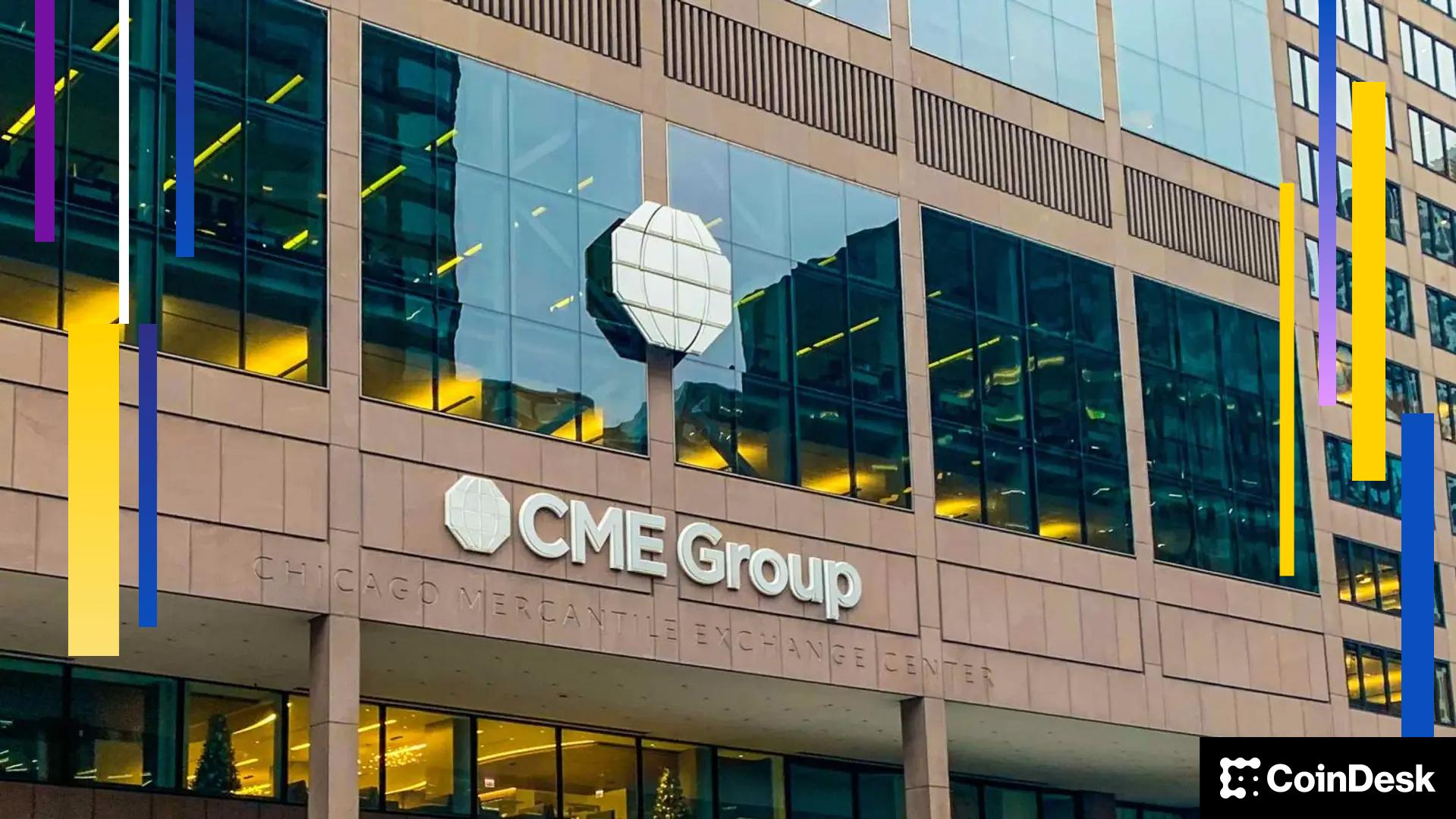
The CME Group, that venerable titan of derivatives, declared its intent to offer 24/7 crypto futures and options on May 29-a milestone as grand as a poet’s ode to the stars.
This endeavor, the exchange claims, is to cater to the restless hunger of professional investors, who, like moths to a flame, seek to manage risk even when the weekend’s veil descends.
Tim McCourt, the CME’s sage of equities and FX, noted that crypto derivatives hit a record $3 trillion in volume last year, a number so vast it could fill the void of a thousand black holes.
“Client demand for risk management in the digital asset market is at an all-time high,” he said, as if reciting a sonnet to the gods of finance.
‘Violent price swings’
Yet, this move may ignite a greater storm, for the weekend, that fabled time when the market’s heart races and the CME’s doors swing shut, leaving institutions to ponder their fate in the silence of the night.
While crypto markets have always danced to their own rhythm, the CME’s derivatives-those strict, regulated sentinels-close on Friday evening, only to awaken on Sunday, while the spot market remains ever-vigilant.
This discrepancy births the infamous “CME gaps,” those chasms between Friday’s close and Sunday’s open, where institutions are left to grapple with price swings like sailors adrift in a storm.
Experts, those prophetic voices of CoinDesk, argue that the CME’s shift to always-on trading could reshape liquidity and trading dynamics, especially around the weekends, where the moonlight casts its longest shadow.
“The most violent price swings happen precisely when institutional venues are dark,” said Bobby Ong, co-founder of CoinGecko, as if recounting a tale of ancient sorcery.
He added that liquidation cascades during the weekend were a “predictable consequence” of thin, fragmented liquidity, noting that “CME [is] finally closing that gap,” a triumph as sweet as a well-aged wine.
Less dramatic moves
This change, in essence, will make trading as smooth as a river’s current, bridging the divide between weekdays and weekends.
Adam Haeems, the head of asset management at Tesseract Group, mused that the shift “closes one of the last structural gaps between crypto-native markets and regulated derivatives infrastructure,” a statement as profound as it is dry.
Institutional flows, once halted on Friday and restarted on Sunday, will now continue unbroken, reducing the risk and cost of holding positions through the weekend. He warned that weekend volatility has been “a direct consequence of this structural mismatch,” and continuous trading should help compress those price swings and narrow spreads.
However, this does not guarantee a total reduction of massive swings; rather, price action will likely be more gradual, as if the market itself is taking a deep breath before exhaling.
Haeems cautioned that simply keeping the venue open doesn’t guarantee deep liquidity. “Institutional desks may not staff weekend risk-taking at the same intensity as weekdays,” he said, as if addressing a crowd of skeptics.
For retail traders, the change may mean less dramatic Monday price action, a mercy as rare as a unicorn’s gaze.
“Tighter pricing and fewer of those jarring Monday-morning gap moves,” said Haeems, “the CME gap has historically filled more than 90% of the time-retail traders who track futures structure will notice that signal fading.”
Bitcoin as a macro risk proxy
Maxime Seiler, CEO of trading firm STS Digital, echoed that the change offers clear benefits to institutions, especially those wary of the forced liquidation mechanisms on crypto-native platforms.
“The ability to trade futures and options on CME without the risk of auto-deleveraging is a huge selling point,” he said, as if pitching to a skeptical audience.
He also pointed to a shift in how bitcoin may be used over weekends as a professional tool to hedge global risk events when other assets are not available to trade.
“With other markets closed, bitcoin could increasingly function as a proxy for broader macro risk, pricing in global events in real time,” he mused, as if gazing into a crystal ball.
Read More
- All Skyblazer Armor Locations in Crimson Desert
- Robinhood’s $75M OpenAI Bet: Retail Access or Legal Minefield?
- How to Get the Sunset Reed Armor Set and Hollow Visage Sword in Crimson Desert
- How to Catch All Itzaland Bugs in Infinity Nikki
- Speedsters Sandbox Roblox Codes
- Invincible: 10 Strongest Viltrumites in Season 4, Ranked
- Re:Zero Season 4 Episode 3 Release Date & Where to Watch
- Who Can You Romance In GreedFall 2: The Dying World?
- Top 10 Must-Watch Isekai Anime on Crunchyroll Revealed!
- USD CNY PREDICTION
2026-02-21 16:24