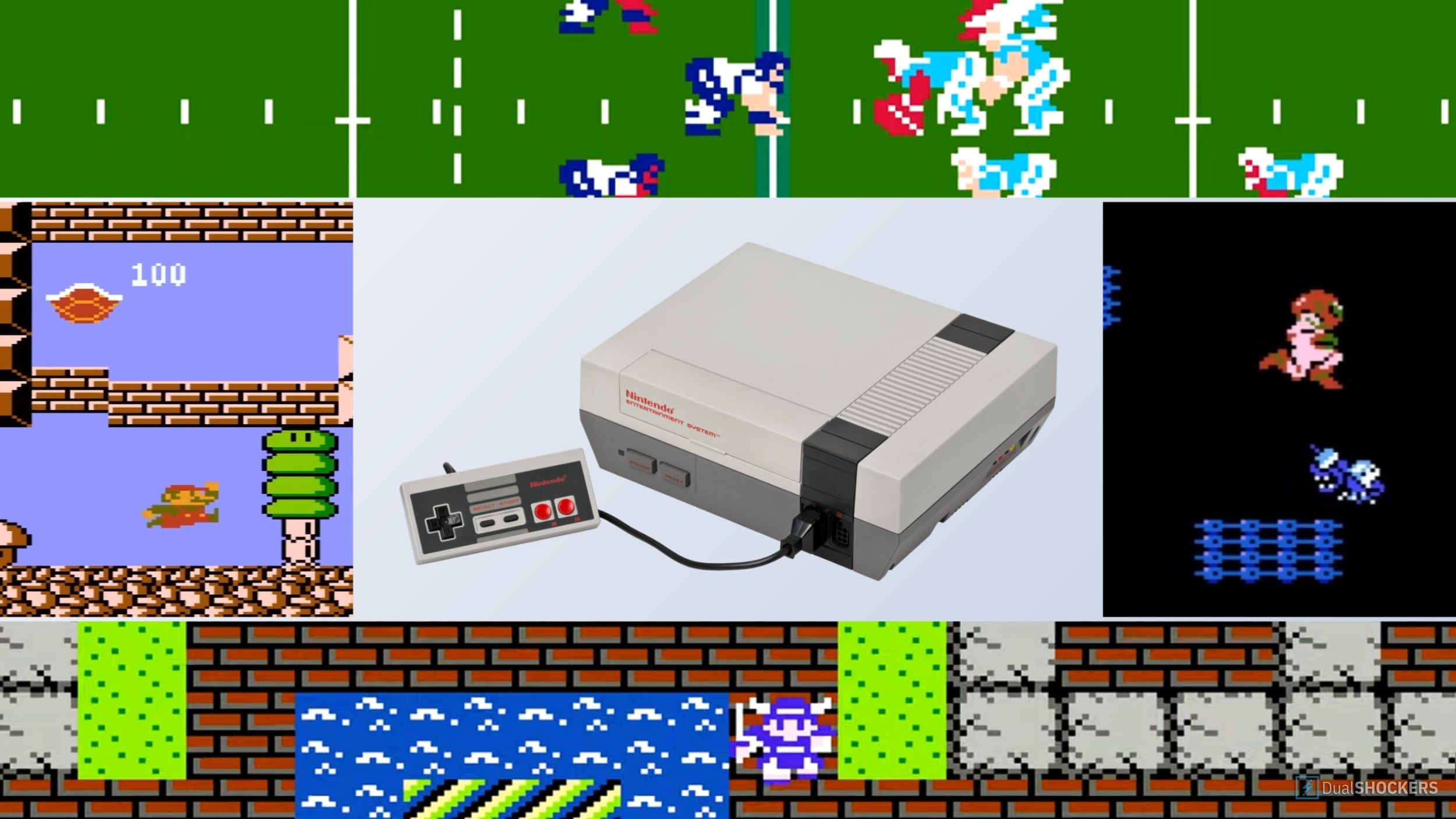
After the video game market crashed in 1983, the Nintendo Entertainment System (NES) almost single-handedly saved the industry. Nintendo smartly avoided calling the NES a “video game console” to reassure customers who were wary after the crash. The NES is a true gaming icon, and deservedly so. We wouldn’t have the gaming world we know today without it, and its games deserve just as much credit for their impact.
The NES wasn’t just home to many great games – it launched some of the most successful franchises we know today. Beyond simply being enjoyable, these games introduced innovative ideas, both big and small, that shaped the video game industry as it exists now. As the leader of the third generation of consoles, the NES paved the way with its groundbreaking titles.
10. Tecmo Bowl
The First Sports Game to Use Real Players
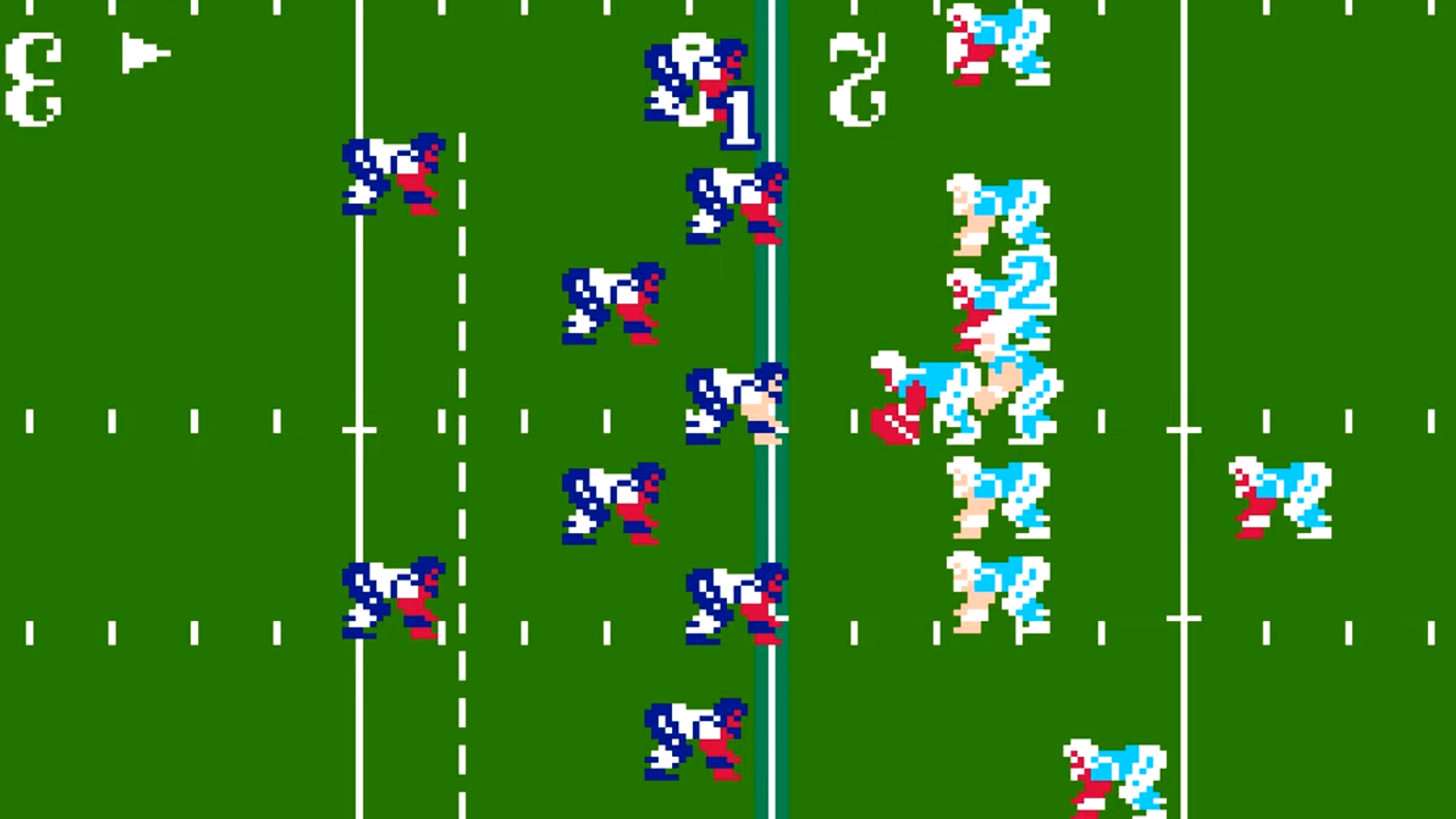
Modern sports video games are packed with official team branding – think current rosters, stadiums, and logos. But it wasn’t always this way. Early sports games rarely featured real teams because those teams are valuable brands and were careful about who they allowed to use their names and images. Tecmo Bowl was the first game to successfully change that and include licensed teams.
Tecmo Bowl, first appearing in arcades in 1987, made history as the first console game on the NES, in 1989, to feature real NFL players—or at least, their names and somewhat recognizable versions of them. However, Tecmo only had a licensing agreement with the NFL Players Association, meaning team names and logos couldn’t be included in the game.
Regardless of the team logos, each local team in the game perfectly mirrored the real NFL rosters of that era, with the correct players in the right positions. The game was a huge hit, and it made the NFL realize they could profit by officially licensing team names for future use.
9. Gradius
The First Appearance of the Konami Code
| Developer | Konami |
|---|---|
| Platforms | NES |
| Release Date | April 1986 |
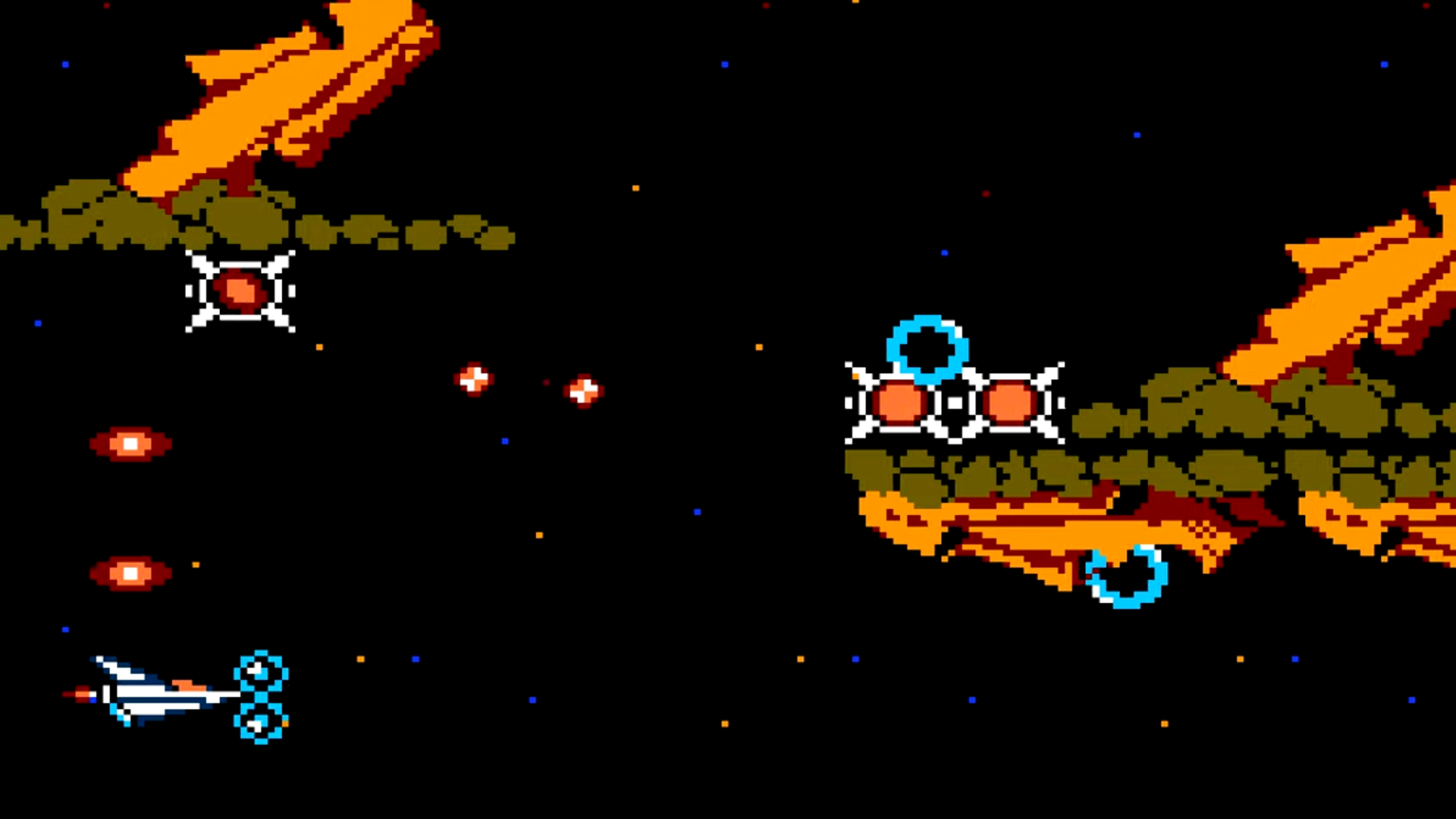
The Konami Code is famous for helping players in games like Contra, but did you know it actually debuted in an earlier title? While many associate it with Contra, the very first appearance of this legendary code – and one of the first cheat codes ever – was in the game Gradius.
Man, I remember discovering the Konami Code back in the original Gradius on Famicom in ’87! It was a total game-changer. If you paused, you could punch it in and suddenly your ship would be fully loaded with all the best weapons and power-ups. Seriously, it was a lifesaver after getting destroyed and having to start over. Let’s be honest, a lot of us not-so-great players relied on it to get through those tough levels!
After becoming popular in games like Gradius and Contra, cheat codes were a common feature in gaming for many years. However, they slowly disappeared starting with the sixth generation of consoles. It’s unfortunate, as these codes, especially the Konami Code, were a defining part of gaming’s early years and created a lot of fun for players.
8. Kirby’s Adventure
Designing for Replay Value
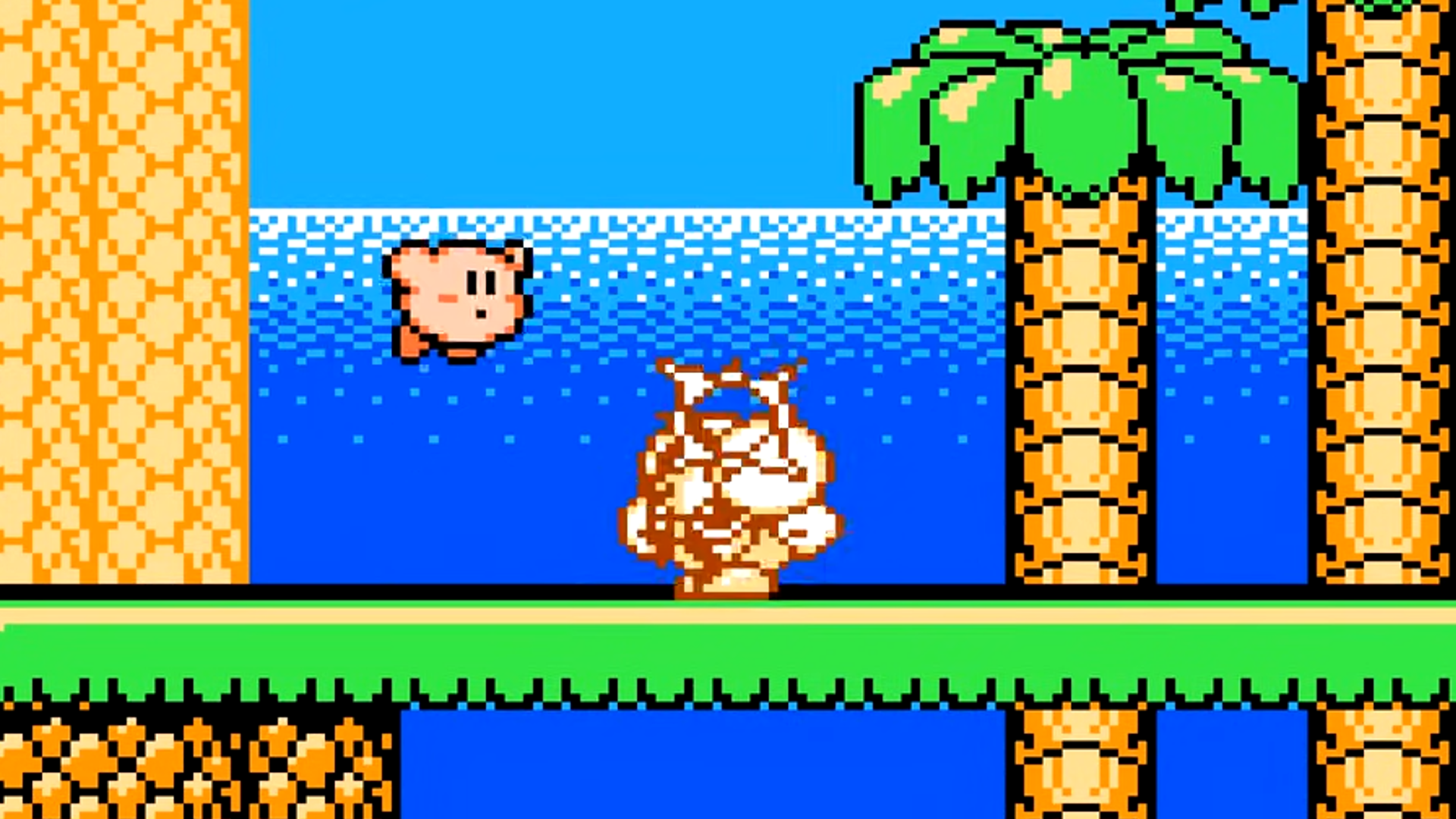
Most games from the original Nintendo Entertainment System (NES) weren’t made to be played through multiple times. While you could replay them, the experience usually stayed the same. However, Kirby’s Adventure was different – it was designed with some random elements to make each playthrough a little unique.
After hearing that the first Kirby game, Kirby’s Dream Land, was too easy, creator Masahiro Sakurai completely redesigned the gameplay for Kirby’s Adventure. Instead of simply making the game harder, he added a unique feature called the Copy Ability. This ability was intentionally a bit unpredictable, meaning each time you played, the experience would be slightly different, making the game more replayable.
While it didn’t invent the idea of replaying games, Kirby’s Adventure was an early example of adding enough variety to a game that players would want to come back and play it again even after completing the main story.
7. Dragon Quest
The Progenitor JRPG
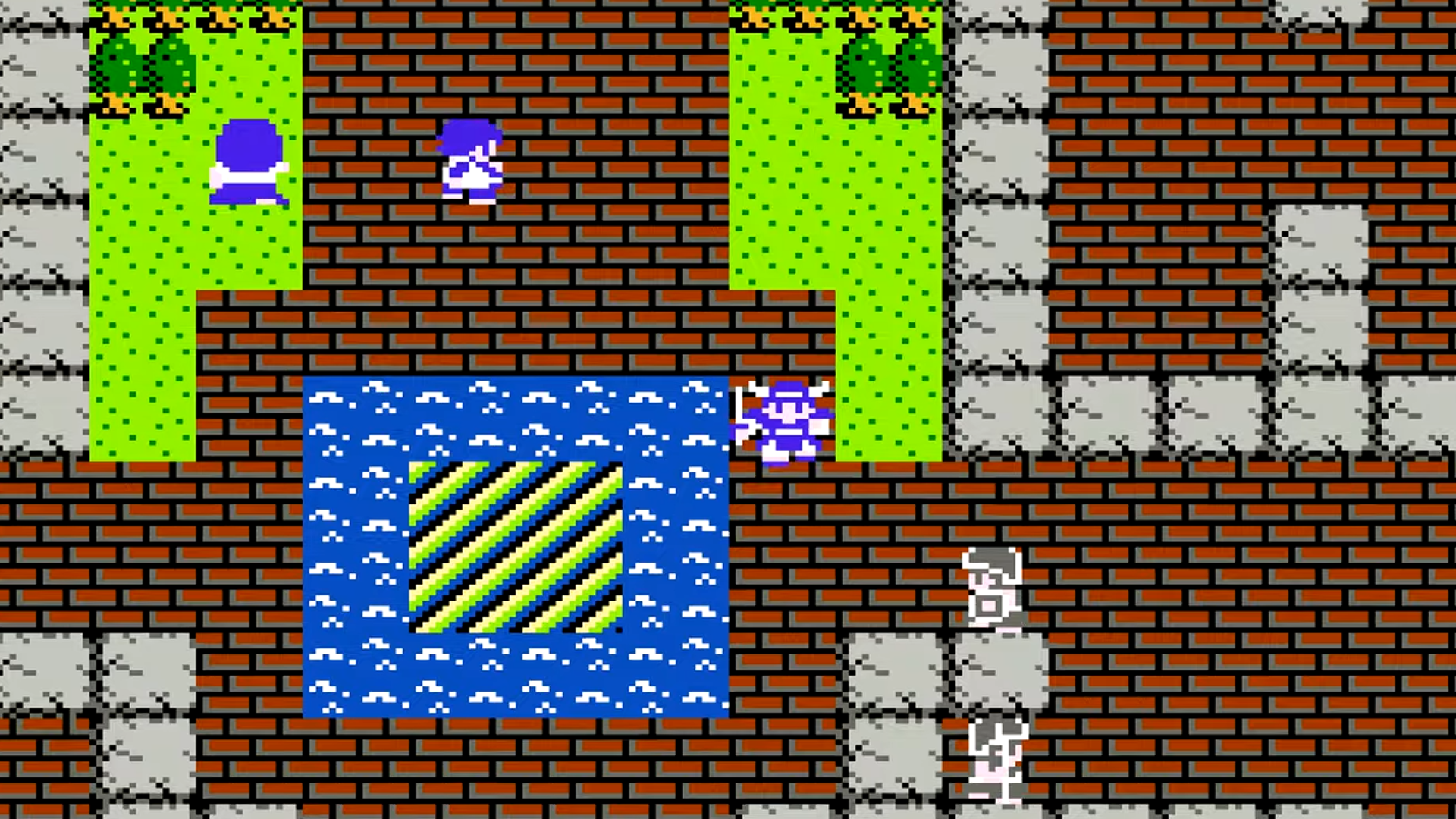
What people consider the very first JRPG often depends on their background. In the United States, many think of Final Fantasy as the original, while in Japan, Dragon Quest holds that title and has for a long time.
Yuji Horii created the first Dragon Quest in 1986, taking cues from Western computer RPGs such as Ultima. However, he realized that a direct port of Ultima wouldn’t work well on the NES console. So, he simplified the game and made it easier to pick up, aiming for something that didn’t require players to already know things like Dungeons & Dragons. The result was Dragon Quest, and it became a huge success.
Dragon Quest didn’t reach Western audiences until 1989, when it was released as Dragon Warrior. By then, Final Fantasy was already available on the NES, making it more familiar to Western players who enjoy retro games. However, Dragon Quest was the original, and all other Japanese role-playing games – including Final Fantasy – owe a debt to it.
6. Tetris
The Original High-Speed Puzzler
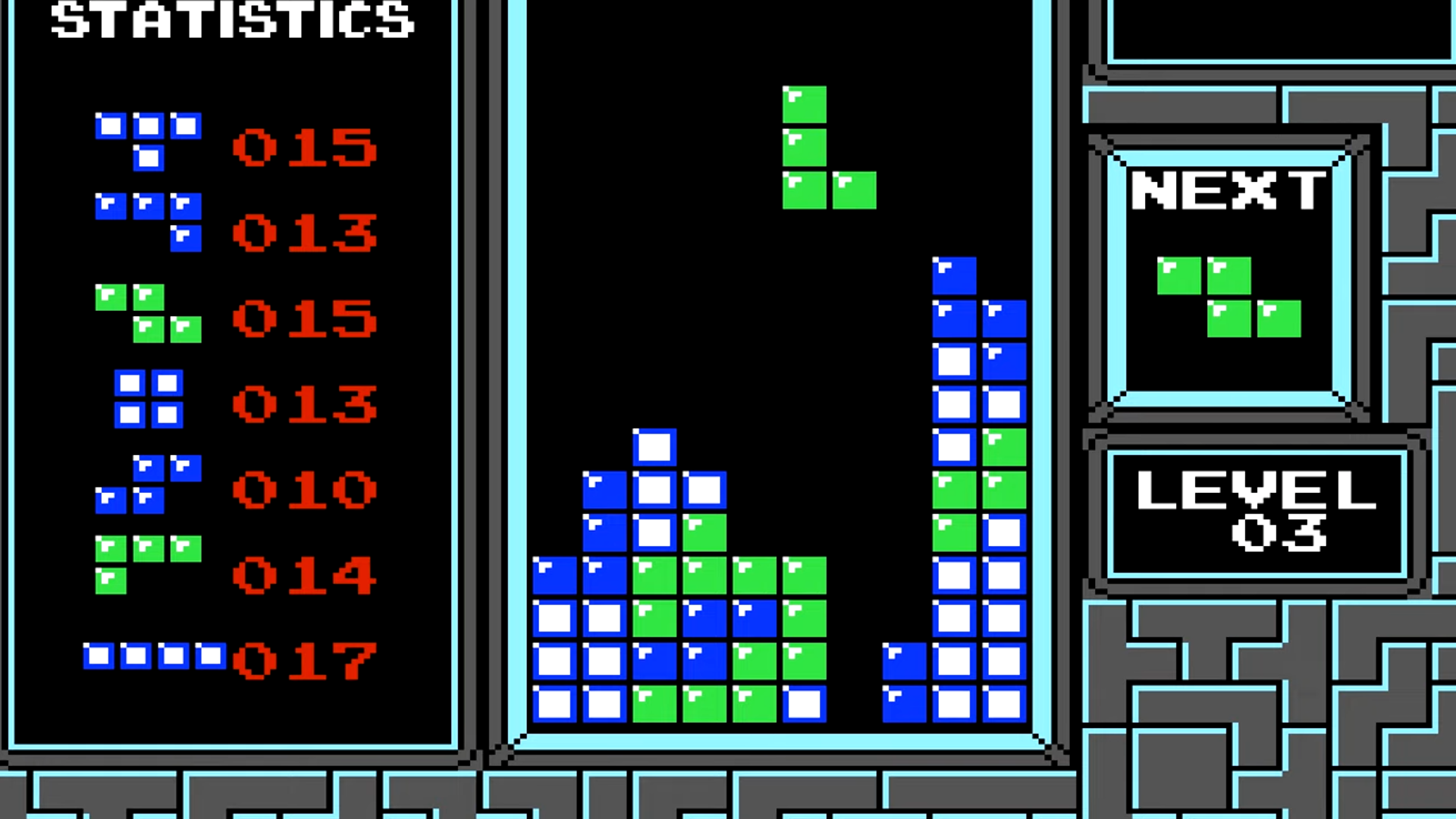
Fast-paced puzzle games are popular gifts now, but older puzzle games used to be slower and more thoughtful. The original Tetris, created by a Russian engineer, really sped things up, and when it was released on the Nintendo Entertainment System (NES), it became even more popular.
The Tetris game on the original Nintendo Entertainment System (NES) is unique compared to other games of its time. It quickly gets much faster, demanding skillful play to keep up. This fast-paced style helped make quick puzzle games popular, and Tetris itself became a key example of competitive gaming.
Most people remember Tetris from the Game Boy, which came out in June 1989, but the very first console version actually appeared a month earlier. The story behind it is a bit complex, involving legal issues. Basically, Atari created the initial version, but it was quickly removed from stores due to a dispute. Then, a few months later, Nintendo released the popular version we all recognize.
5. Super Mario Bros.: The Lost Levels
The First DLC
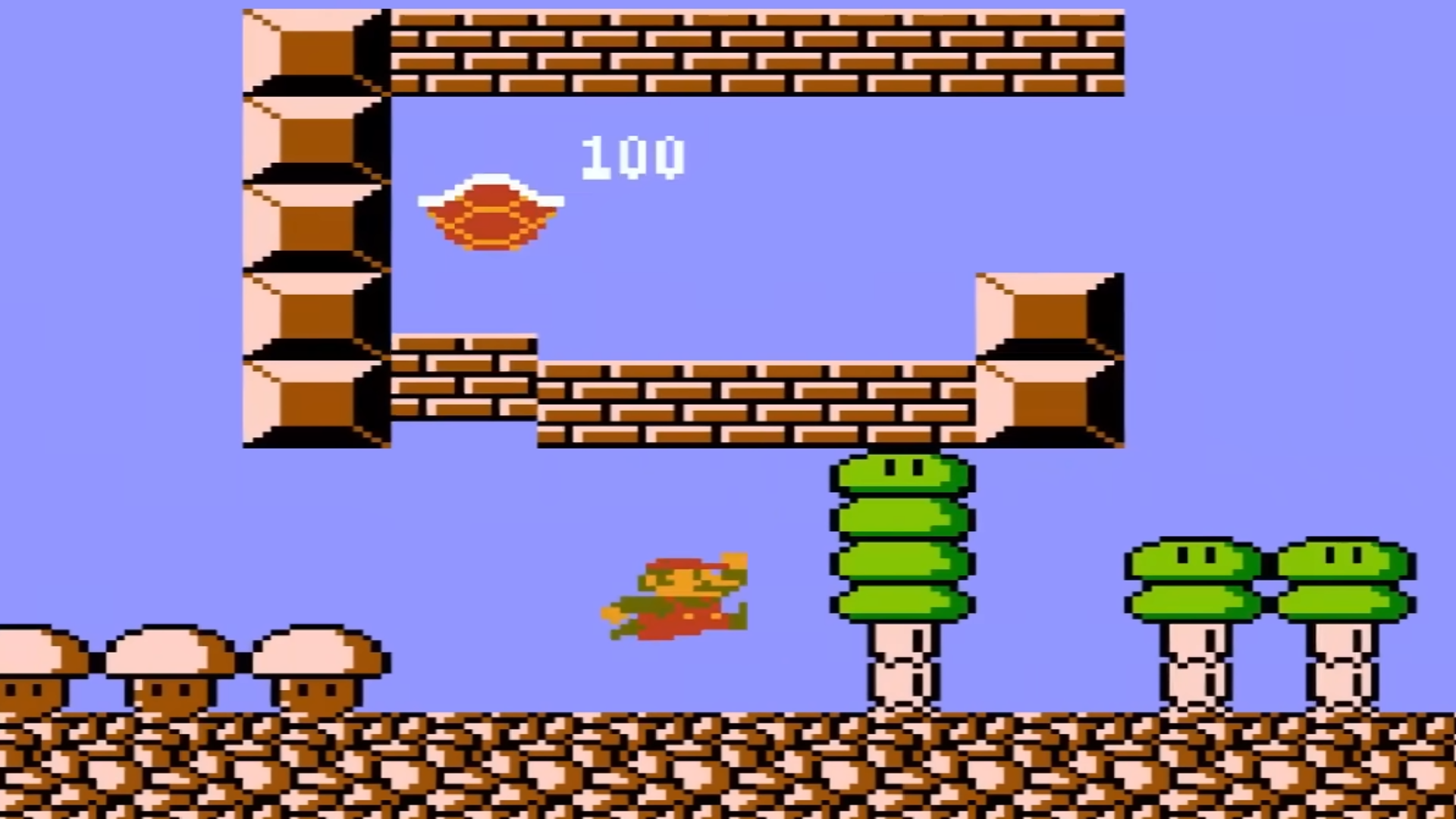
In 1986, Nintendo released an add-on for its Famicom console (the Japanese version of the NES) called the Famicom Disk System. This device connected to the bottom of the console and let players use floppy disks instead of game cartridges. One of the first games available on the Disk System was a follow-up to Super Mario Bros., called Super Mario Bros. 2, but it was more like extra content or a large expansion than a true sequel.
As a huge Mario fan, I always found it interesting how Super Mario Bros. 2 came about. It used a lot of the same stuff as the first game – the engine and most of the graphics were familiar – but the levels were designed to really challenge players who had already gotten good at the original. Apparently, Nintendo thought they were way too hard for players in the West, so they didn’t bother releasing it over here. Plus, our NES system didn’t even have the Disk System needed to play it, which was a bummer!
While it’s a bit of a strange case, Super Mario Bros. 2 was essentially the first expansion pack for a console game. The version we received in the United States wasn’t actually a Mario game originally; it was a modified version of a game called Doki Doki Panic. The original Japanese sequel, Super Mario Bros.: The Lost Levels, eventually came to the West as part of the Super Mario All-Stars collection.
4. Excitebike
One of the Earliest Console Level Editors
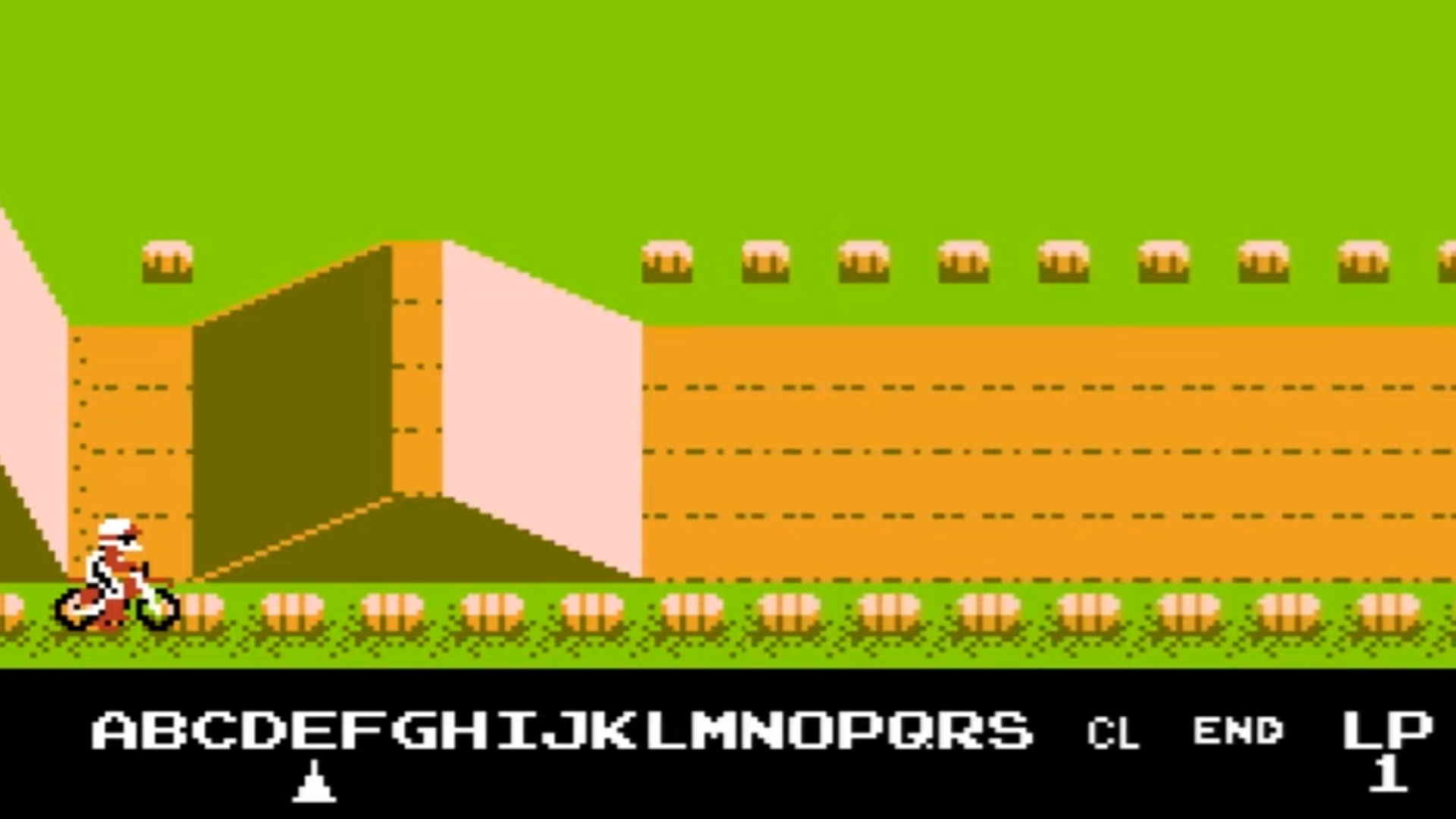
Back in the early 1980s, many people enjoyed creating their own video games on home computers, and that really helped build the early PC gaming scene. Making games for consoles was much harder, though, because Nintendo strongly defended its hardware copyrights. However, the NES did allow for some customization, most notably with the game Excitebike.
Excitebike seemed like a straightforward motocross racing game where players competed against others on a track full of jumps and obstacles. But what really made it special was the Design Mode. This allowed you to build your own tracks, placing obstacles wherever you wanted, and then race them against friends or the computer.
You know, these days it’s super common to play old NES games on emulators and mess around with the levels, or even use built-in editors in newer games to customize things. But Excitebike was doing that way back then, right on the cartridge and console itself! It was ahead of its time, really – it let you build and play your own tracks before that stuff was even a thing.
3. Metroid
Planted the Seeds of a Genre
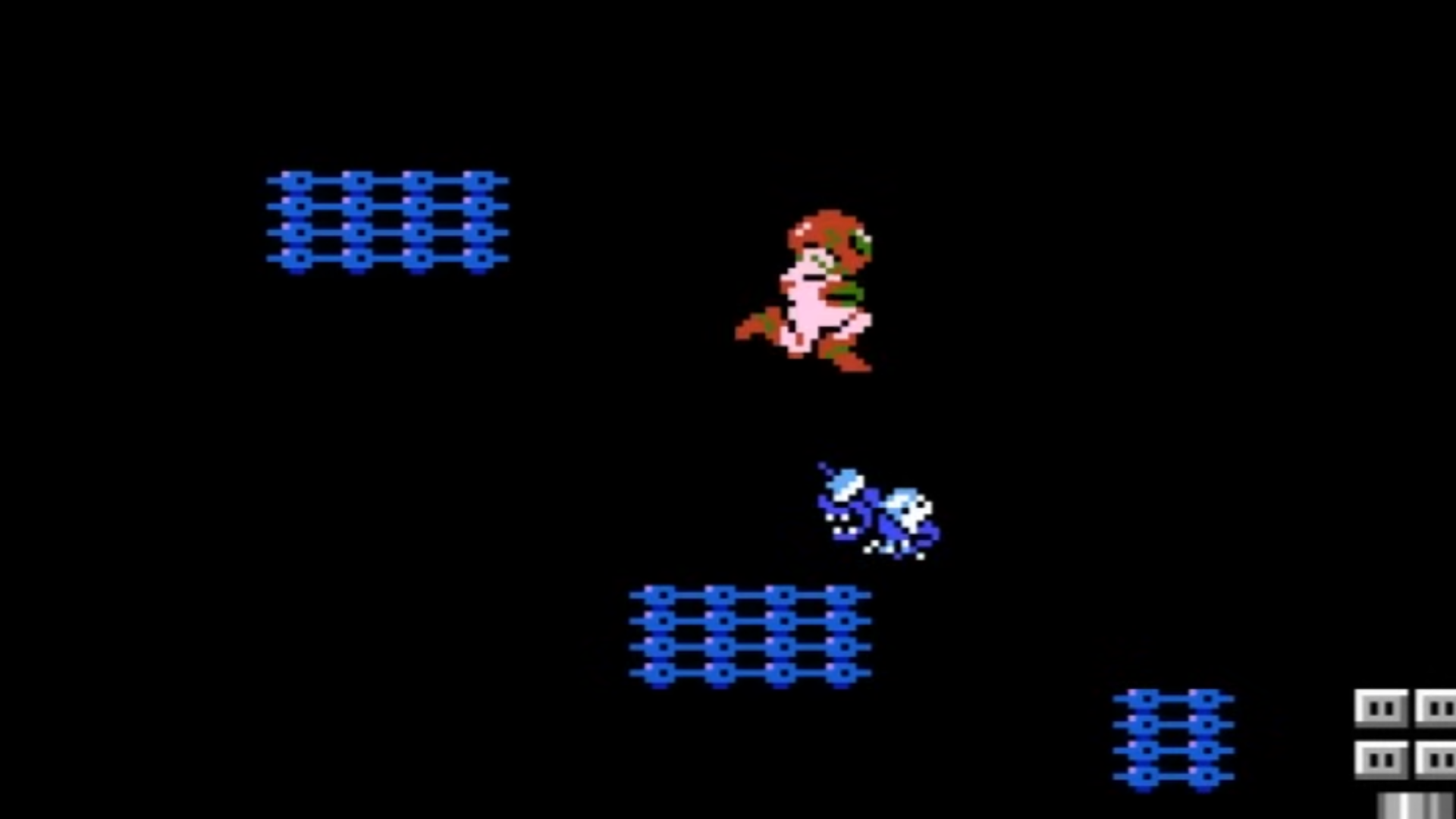
The term “Metroidvania” isn’t the only way to describe these types of games. Developers also call them “search action” games, highlighting the combination of fast-paced action, platforming, and the freedom to explore a large, interconnected world. While games like Super Metroid and Castlevania: Symphony of the Night popularized this style, the original Metroid game first introduced many of its key features.
Subscribe for NES origins and game-design insights
The original Metroid was a huge game for the NES, featuring five different areas and tons of upgrades to find. It was remarkably open-ended for its time, letting players explore and create their own maps to keep track of progress. While the game saved your upgrades with passwords, you always restarted each area at the beginning, making a map essential for navigating its world.
Interestingly, Metroid was an early game that sparked the speedrunning community, thanks to its multiple endings. The best ending famously revealed a surprising twist – that the player character, Samus Aran, was a woman.
2. Super Mario Bros.
Pioneered Scrolling Graphics
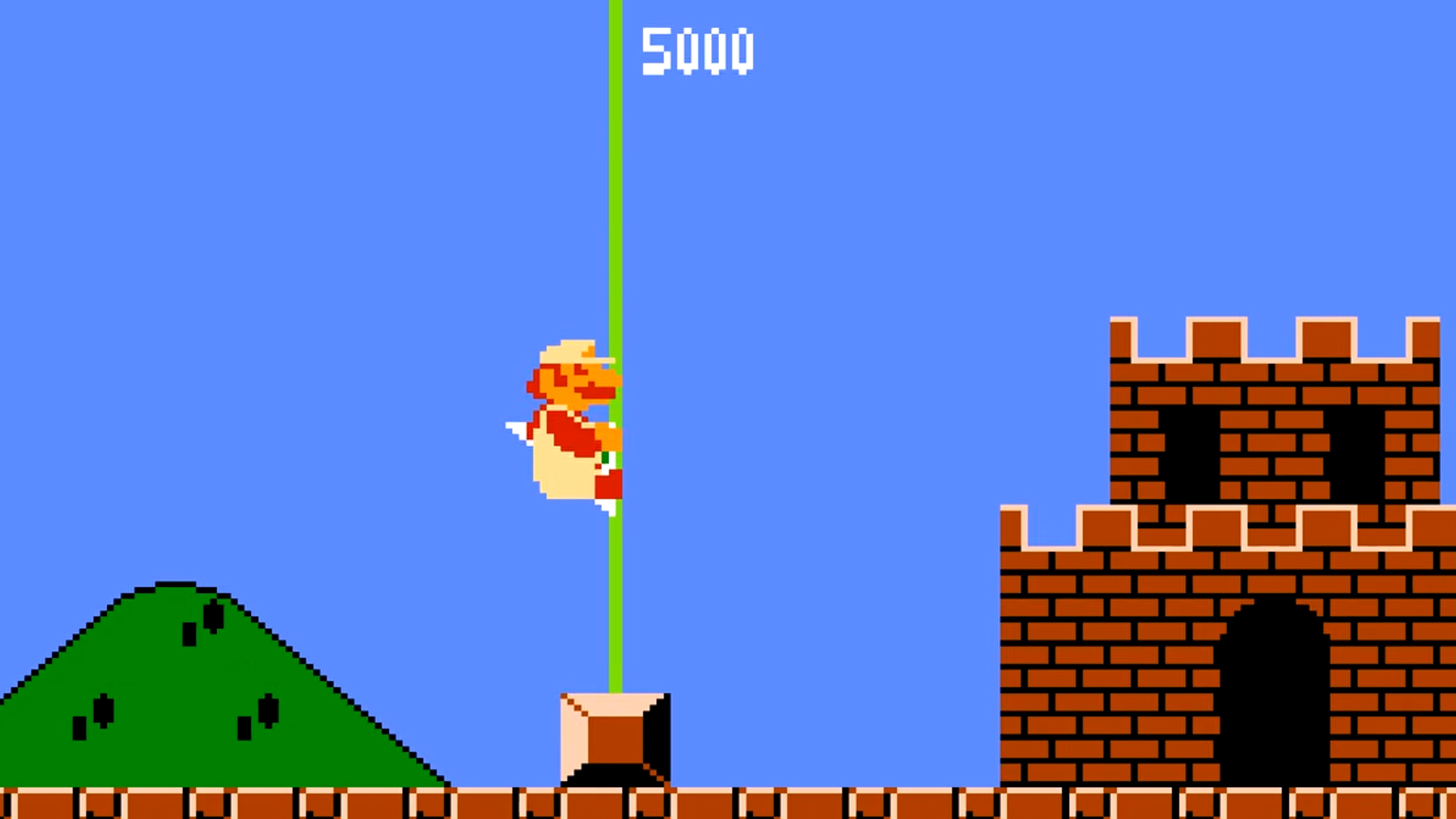
Although Super Mario Bros. is famous and often considered a defining platformer, it wasn’t the very first game of its kind. Games with jumping were around even in the early days of Atari. But what really set Super Mario Bros. apart was its ability to scroll the screen, letting players see more of the level as they moved.
The original Super Mario Bros. for the NES revolutionized platformer games with its smooth, side-scrolling graphics. Unlike earlier games that either showed everything on one screen or loaded a completely new screen when you moved, Mario could run continuously to the right, with new challenges appearing as he went. This constant movement was key to the game’s fast pace and helped create its iconic level designs.
Interestingly, after Nintendo launched Super Mario Bros., many independent game developers went all-out trying to replicate its smooth scrolling. One of the earliest successful attempts was the shareware game Commander Keen.
1. The Legend of Zelda
Gave Us the Gift of Saving
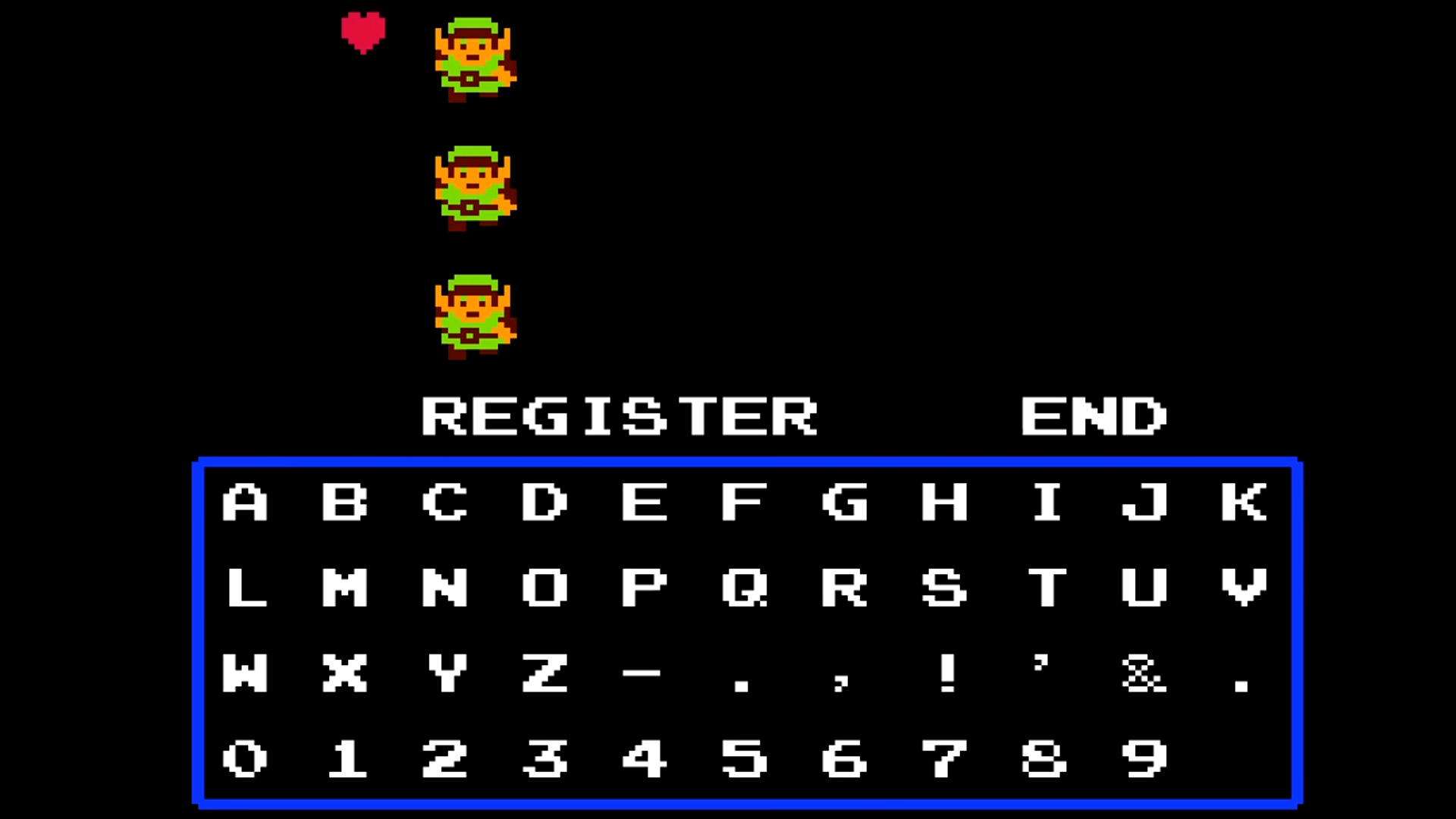
Early video games, like those on the NES, were designed much like arcade games – you had to finish them in a single play session or start over. While some games offered passwords to help you pick up where you left off, these systems were often awkward to use. The Legend of Zelda was one of the first console games to change this, and it became a hugely popular and influential title on the NES.
The first Legend of Zelda game was innovative for its time because it included a small memory chip and battery. This allowed players to save their game progress – a new feature at the time – so they could continue their adventure later instead of having to complete it in a single play session.
Most games released recently include an automatic save feature, which is a good thing! I definitely wouldn’t want to have to replay every game from the very beginning.
Read More
- Robinhood’s $75M OpenAI Bet: Retail Access or Legal Minefield?
- All Skyblazer Armor Locations in Crimson Desert
- How to Get the Sunset Reed Armor Set and Hollow Visage Sword in Crimson Desert
- How to Catch All Itzaland Bugs in Infinity Nikki
- All Hauntingham’s Letters & Hidden Page in New Super Lucky’s Tale
- Speedsters Sandbox Roblox Codes
- Invincible: 10 Strongest Viltrumites in Season 4, Ranked
- Who Can You Romance In GreedFall 2: The Dying World?
- Top 10 Must-Watch Isekai Anime on Crunchyroll Revealed!
- Black Sun Shield Location In Crimson Desert (Buried Treasure Quest)
2026-02-27 22:45