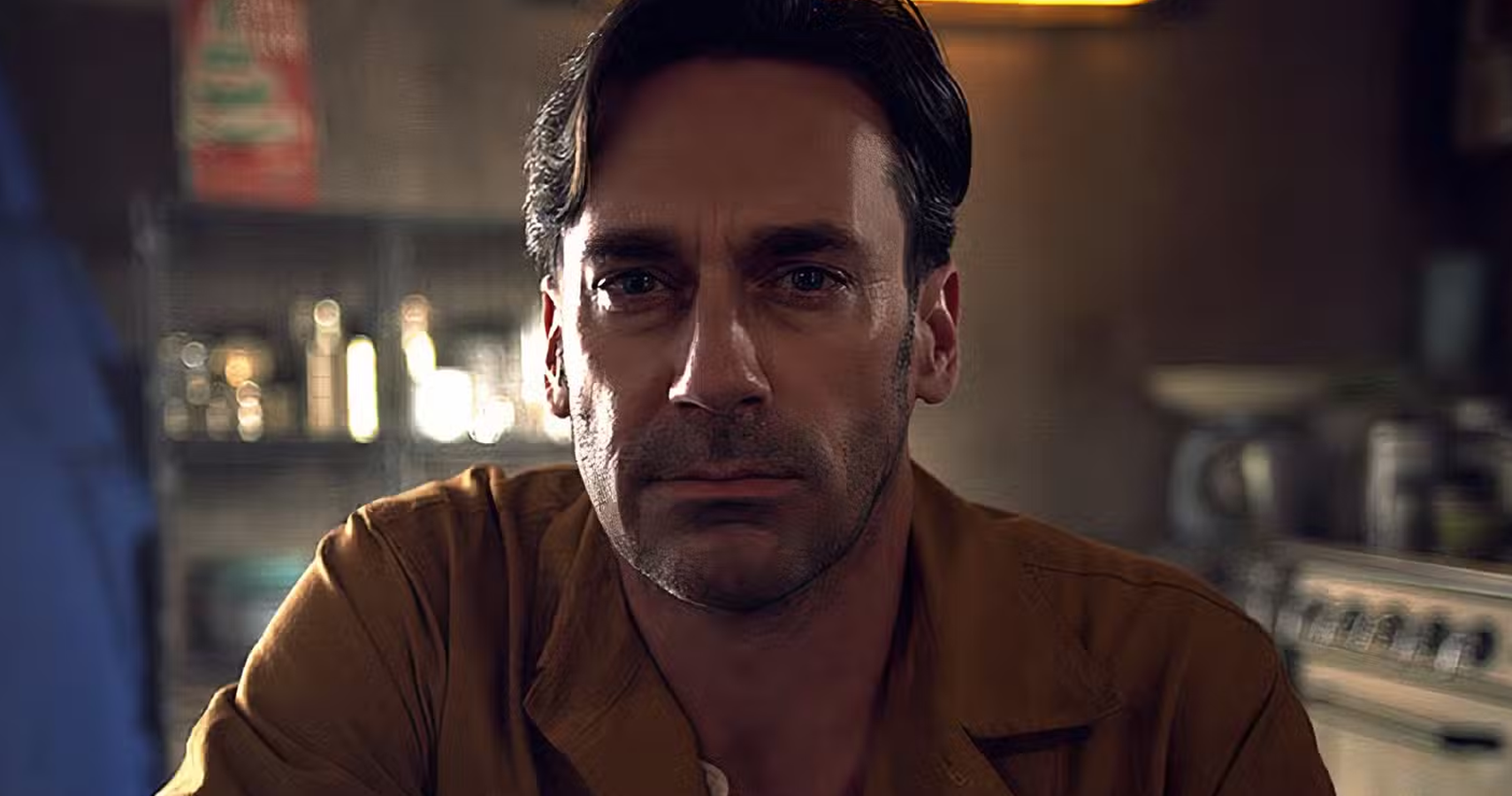
Whenever fans talk about the best episodes of Black Mirror, “White Christmas” consistently comes up. Its 9.1/10 rating on IMDb is impressive, but the episode’s lasting impact is what truly makes it stand out. It’s one of those episodes that stays with you long after you’ve finished watching.
This episode is incredibly haunting and stays with you long after it ends. It’s not just a quick thrill; the story and its themes really burrow into your mind, making you think and wonder about its connection to real life. It doesn’t rely on jump scares, but instead creates a lingering unease that quietly disturbs your thoughts and even your sleep.
White Christmas Is Black Mirror’s Highest-Rated Episode For A Reason
What Starts as Three Stories Becomes One
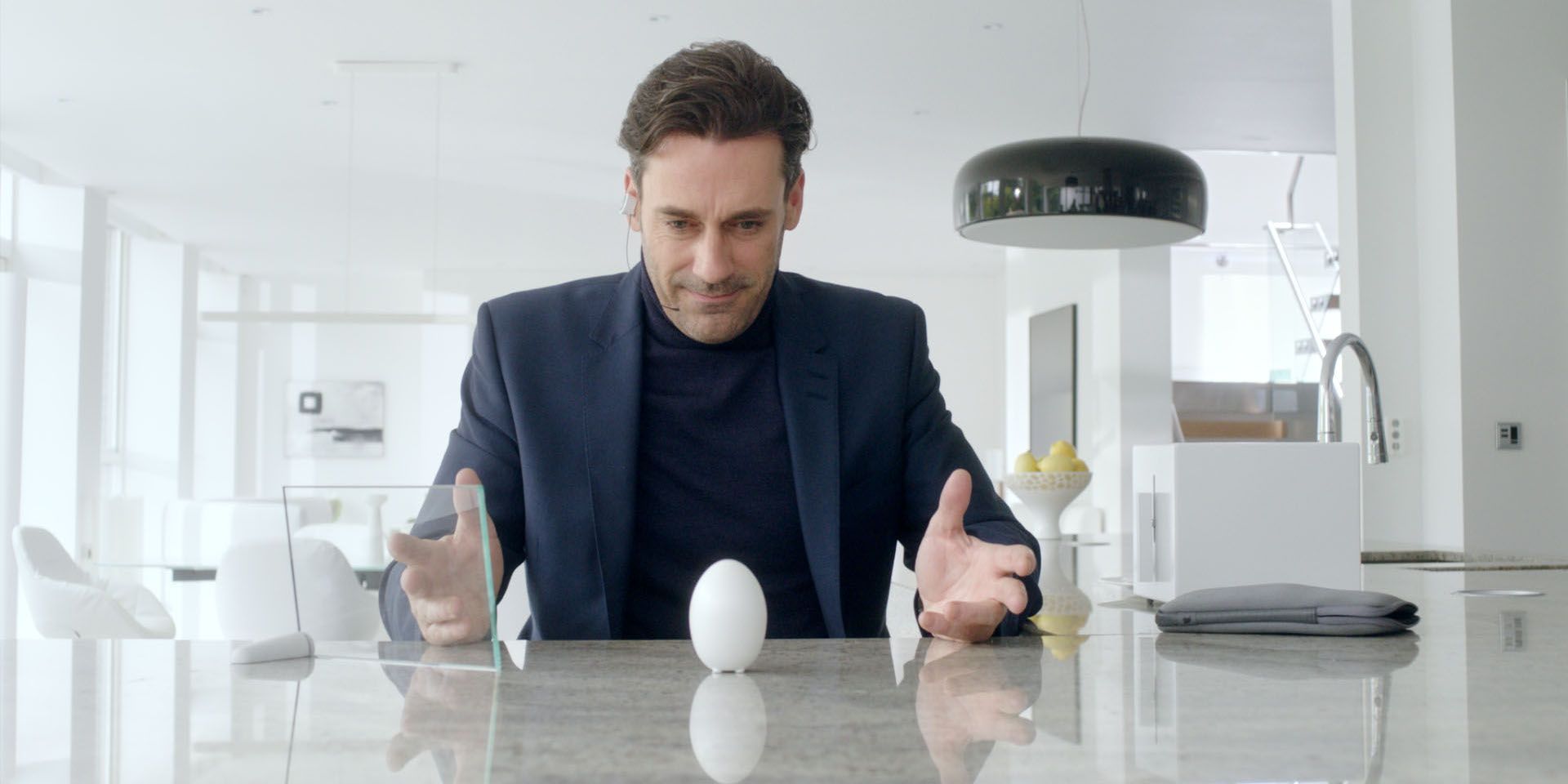
The most popular episode of Black Mirror, titled “White Christmas,” is a 73-minute special that originally aired in 2014. It centers on two men, Matt (played by Jon Hamm) and Joe (Rafe Spall), who have lived in isolation together for years with minimal communication. As they begin to talk, the episode reveals how they came to be in their situation. Initially, the story unfolds as three distinct narratives.
Matt describes a past where people received coaching on social interactions through live video. He also mentions “cookies” – digital copies of a person’s mind used as helpers. Meanwhile, Joe reveals a relationship that led to him becoming completely isolated. While the premise seems simple, it’s actually quite unsettling. Even the first time you watch it, something feels wrong, and that feeling is a key reason why this is considered one of the strongest episodes of Black Mirror.
Why This Episode Feels More Disturbing Than Traditional Horror
The Kind of Fear That Doesn’t Let You Sleep

Okay, so if you’re hoping for a typical scary movie with things jumping out at you, White Christmas isn’t that at all. It doesn’t rely on cheap thrills. Instead, it builds this really unsettling feeling that just…sticks with you. It’s more about the quiet moments, the silences that feel loaded with dread – it genuinely gets under your skin. Honestly, it’s the kind of episode that stays with you for days, having you lie awake at night, overthinking every little thing that happened.
The story’s impact comes from how relatable it is. With so much recording and sharing happening today, the idea of ‘Z-Eyes’ – advanced recording technology – doesn’t seem so far-fetched. It’s easy to envision a future where people could broadcast everything they see. While being digitally ‘blocked’ into a blurry image sounds drastic, it quickly feels unsettlingly familiar. It makes you think: what if someone you encounter every day has completely blocked you from their view? You could be standing right there, but to them, you’d be invisible.
Honestly, what really gets under my skin is the idea of ‘cookies’ as they present it – these digital copies of yourself. It’s unsettling to think about a version of you that thinks and feels, but is ultimately just something to be manipulated, put on hold, or completely dismissed. Imagine a copy of yourself just… waiting indefinitely. It’s a creepy thought, but with AI advancing so rapidly, it doesn’t feel like science fiction anymore. It feels like a genuinely possible future, and that’s what makes it so impactful.
This is when the episode truly connects with you – it stops feeling distant and starts feeling deeply personal. The silence becomes more noticeable, your own boundaries feel blurred, and you begin to consider how much of your life is outside of your influence. All of this is combined with the characters’ own struggles, none of whom are simple or easily likeable. As the story progresses, it becomes increasingly difficult to know who to root for. This unsettling feeling lingers, not from any direct scare, but because it feels uncomfortably realistic.
White Christmas Has A Twist That Changes Everything
The Moment Everything Falls Into Place
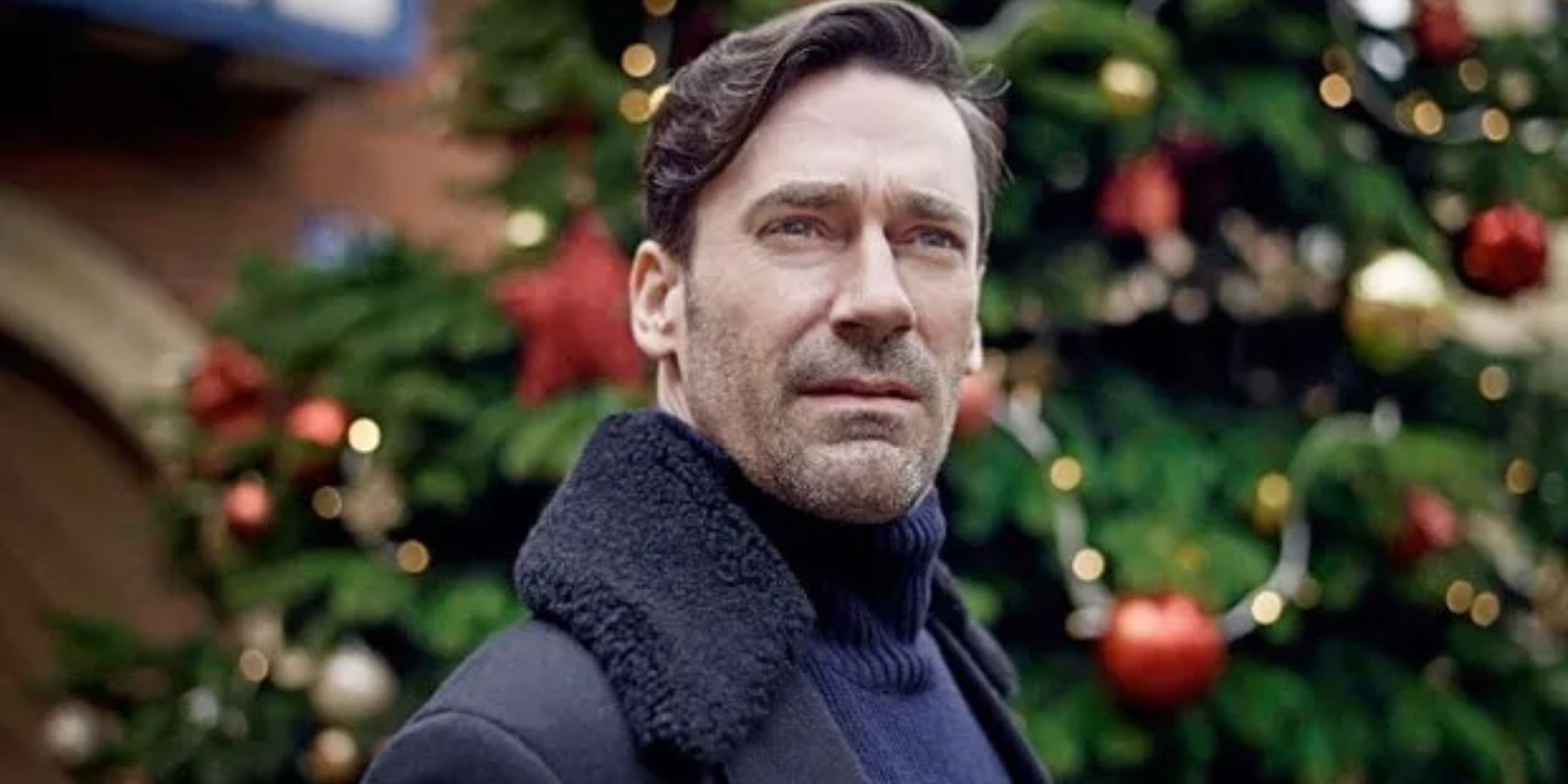
The truth hits you unexpectedly, like a delayed impact. What starts as a calm, somewhat strange conversation between the two men quickly turns shocking. The cabin isn’t real, and neither is the time they’ve spent there – not as Joe perceives it. He’s essentially a digital copy, being manipulated and pressured until he reveals what they want to know.
And just when that realization settles in, the episode tightens the screws even more.
Joe isn’t simply imprisoned; he’s stuck in a torment where time feels excruciatingly slow. He’s forced to endlessly listen to the same Christmas song, with no way to stop it or even pause. It’s a subtle but devastating punishment – a relentless, nagging feeling that won’t disappear.
What’s truly unsettling is the earlier scene with the helper robot. She simply asks for a task, anything to avoid feeling so lonely. But she’s ignored, and time seems to stretch on endlessly. It’s not about any big conflict or outburst, but a quiet, intense feeling of isolation that really stays with you – even more than the final moments of the story.
The episode builds to something much larger than it initially seems. What begins as a simple discussion evolves into a deeply unsettling experience, where even the smallest moments become significant. It’s the kind of story that stays with you, prompting you to revisit each detail and understand the full extent of what happened.
How It Reflects Real-World Fears About Technology
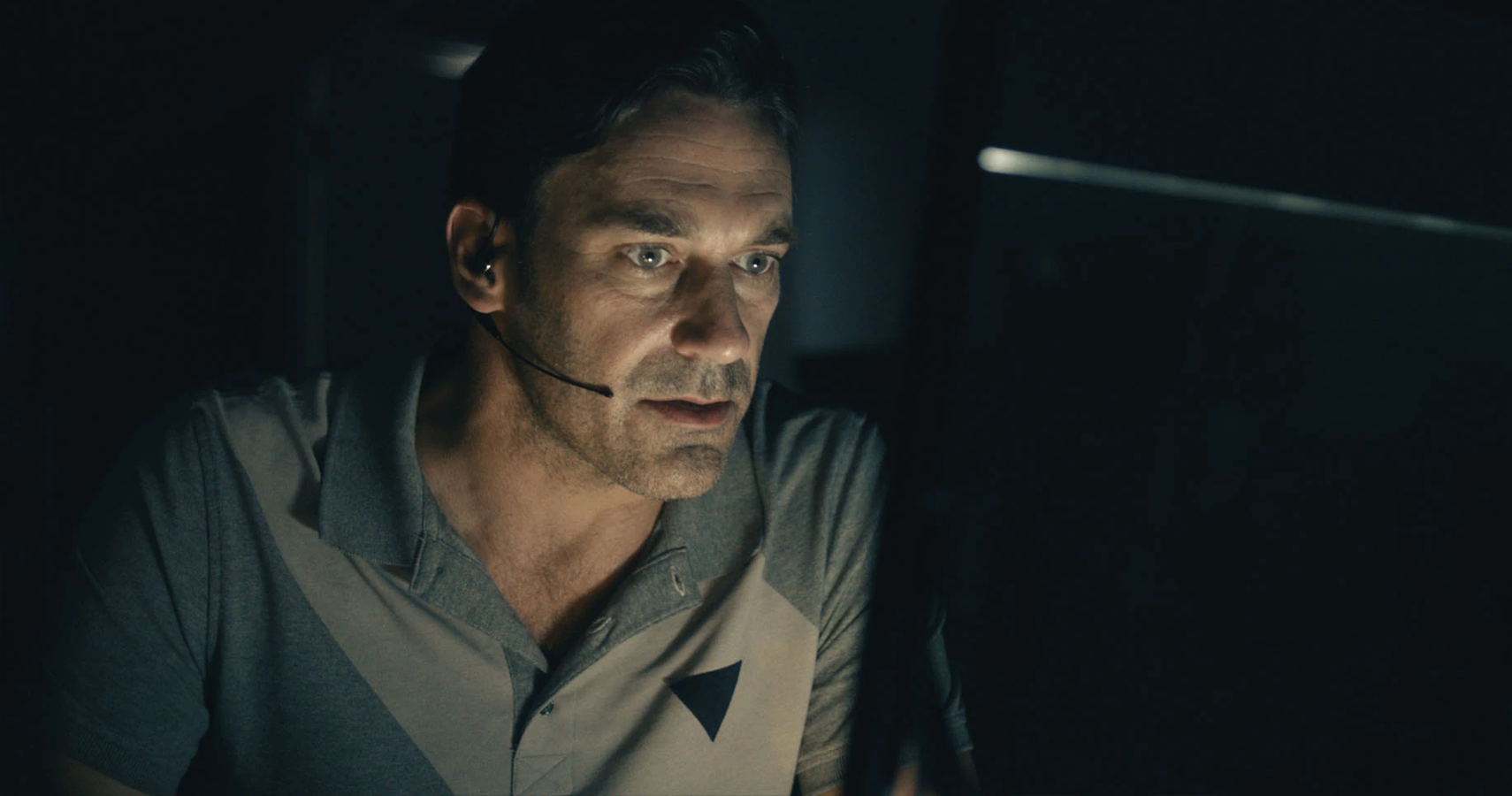
This is when White Christmas truly gets under your skin. It doesn’t rely on jump scares, but on unsettling ideas that feel familiar and a little too real. It takes everyday things and twists them just enough to make you uncomfortable.
One of the biggest concerns is privacy. It doesn’t seem so distant anymore to imagine someone looking into your personal life or seeing things from your point of view – and it feels like that could quickly escalate. The show also explores blocking someone, which completely erases them from your experience, reducing them to a blurry, silent presence. While it seems drastic, it mirrors how easily we disconnect from people in the digital age.
What really stuck with me was the idea of a digital consciousness. It’s unsettling to imagine a version of yourself that can think and feel, but is completely powerless. The show doesn’t spell it all out for you, which I appreciated – it just presents the concept and lets you wrestle with it yourself. It’s a truly haunting thought that’s stayed with me long after watching.
There’s a striking realism to White Christmas that’s hard to dismiss. Watching it today, it feels surprisingly predictive of what’s to come. What’s unsettling is realizing that some of the concepts presented aren’t so far-off, and are, in subtle ways, perhaps already unfolding around us.
Read More
- Forza Horizon 6: Find the Ohtani Treasure Chest Location
- NTE Drift Guide (& Best Car Mods for Drifting)
- LEGO Batman Legacy of the Dark Knight Batcave Minikits & WayneTech Caches
- Sega’s “Super Game” is Said to Release Next Month, But Nothing is Known About It
- Skyblivion Gets Encouraging Development Update
- How to Open Locked Door in Tenryu River in Nioh 3 (Dirty Key)
- God of War Shadow Drops New Game and Confirms Greek Trilogy Remake
- New Steam Game is Like Pokemon If It Were a Sci-fi Shooter
- Dead as Disco Best Songs (Clear Beats & Stable BPMs)
- Asmongold reveals shocking detail about how much money he makes
2026-03-28 01:13