Top gainers and losers
Most profitable crypto: Allora (ALLO), LAB (LAB), ROLL (ROLL), Rain (RAIN), Humanity (H), Nockchain (NOCK), Stellar (XLM), Collector Crypt (CARDS), DeBox (BOX), Unicorn Fart Dust (UFD).
Most profitable crypto: Allora (ALLO), LAB (LAB), ROLL (ROLL), Rain (RAIN), Humanity (H), Nockchain (NOCK), Stellar (XLM), Collector Crypt (CARDS), DeBox (BOX), Unicorn Fart Dust (UFD).
Cryptocurrencies that are trading close to all time high values LAB (LAB/USDT) LAB rate has changed by 109.04% in the last 7 days. The difference for the last day was 28.34%. Cryptocurrency LAB ranks the 32 place in the rating by capitalization. The price of LAB/USD has declined by 1.15% from the peak value on … Read more
Sorry, DASH/USD forecast is not available at the moment. Please try again later. Forecasts that will be relevant tomorrow:
Key Takeaways:
Researchers are leveraging the power of genetic algorithms to refine lattice reduction techniques, achieving improved performance in solving complex mathematical problems.

Yet, as the peddler of numbers marches on, BTC eyes a wry refuge: the 70k-72k corridor where the trendline hug and the 100‑day moving average might throw in a lifeline. In the language of the masses, a sigh of temporary reprieve.
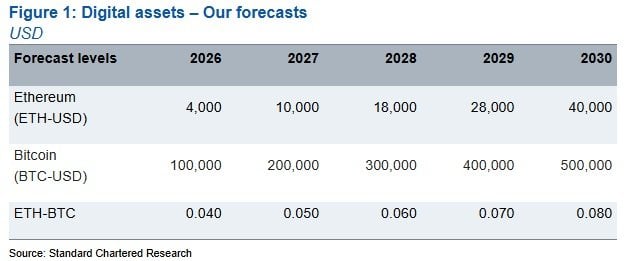
Key Takeaways:
Cryptocurrency Jupiter ranks 96 place by market capitalization. The price of JUP has decreased by 90.80% from the maximum value on 31 January 2024. Today the price for 1 JUP is 0.1859 USD. Yesterday the rate was 0.1885 USD for 1 Jupiter. JUP/USD traded in the range of 0.1847 – 0.1860. The difference compared to the previous day was -1.38%.
Cryptocurrency Beldex ranks 95 place by market capitalization. The price of BDX has decreased by 82.23% from the maximum value on 17 December 2018. Today the price for 1 BDX is 0.080095 USD. Yesterday the rate was 0.078401 USD for 1 Beldex. BDX/USD traded in the range of 0.080090 – 0.080106. The difference compared to the previous day was 2.16%.
Cryptocurrency Pump.fun ranks 94 place by market capitalization. The price of PUMP has decreased by 79.85% from the maximum value on 14 September 2025. Today the price for 1 PUMP is 0.001793 USD. Yesterday the rate was 0.001731 USD for 1 Pump.fun. PUMP/USD traded in the range of 0.001781 – 0.001794. The difference compared to the previous day was 3.58%.