Bitcoin: The Ultimate Drama Queen Amid Global Market Meltdown!

In the U.S., the Nasdaq is at session lows, down 2.5%. S&P 500? A 2.3% slump. Europe’s markets? They’re throwing a pity party-Italy’s IBEX 35 down 5.2%, Germany’s DAX at 4.1%. Yikes.

In the U.S., the Nasdaq is at session lows, down 2.5%. S&P 500? A 2.3% slump. Europe’s markets? They’re throwing a pity party-Italy’s IBEX 35 down 5.2%, Germany’s DAX at 4.1%. Yikes.

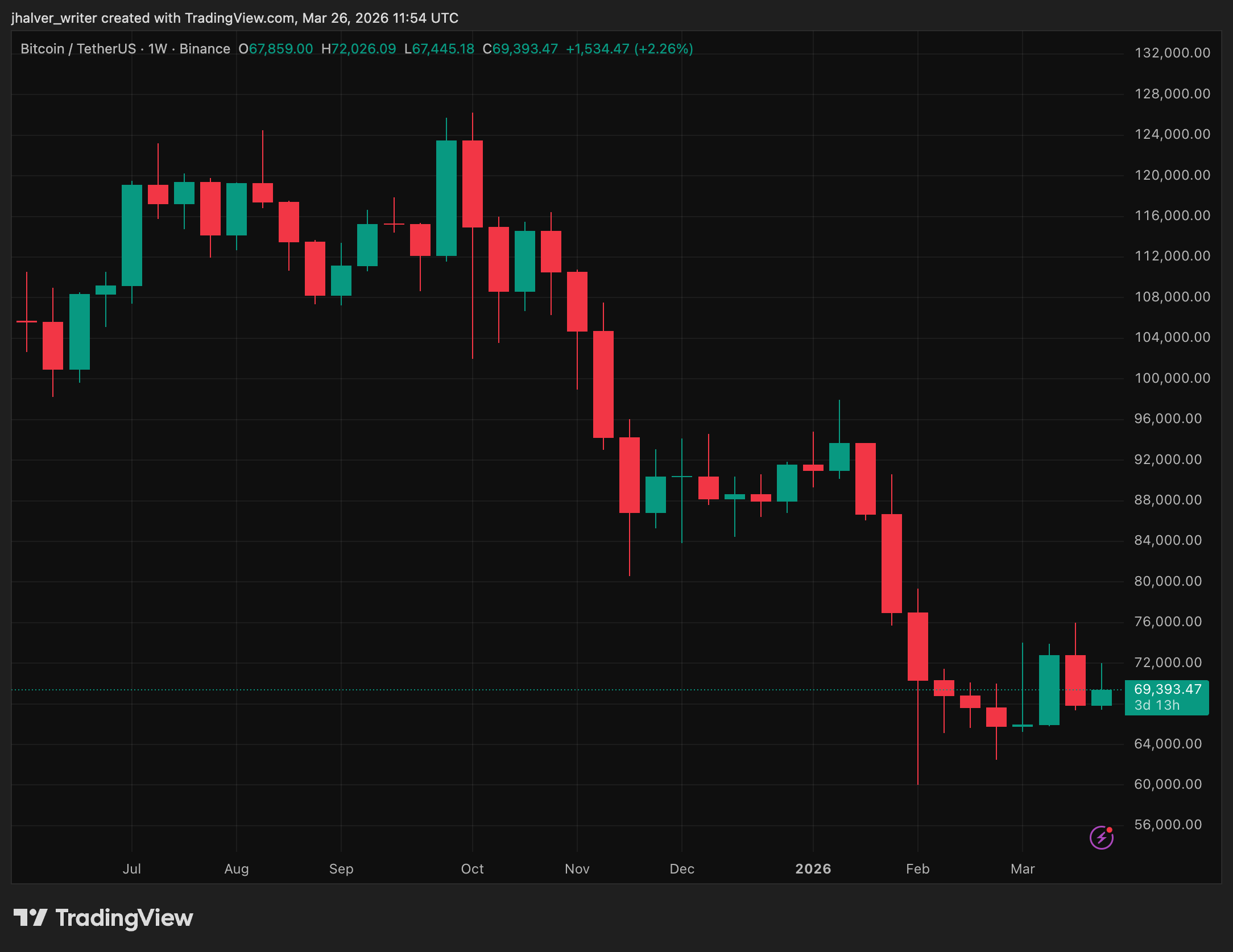
Behold, Bitcoin’s [BTC] recent jaunt above $70k-a 4.64% leap on the 2nd of March-has sparked whispers of a “fake pump,” allegedly fueled by short-sellers’ deleveraging theatrics. The next resistance, they say, looms at $78k, a price tag that smells faintly of desperation.
The crux of this upheaval? Not the interest rate, but liquidity-the very thing traditional banks treat with the disdain of a duchess eyeing a commoner’s crumpet. For years, savers have been forced to choose between earning interest and clutching their cash like a miser guarding a gold sovereign. On-chain alternatives, however, have swept in with the grace of a dashing rogue, offering both yield and freedom. One might say they’ve removed the trade-off “entirely,” though one suspects the banks would prefer to keep it tucked under the carpet.
CryptoQuant, in a burst of enthusiasm, shared a tweet showing the “percentage altcoins near ATL” metric. Apparently, a “significant” portion of altcoins-because why not-remains in a perpetual state of underwhelming. But, wait, it gets juicier: CryptoQuant claims this is the “largest regression of altcoins” we’ve seen in this cycle. Take a moment to appreciate that one. It’s a “largest regression” as if to say, “look, we’ve seen worse, but this… this is next level!”
This new law would change the rules for income and spending taxes to officially include cryptocurrency within the country’s financial system. It also aims to improve government monitoring of the crypto industry.
Meanwhile, the Dow Jones, that staid old gentleman, slipped a mere 140 points, while the Nasdaq 100, ever the opportunist, erased its earlier losses and turned positive. Oil, the perennial provocateur, failed to explode higher as feared, leaving the crypto sentiment to stabilize with all the grace of a cat landing on its feet-though one wonders if it’s a cat or merely a well-stuffed toy.

Now you’re clinging to the $28 demand zone like it’s the last slice of pizza at a party. Early signs say buyers might be whispering sweet nothings, and the Stochastic RSI is dipping like a dramatic soap opera star. Demand zones? Oh, they’re just short-term band-aids for buyers who love a good bargain. But beware, repeated selling pressure could turn this band-aid into a bandaid-sized hole!

This latest acquisition does the miraculous job of slightly lowering their overall cost per coin, which, according to some mysterious reports, stands at around $75,985. A small victory for accounting, but one that only paper pushers would appreciate.
BlackRock’s iShares Bitcoin Trust (IBIT) pulled off its most dramatic Bitcoin heist in nearly half a year, snatching up a tidy 11,054 BTC-worth a cool $767.5 million-as Bitcoin dared to flirt with $69,000. The trading volume for IBIT hit a blistering $3.9 billion, which is more than a dozen cows in a barn but less … Read more
And so the saga continues. The digital world is holding its breath as talks over stablecoin regulation and the broader crypto market structure heat up. A delicate tension fills the air, as lawmakers scramble to make sense of the Digital Asset Market Clarity Act. Among the most vocal advocates are David Sacks, the White House’s AI and crypto czar, and Brad Garlinghouse, CEO of Ripple. Both are determined to push the bill forward, even as they walk the tightrope of a deeply divided industry. The tension is palpable-will they succeed, or will this become another political graveyard of good intentions?