Infini Exploiter Buys $13M ETH Dip, Sends Funds to Tornado Cash
Blockchain data and several security firms show the money was then sent through Tornado Cash, a service that mixes cryptocurrency transactions to obscure their origin.
Out of 1,200 souls polled, nearly two-thirds gave him a hearty thumbs-up, while a paltry 1.8% could muster only a feeble raspberry. Bukele, ever the wag, took to the social media ether to chortle about the opposition’s dwindling numbers, quipping that they’d soon need a magnifying glass to spot themselves.

Now, as the wise folks at CoinShares point out, fund flows are like a weather vane-they spin with the wind of prices. But it’s the pace of the spin that tells the real tale, often whispering sweet nothings about where investor sentiment is headed. This recent slowdown? Well, it’s like the market’s taken a deep breath and said, “Maybe we’re not all doomed after all.”

The digital asset investment firm insists we’re “nowhere near dangerous territory,” and that a quantum computer capable of breaking Bitcoin’s cryptographic armor is at least a decade away. Translation: you’ve got time to finish your popcorn and read the manual on how to panic later.
And now a plan is spoken, announced on January 30, 2026, to turn a billion dollars of stablecoins into Bitcoin within thirty days. A bold, almost ceremonial conversion, as if one were to plant a tree where yesterday’s wind blew hardest. The motion is not so much a triumph of spectacle as a quiet belief: Bitcoin, they profess, is a long-term store of value. A belief that persists even as the price has wandered down from the dizzying height of more than $76,000, as if the sovereign market itself had taken a small nap. If you like a good wager with a ledger as your witness, there is something vaguely noble in such steadiness, even if one suspects the world will not be moved to applause by a plan well-intentioned.
He asserts that ETH-backed algorithmic stablecoins move the counterparty risk away from the user and into the arms of market makers, a transfer that lets the saver stay with their keys while the risk takes a stroll with those who wear the risk like a heavy scarf in a crowded room.
The potential reductions, it seems, could befall around 1,000 individuals, a rather sizeable number when one considers that Block’s total headcount stood at just under 11,000 as the year drew to a close in 2025.

Indeed, this political mandate serves as no mere suggestion but rather a bold declaration of intent, allowing Ms. Takaichi to pursue her ambitious agenda, complete with a lavish $135 billion stimulus package. Such an amount surely could fund a great many social engagements or perhaps even a few splendid novels.

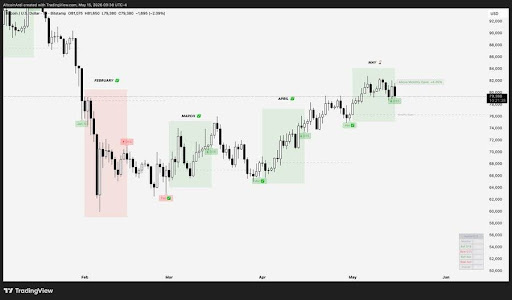
Then came the fateful day of January 29, 2026, when BTC decided to take a nosedive to $84,000 amid a chaotic $1 billion in forced liquidations. It was like watching a car crash in slow motion – painful yet hard to look away from. The situation escalated further in early February, with a jaw-dropping 33% drop from $90,000 to $60,000 in just 72 hours. Cue the dramatic music and broad margin calls!
These two industry heavyweights are challenging the entire crypto universe to take a good, hard look in the mirror. You know, the kind of self-reflection that usually leads to a midlife crisis or a new haircut.