Smarter Quantum Simulations: A New Encoding Boosts Molecular Accuracy
Researchers have developed an optimized quantum encoding technique that significantly improves the efficiency and resilience of molecular simulations.
Researchers have developed an optimized quantum encoding technique that significantly improves the efficiency and resilience of molecular simulations.

Researchers have developed a new protocol for privately and remotely determining a quantum property, even when signals are weakened by transmission losses.

A new hybrid computing architecture leverages the combined strengths of quantum and photonic systems to significantly improve the accuracy and efficiency of time-series prediction.

New research reveals that commonly used key length extension techniques are vulnerable to sophisticated quantum attacks, demanding a re-evaluation of current cryptographic standards.

New compilation techniques promise to dramatically reduce the resources needed to run practical quantum algorithms on near-term hardware.

Researchers have developed a new quantum teleportation protocol that improves fidelity and reduces resource demands for transmitting complex quantum information.

A new framework automatically generates custom code analysis queries from vulnerability descriptions, bridging the gap between natural language reports and actionable security insights.
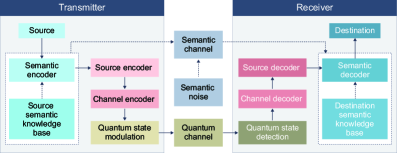
A novel quantum semantic communication scheme dramatically boosts data transmission efficiency for complex 3D data, exceeding classical channel capacity.

A novel architecture blends the power of quantum circuits with state space models to tackle long-range dependencies in sequential data.

A new reinforcement learning framework autonomously stabilizes quantum error correction by adapting to system drift and maximizing performance.