Unlocking the Secrets of Exotic Tetraquarks
![The decay of a resonance, potentially [latex]Z_c(4430)[/latex], into both two-body states like [latex]D^{<i>+} \bar{D}_{2}^{</i>0}[/latex] and [latex]\psi(2S)\pi^{+}[/latex], and three-body combinations of [latex]D^{<i>+}D^{-}\pi^{+}[/latex], [latex]D^{</i>+}D^{<i>-}\pi^{+}[/latex], and [latex]D^{</i>+} \bar{D}^{<i>0}\pi^{0}[/latex], offers a comparative shape analysis-scaling the [latex]\psi(2S)\pi^{+}[/latex] distribution to match the peak height of the [latex]D^{</i>+} \bar{D}_{2}^{*0}[/latex] mode-to determine the coupling constant [latex]g_{\psi'}[/latex] and reveal underlying patterns in particle decay.](https://arxiv.org/html/2601.20740v1/x8.png)
New research delves into the composition and decay of the Zc(4430) and Zc(4200) states, shedding light on the fundamental forces binding these unusual particles.
New research delves into the composition and decay of the Zc(4430) and Zc(4200) states, shedding light on the fundamental forces binding these unusual particles.
A novel framework leveraging fractal transforms and Fourier analysis dramatically improves the security and efficiency of image transmission.
New protocols enable secure computation of shared elements between private datasets, even when perfect matches aren’t required.
![The Shastry-Sutherland lattice-characterized by four orbitals within each unit cell and defined by sublattice degrees of freedom [latex] (m_x, m_y) = (A,A), (B,A), (B,B), (A,B) [/latex]-can be systematically transformed towards a square lattice through the introduction of diagonal Heisenberg couplings, offering a pathway to explore the interplay between magnetic frustration and dimensionality.](https://arxiv.org/html/2601.19980v1/x1.png)
New research reveals a shared underlying mechanism governing the exotic behavior of Dirac spin liquids on both square and Shastry-Sutherland lattices.

A new mathematical approach offers a precise way to model and analyze job queuing in cloud computing environments.
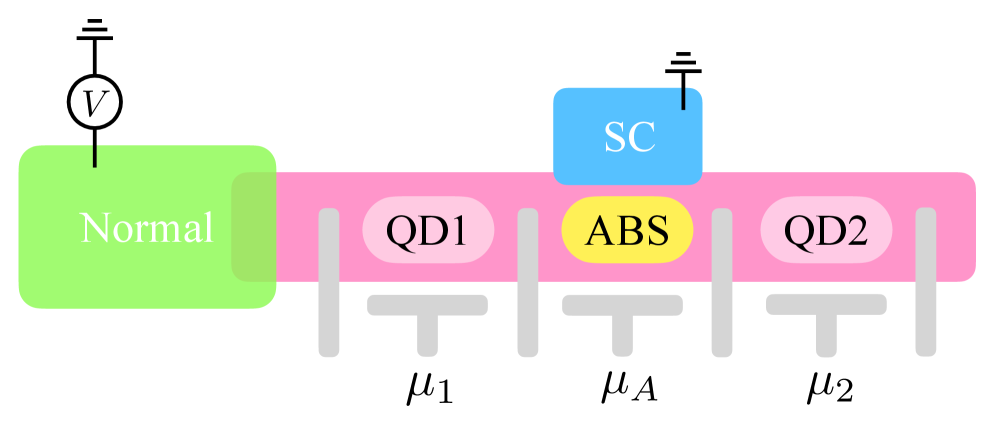
Researchers demonstrate a novel method for characterizing topological qubits by leveraging the sensitivity of quantum capacitance to the underlying fermion parity in a quantum-dot-based Kitaev chain.

A new approach leverages the principles of quantum mechanics to better understand and mitigate the tendency of large language models to generate factually incorrect or nonsensical text.
Researchers have developed a novel method for accurately determining the state of a quantum system, even with limited or adaptively collected data.
Researchers demonstrate a viable path toward protecting Open RAN infrastructure from quantum computing threats by integrating a new cryptographic approach into a critical 5G interface.
![The discretization of Burgers’ problem using a second-order MUSCL scheme, when integrated with a fourth-order Runge-Kutta method ([latex]RK44[/latex]), demonstrates that [latex]RK44[/latex] preserves the Total Variation Diminishing (TVD) property initially established by a forward Euler solution, even with variable time steps ([latex]\Delta t = \Delta t_{FE}[/latex]).](https://arxiv.org/html/2601.18947v1/figures/MUSCL2_TVD_RK4.png)
New research challenges the long-held assumption that strong stability preserving (SSP) methods are essential for maintaining numerical stability when solving hyperbolic conservation laws.