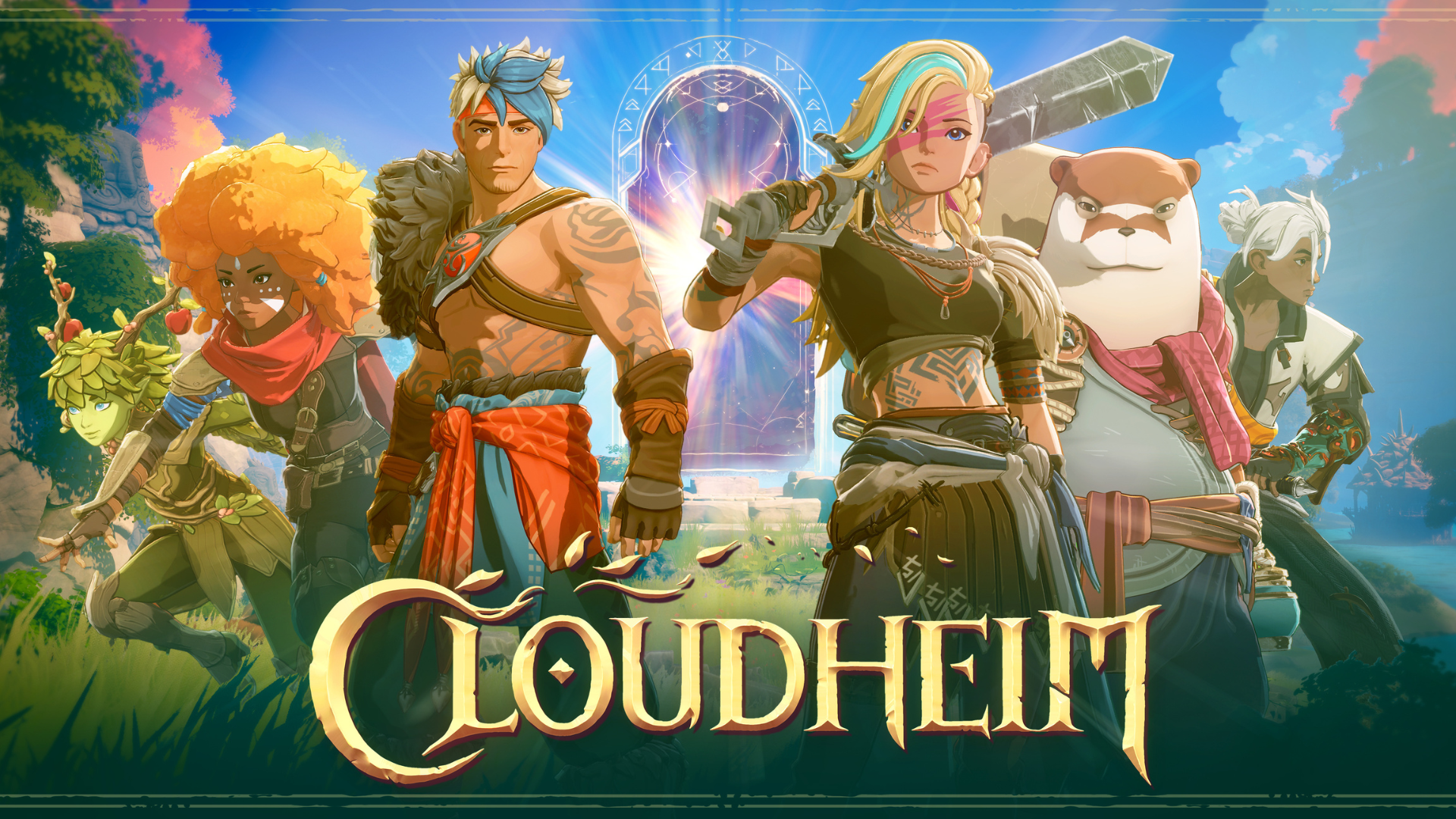
I’m really excited about Cloudheim, the new game from Noodle Cat Games! They’re a brand new studio, and it’s awesome to see them trying to do something fresh and different with their first release. I’m hoping it really stands out from all the other games out there!
What really makes Cloudheim special, for me, is how the combat feels – it’s all based on real physics, which is awesome! But it’s not just about fighting; the story is great, and it’s even better when you play with a friend. There’s so much to do, honestly. I’ve spent hours just exploring the world, finding hidden treasure and raiding dungeons for loot – it’s a ton of fun!
I went into Cloudheim expecting one thing, but I was quickly surprised. It’s a really complex game, and it feels like the developers are still adding a lot more content.
The issue with Cloudheim isn’t about its current state, but whether the developers can successfully achieve their vision for the game and finish strong.
What is Cloudheim?
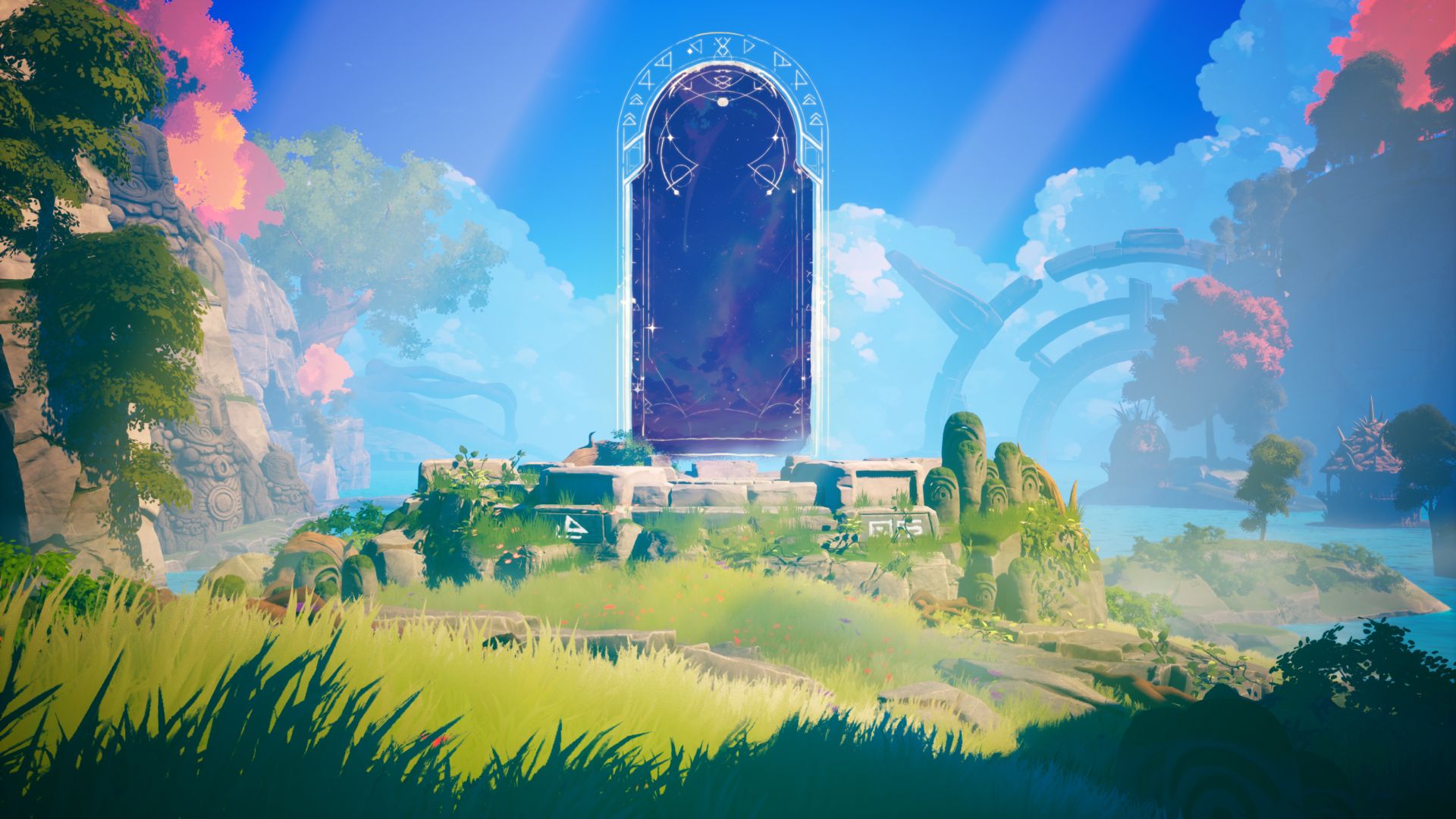
Okay, so trying to describe this game is trickier than I thought! It’s supposed to be a co-op RPG built around physics, which sounds amazing, but there’s also a big base-building element to it, too. It’s like both of those things are really central to the experience.
Explore the islands of Cloudheim, completing quests and gathering items to convince each island’s god to join your team. You’re on a mission to repair the world after Ragnarok, and recruiting these gods is the only way to do it.
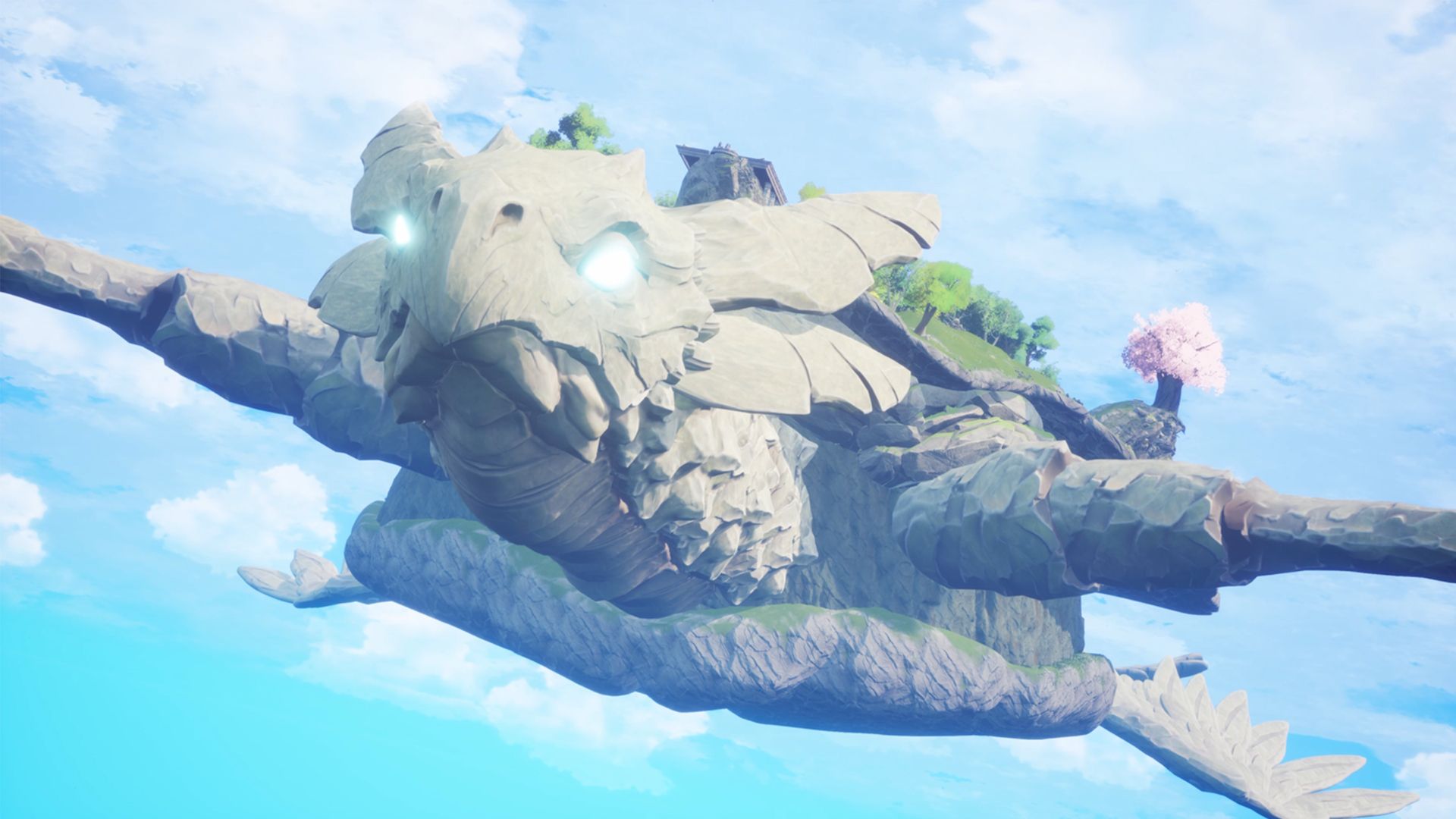
The game features four different classes that you can switch between as often as you like, letting you experiment with all their unique weapons. Gameplay follows a typical RPG structure: you’ll gain experience to level up, find better equipment, and ultimately battle powerful bosses. When you’re ready to finish playing or have collected everything you need, you can return to your base camp riding on the back of a giant, flying turtle.
In this section, you’ll create your main base and assign jobs to your Bolins – helpful characters who offer bonuses and collect resources. You’ll refine ore into metal and use it to create weapons, each designed for a specific character class. Plus, you can sell extra items at a shop where other characters will buy them from you.
That covers the main points. I’ll share some more details later, but it’s important to remember this game is still in development. Things could change quite a bit over the next few months as we continue to improve it.
The Story So Far
The version I played ended after the second island, but the final release will include more. Even so, the story is still far from complete.
If you’re looking for a grand, sweeping Nordic tale filled with powerful characters and a strong sense of fate, this story might not immediately captivate you. Right now, it feels more focused on showcasing the vibrant and fascinating world of Cloudheim than on delivering a truly epic narrative.
The game largely lacks voice acting after the tutorial, and there aren’t many cutscenes beyond the beginning. You’ll also find limited interaction with characters outside of a handful of brief conversations.
The story centers around your character’s actions, but each island also has a key character who provides quests and background information. These characters primarily exist to guide you forward – to the next quest or area. While you’ll encounter other people, they’ll mostly just offer bits of story and won’t have much impact beyond that.
Collect gods and bring them back to your base, where they’ll settle in. Once you have them, the characters on the current island aren’t very useful anymore, so it’s best to move to the next island unless you still need to collect more World Stars.
The Rollercoaster of Progression
Moving forward in Cloudheim has both positive and negative aspects. You’ll level up your character and class, but you also have to consider your base level and World Stars. These World Stars are essential for unlocking new islands to explore.
Your character has two levels: a general player level and separate levels for each class. You increase your player level by completing quests and defeating enemies. Class levels, however, only go up when you actively use skills or weapons specific to that class – feel free to switch between classes as you play! Your player level improves your core stats, while increasing a class level boosts specific skills and unlocks new abilities for that class.
Beyond character advancement, weapons also improve over time. They level up and become more powerful, and you can find upgrades during exploration to boost them further. While this system isn’t inherently flawed, it does lessen the importance of finding new weapons. Since your current weapons are constantly getting better, there’s less need to actively search for replacements – at least for a while.
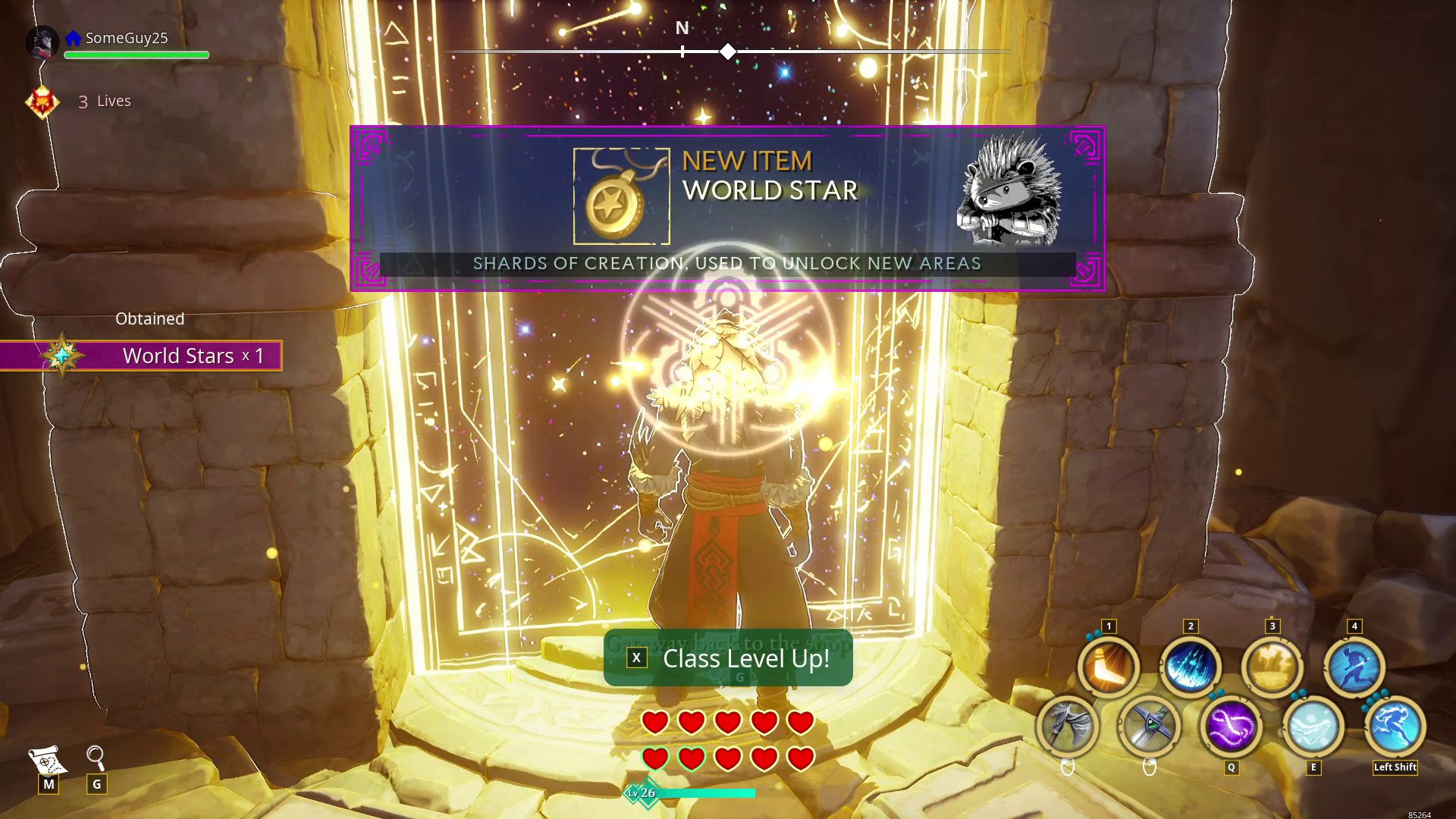
Okay, so as I’ve been exploring, I’ve learned about World Stars. You unlock them by just playing – finding them in chests that pop up randomly, but also as rewards for solving puzzles, taking down bosses, or clearing out dungeons. They aren’t super rare, but if you’re like me and try to do everything, collecting them can get a little tedious. You really have to make an effort to grab them all!
Once these systems are established, the game can feel repetitive, as you focus mainly on collecting World Stars to unlock the next island. While not a major issue, locking islands behind World Stars instead of player level diminishes the importance of leveling up your character.
The game definitely makes you want to see everything it has to offer, and I already enjoyed exploring anyway. It’s good that the game pushes and rewards you for doing so, but I sometimes got stuck searching for collectibles when I just wanted to progress to the next area.
It’s A Wonderful World
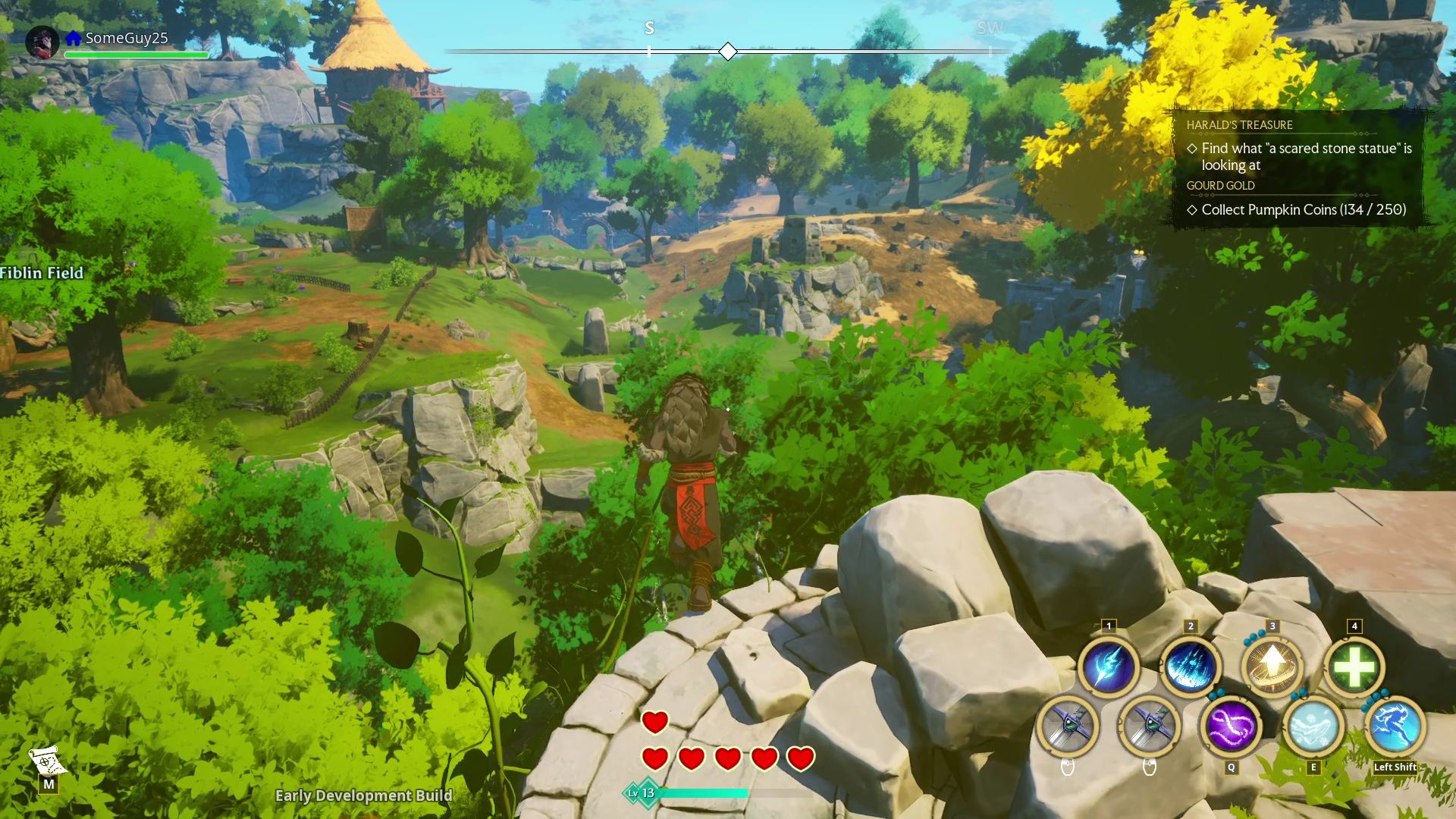
Exploring the game world is genuinely enjoyable. Movement feels smooth, and you can surprisingly scale almost anything, even small ledges and slopes. This turns getting around into a fun challenge of seeing just how much you can climb, and the answer is usually ‘yes!’
Exploring is genuinely enjoyable, and the islands are cleverly designed with treasure and puzzles placed right in your way. You’ll naturally go from one discovery to the next, occasionally getting sidetracked by interesting sights. What’s really impressive is how detailed and filled with things to do every part of the islands are.
As a fan, I’ve found the levels strike a great balance. They’re not overwhelmingly huge, so you’re not constantly running everywhere, but they are large enough to really let you play with all the cool movement options. Seriously, jumping, dashing, and especially using the blink evade is just so satisfying! I find myself constantly trying to see how crazy I can get with the height and distance – it’s a lot of fun!
The game is really enjoyable when you’re discovering the world and fighting enemies, so it’s strange that it interrupts this flow. Having to constantly return to your mobile base to build things pulls you away from exploring and focuses you on base management instead.
Building for Bolins
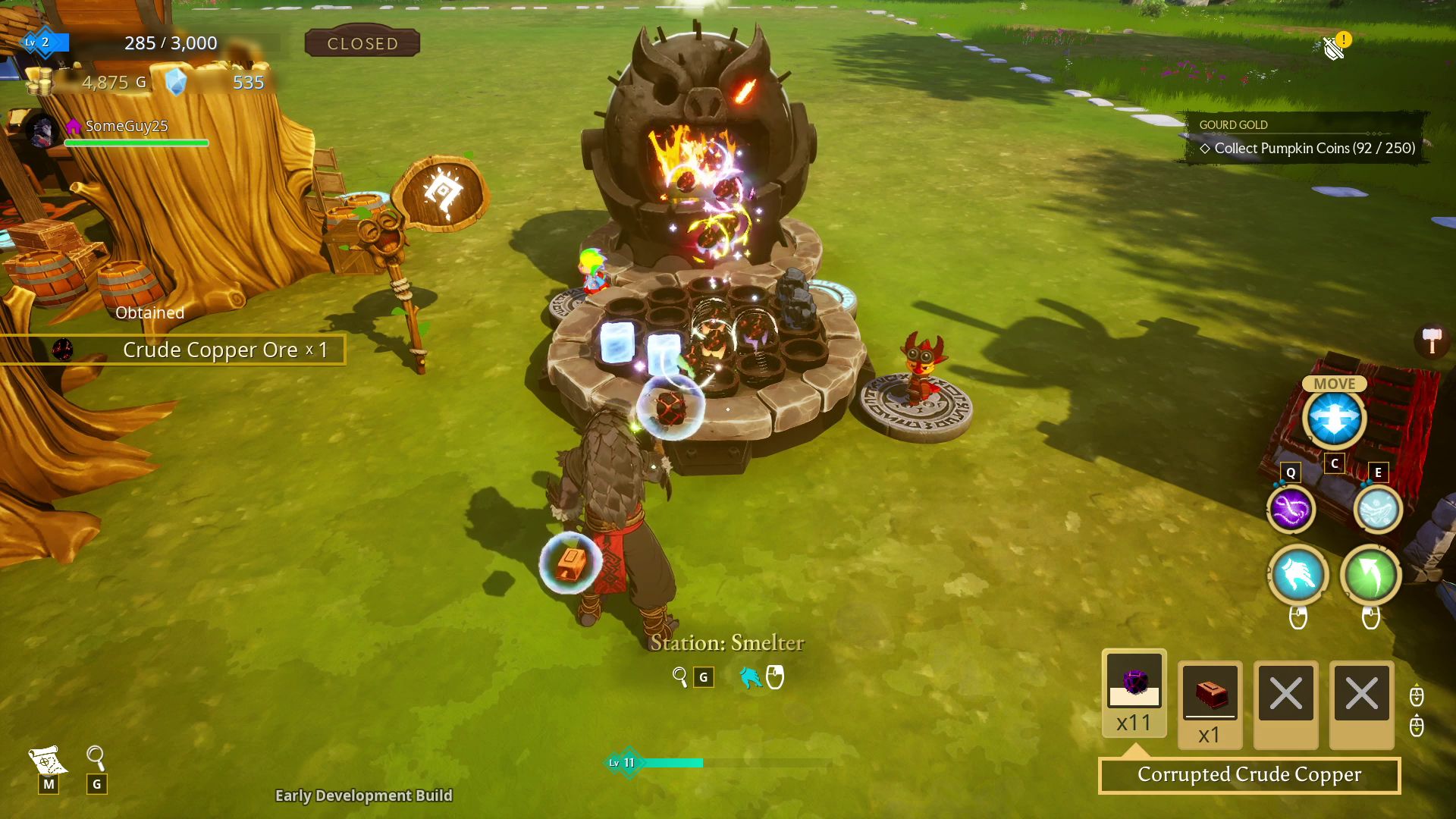
Don’t expect to construct the buildings yourself – everything in the game is scaled down for the Bolin creatures who actually manage and maintain everything. You’ll focus on gathering resources, then return to base to refine them and craft items needed for your adventure.
The buildings are on the smaller side, giving you lots of freedom to design your base however you want. Just be aware that you’ll need to gather and process all materials yourself, carrying them one by one to where you need them. It might not sound difficult, but you can only carry four different types of items at a time, and each item has a limited quantity you can carry, which can become a challenge.
If you need to run a quick errand that takes over thirty minutes, you’ll likely spend a good amount of time going back and forth, moving things around until you get what you need. I recently spent over half an hour sorting through items I’d collected during a ninety-minute search on one island.
I used to constantly run back and forth, taking items from my inventory to my storage, then to the crafting station, and then to whatever building I needed. I noticed my inventory could hold unlimited items, so I stopped bothering with my base because it wasn’t very useful anymore.
It’s something that can be fixed later, but right now, it really disrupts the flow of the game. Returning to base and facing this issue is a major setback, killing any progress you’ve made.
…whenever you come back to base and remember what horrors await you.
A Merchant’s Dream
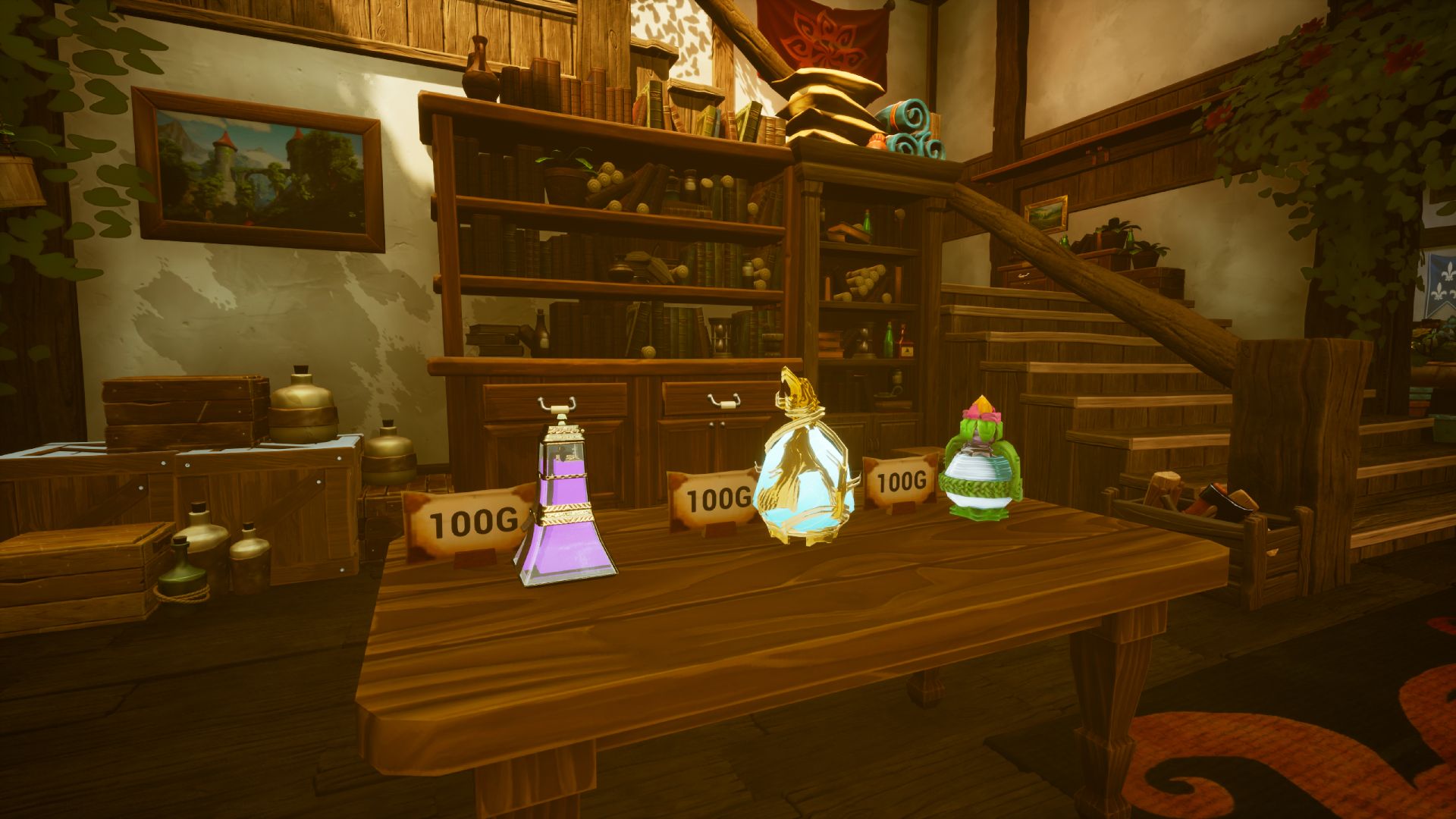
Similar to many heroes in other-world stories, you can sell the items you find to earn money. You can then use that money to improve your character by increasing health, buying useful accessories, or boosting your stats. However, instead of bargaining for prices, you’ll spend more time organizing your inventory.
To be honest, this felt a bit unnecessary. While it was helpful for getting rid of unwanted items, it ended up being as repetitive as the crafting system. I really liked seeing the shop as a physical stall with NPCs coming to buy things at first, but the novelty wore off quickly.
Eventually, it stopped being enjoyable and turned into a repetitive cycle of making items, displaying them for sale, and restocking as soon as they sold. Like many hobbies, it felt more like work than fun, and it stopped me from pursuing the projects I truly wanted to do. I couldn’t freely explore or take time off because I needed to constantly staff my shop, or it would quickly be emptied of merchandise.
Look, if my shop is empty or customers are leaving mad, my ratings drop, and that means fewer people come in and I make less money. It gets a little better later on when I can set up more selling tables, but early on, with just one table and only three slots, it feels like the game is actively discouraging me from even trying to sell a lot of stuff. It’s super frustrating!
An Oasis of Color
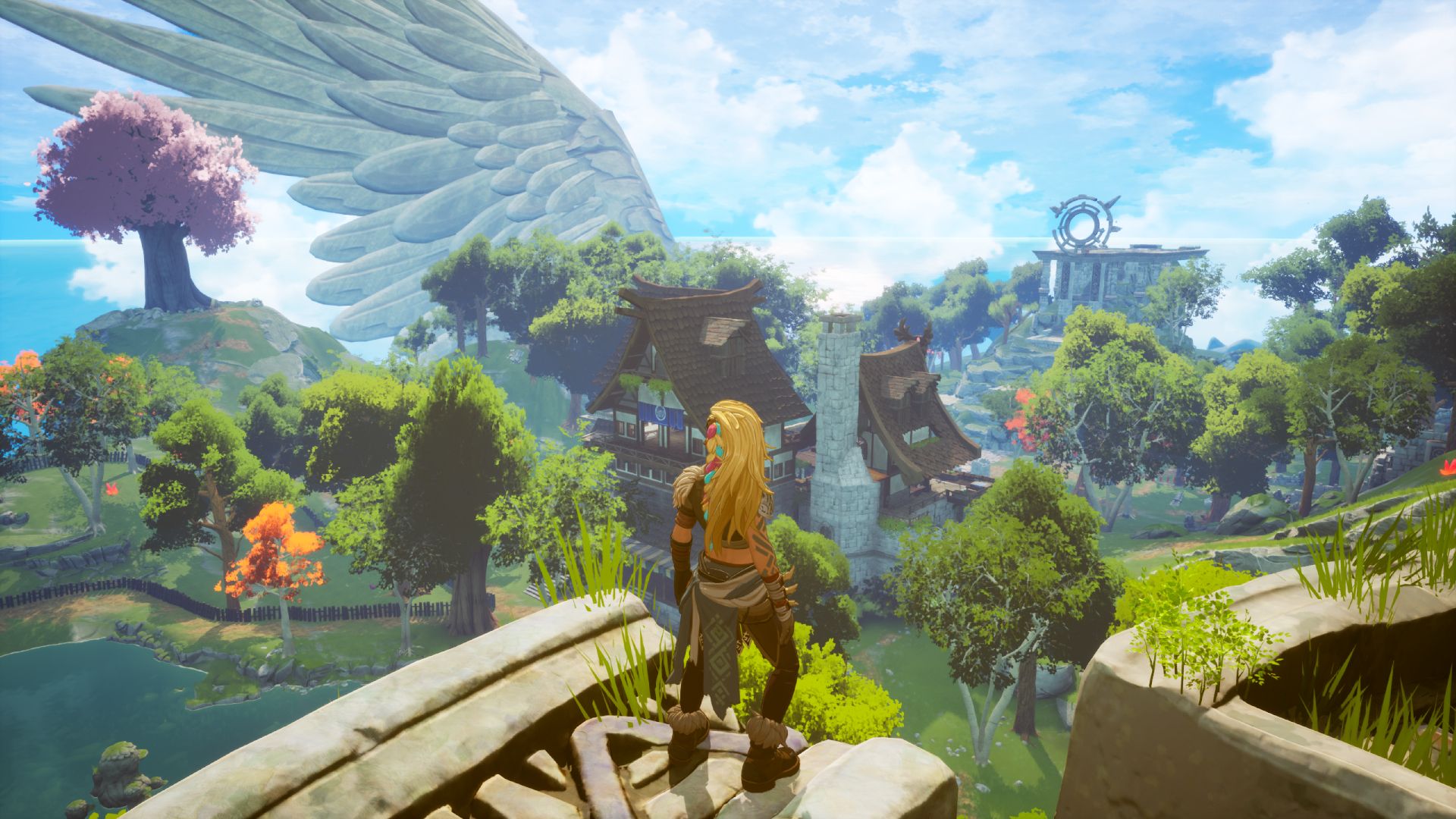
Cloudheim’s art style might not appeal to everyone, but it’s generally quite vibrant and visually engaging. The game features a rich color scheme, not only in the environments and character designs, but also in the effects of attacks and spells.
It’s easy to get lost in a vibrant world, and this one is intentionally designed to feel clear and organized. This simplicity extends to everything you see – enemies, puzzles, and even the materials around you – making it easier to decide what to interact with or gather.
Need materials for a fiery weapon? Try breaking those glowing, reddish rocks – they’re a good source. While the amount you get is still somewhat random, you can usually tell which rocks are worth breaking. The game’s systems, however, aren’t always so easy to figure out.
Mechanics Marvel or Monster?
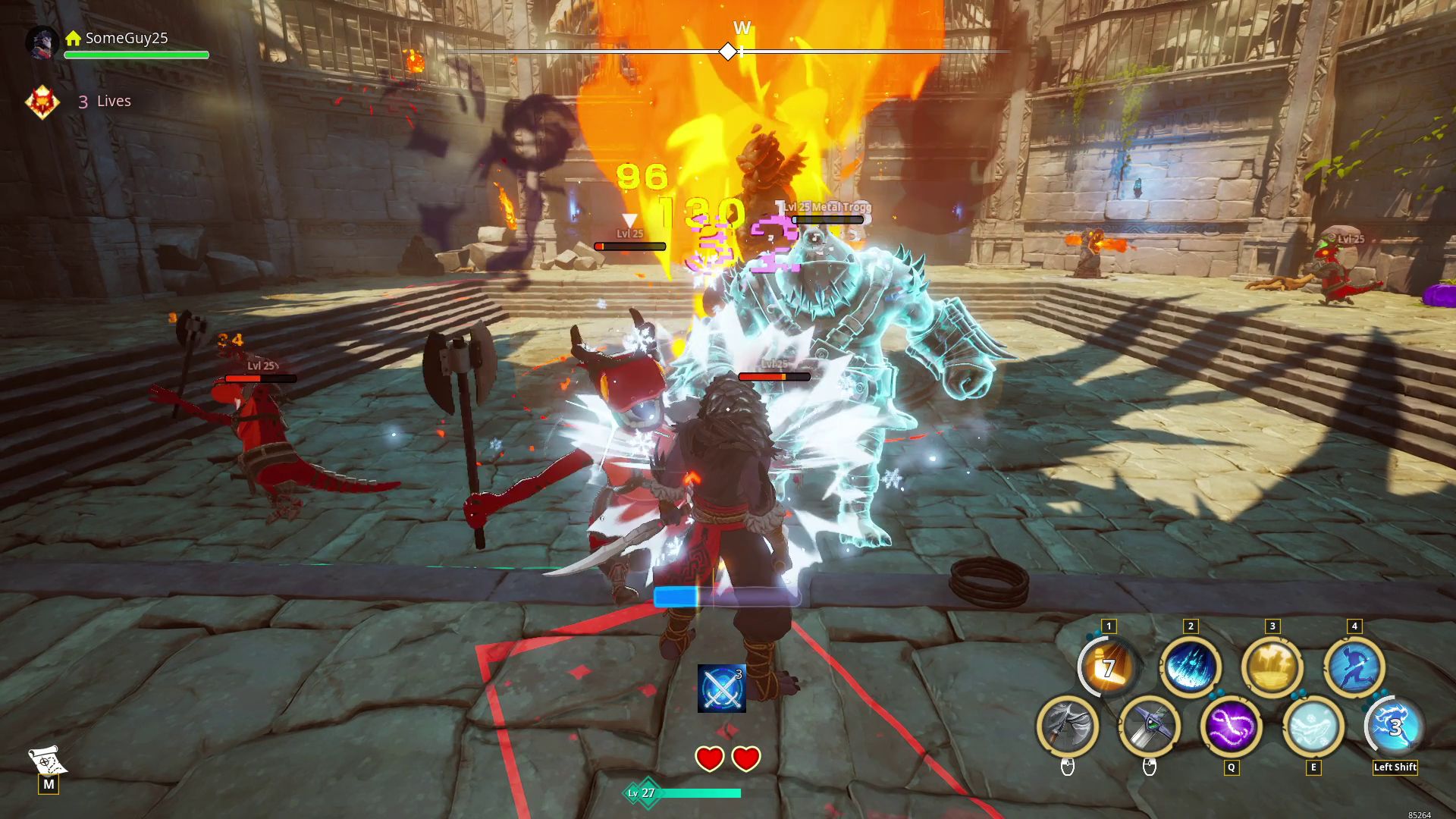
The game’s mechanics aren’t terrible, though they can be frustrating when things don’t go your way. It takes some getting used to, and you might not ever master it completely. But even if you don’t, it’s still really fun to defeat enemies with a well-executed combo.
The combat system is based on realistic physics, so precise aiming is crucial. Even a slight misdirection – like being off by a small amount – can cause unexpected results, such as accidentally hitting a wall instead of your target. These kinds of mishaps are common while you’re learning, but once you get the hang of it, the system becomes incredibly satisfying.
Control your opponents’ positions to set them up for a powerful, all-abilities attack. A system called Mana Burn helps with this, letting you use skills even while they’re on cooldown by charging a special bar. However, once the bar is full, you’ll need to wait for it to decrease before you can use those abilities again.
This system allows you to push past your limits and use abilities that are on cooldown.
As a player, I’m really loving how this lets me customize my combat style! It’s awesome being able to decide if I want to use quick, weaker attacks repeatedly, or go for big, powerful moves that take out groups of enemies. The best part is, there’s no single ‘right’ way to build your character, and it’s so refreshing to be able to experiment with different setups.
Closing Comments
Cloudheim shows a lot of promise, but it’s still finding its footing. It tries to do a bit of everything, and doesn’t quite excel in any one area – but that’s okay, considering it’s early in development. Many of the current issues will likely be addressed in the coming months. Right now, the game feels a little unsure of what it wants to be. It’s frustrating to build a vibrant world to explore, only to be bogged down with tedious tasks when you return home. When the combat works, it’s incredibly enjoyable – the unique mechanic of using enemies like bowling pins is a highlight. However, the game has a lot of progression systems, which can feel overwhelming, and managing your inventory quickly becomes a chore. The grand goal of becoming a Nordic hero is appealing, but it’s interrupted by constant item management.
Read More
- All Skyblazer Armor Locations in Crimson Desert
- All Shadow Armor Locations in Crimson Desert
- How to Get the Sunset Reed Armor Set and Hollow Visage Sword in Crimson Desert
- Marni Laser Helm Location & Upgrade in Crimson Desert
- All Golden Greed Armor Locations in Crimson Desert
- All Helfryn Armor Locations in Crimson Desert
- Keeping Large AI Models Connected Through Network Chaos
- Best Bows in Crimson Desert
- All Icewing Armor Locations in Crimson Desert
- How to Craft the Elegant Carmine Armor in Crimson Desert
2025-12-02 18:14