Homomorphic Encryption Gets a GPU Boost

Researchers have designed a specialized GPU unit to dramatically accelerate fully homomorphic encryption, paving the way for more practical privacy-preserving computation.
Researchers have designed a specialized GPU unit to dramatically accelerate fully homomorphic encryption, paving the way for more practical privacy-preserving computation.
A joint aerial incursion by American and Israeli forces upon Iran occurred at the break of dawn, which saw Bitcoin’s value spiral downward from $65,500 to $63,000 within the span of a single hour. Ethereum, ever the loyal companion, slid to around $1,850. Approximately $75 billion in total crypto market cap vanished before most traders even stirred from their beds, a feat rivaling the swiftness of a well-timed espresso shot.
![As the magnitude of [latex]\bm{\epsilon}[/latex] increases, perturbations grow progressively stronger when generating adversarial examples from a model encrypted with TT-SEAL, demonstrating the sensitivity of the system to input alterations.](https://arxiv.org/html/2602.22238v1/2602.22238v1/figures/examples.png)
A new selective encryption framework harnesses model compression to deliver both strong adversarial robustness and low latency for on-device intelligence.

Researchers introduce a new benchmark and agentic framework to dramatically improve automated bug fixing in Rust programs.
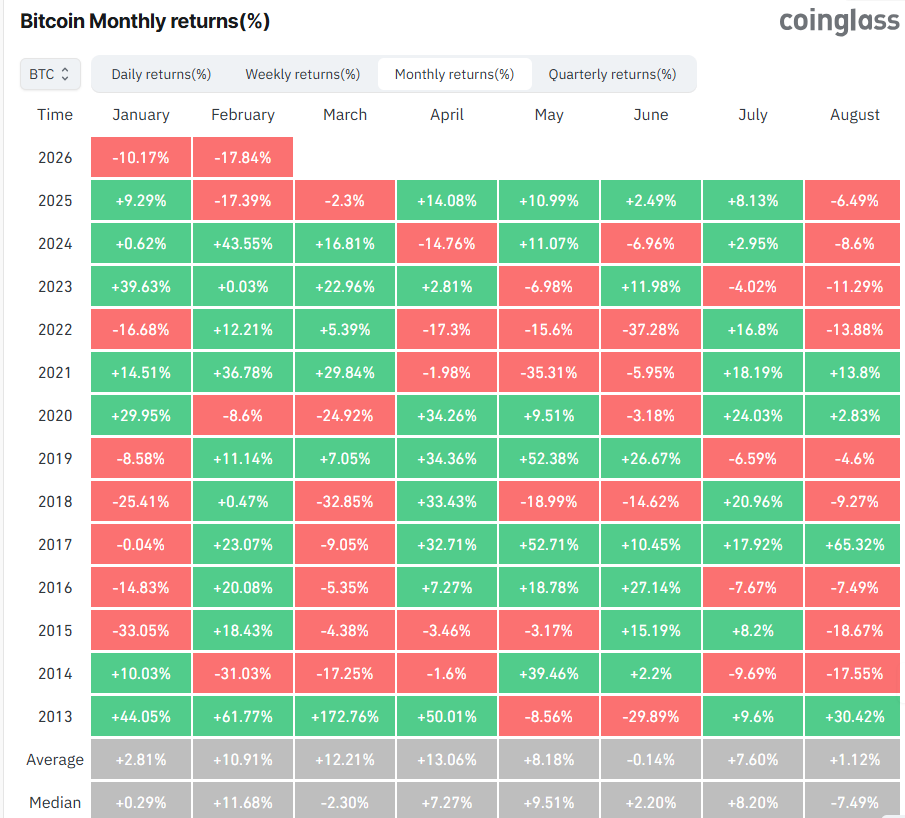
On the 27th of February, BlackRock’s iShares Bitcoin Trust (IBIT) bled $32.99 million, a sum equivalent to 499 BTC. A single day’s outflow, yet how it echoes! Still, IBIT remains the darling of the U.S. spot Bitcoin ETFs, a phoenix amidst the ashes. Only a day prior, it had basked in the glow of $275.8 million in inflows, following $297.4 million and $78.9 million in the days before. Such is the rhythm of the market-a waltz of greed and fear.
The CoinMarketCap 20 Index, that chorus of altcoins, wailed in unison, a 4.70% lament, proving this was no solitary tragedy but a grand opera of sell-offs. And what provoked this financial aria? Ah, the Middle East, that eternal cauldron of chaos, where Israel and Iran exchanged not words but strikes, sending ripples through energy markets, equities, and the tender heart of crypto. Geopolitics, that old maestro, conducts the orchestra of risk assets with a baton dipped in uncertainty.

Consider the recent theatrics of the Jane Street brigade, whose so‑called “10 A.M. manipulation” was less a grand strategy than a digital séance-summoning panic where paper wallets serve as floating boats on volatile waters.
January PPI rocketed 2.9% year-over-year, handily trouncing the 2.6% forecast. Core PPI? It jumped 0.8% month-over-month, a number so bold it could’ve been a dare. That core reading hit an 11-month high, proving price pressures aren’t taking a holiday. Crypto Rover, that digital oracle, warned the Fed is now as stuck as a pig in a poke-every move a potential disaster.
![The system’s stability hinges on a margin-to-degeneracy geometry, where each token’s proximity to an instability boundary-analogous to a support vector in [latex]SVM[/latex] classification-dictates the sequence’s overall resilience, with the token closest to this boundary exerting disproportionate influence on the system’s susceptibility to perturbation.](https://arxiv.org/html/2602.22271v1/2602.22271v1/figures/figure_margin_schematic.png)
New research reveals a geometric principle underlying the robustness of large language models, offering a deeper understanding of how they learn and generalize.

One might imagine the architects of this scheme, clad in powdered wigs and spectacles, declaring, “Behold! A permissionless, on-chain token launch! No more tedious off-chain antics!” Yet, let us not forget, dear friends, that even the grandest of plans are but a farce when the actors forget their lines.