Taming the Quantum Ghost: Automated Flakiness Detection in Quantum Software

As quantum software grows in complexity, researchers have developed an automated pipeline to identify and diagnose the root causes of unreliable, or ‘flaky’, tests.
As quantum software grows in complexity, researchers have developed an automated pipeline to identify and diagnose the root causes of unreliable, or ‘flaky’, tests.
Researchers have established a surprising connection between quantum error-correcting codes and a class of classically-inspired codes used in secure multi-party computation.

But hold your horses! According to those clever folks at CryptoQuant, the spot trading volume for SUI has been doing the macarena-falling since October 2025 and showing no signs of stopping. Despite a whimsical 64% leap in daily trading volume, the long-term trends are cooler than a cucumber in a freezer.
Current methods for evaluating automated vulnerability repair tools are significantly overestimating their success rates, masking critical flaws in patched code.

Ali Martinez, Crypto Guru Extraordinaire (probably makes more money from YouTube than trading), gasped, “WLD almost kissed $0.366! That’s the same level it’s been eyeing since last month’s group therapy session!” Miraculously, it’s up 6.5% from its “I give up” low of $0.356. Cue the confetti.
![Spin textures-specifically Rashba, persistent spin helix, and Dresselhaus states-exhibit a striking enhancement of all quantum metric components [latex]g_{\mu\nu}[/latex] when Rashba and Dresselhaus strengths equalize, signaling a unique signature of the persistent spin helix state and demonstrating how geometric properties emerge from spin-orbit interactions.](https://arxiv.org/html/2603.08009v1/x1.png)
Researchers have discovered a way to sensitively detect and characterize a persistent spin helix in materials by leveraging the quantum metric, a geometric property of quantum systems.
This review explores techniques for building robust analog computing systems by leveraging error-correcting codes that maintain signal integrity with remarkably low overhead.

Researchers have developed a novel method for dramatically reducing the size of large language models without sacrificing accuracy, paving the way for faster and more accessible AI.
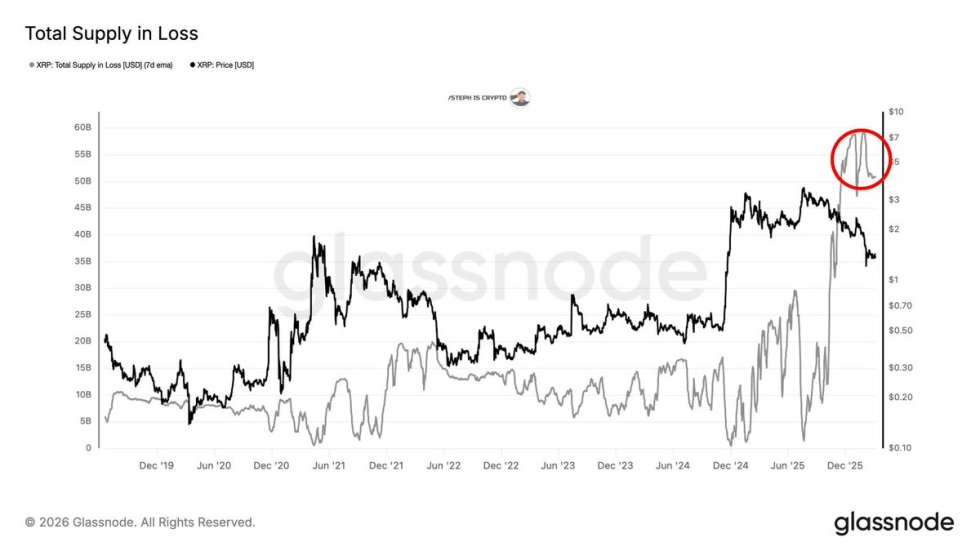
The bears have taken the reins, and XRP is feeling the squeeze like a lemon at a lemonade stand. Stuck below the $2 mark, it’s as if the poor thing is glued to the floor. And what’s the telltale sign of this misery? Why, it’s the ever-growing pile of XRP tokens drowning in the red ink of loss. Steph, the crypto sage, chimed in on X (formerly known as the place where birds chirp), using Glassnode’s fancy charts to reveal that a whopping 36.8 billion XRP tokens are currently underwater. That’s right, nearly 60% of the circulating supply is taking a bath, and it ain’t the refreshing kind.
As BTC flirts once more with the $71,000 threshold-a number as arbitrary as a taxidermied walrus in a ballroom-the financial soothsayers debate: Is this collective institutional agony a harbinger of doom, or merely the siren song of contrarian opportunists?