In the grand theater of American governance, where the stage is set with the most illustrious of characters-presidents, vice presidents, and those ever-ambitious members of Congress-a curious new act has been unveiled. The bipartisan PREDICT Act, a legislative oddity, seeks to prevent these esteemed figures from dabbling in the arcane art of political prediction markets. One might wonder, is it a noble endeavor or merely a farcical display of legislative overreach?
This audacious proposal aims to impose a ban not only on the president and his vice but also on the congressmen and their politically appointed sidekicks, along with their close relatives-spouses and even the children who may have unknowingly inherited a penchant for speculation. It appears our lawmakers are greatly concerned that the upper echelons of power might find themselves profitably betting on the very outcomes they influence. Who would have thought that politicians could be so unscrupulous?
The PREDICT Act: A Comedy of Errors in Political Trading
It was on the 25th day of March that Representatives Adrian Smith and Nikki Budzinski decided to grace us with the introduction of the Preventing Real-time Exploitation and Deceptive Insider Congressional Trading Act-surely, the name alone could win awards for verbosity. This bill, with all the pomp expected from such an endeavor, targets the dubious world of prediction market trading linked to political events, policy decisions, and governmental actions. One can almost hear the collective gasp of surprise from the audience.
According to the proposal, all who dwell in the hallowed corridors of power, including their familial companions, would henceforth be barred from reaping financial rewards based on their privileged access to sensitive information. Because, of course, who could possibly resist the temptation to turn public service into a lucrative betting enterprise?
The bill does not shy away from consequences; those unfortunate enough to flout this decree might face a 10% fine based on their ill-fated contracts and must surrender any profits to the U.S. Treasury. Ah, the sweet irony of punishing the wealthy with even more wealth, destined to be collected by the very government they sought to outsmart!
Caution: Insider Information Ahead!
Proponents of this legislation argue with earnestness that prediction markets have recently garnered unwarranted attention, especially after traders allegedly made substantial gains from pivotal geopolitical developments and government decisions-who could forget the last-minute bets on a government shutdown or a war escalation? Such events have surely turned the political arena into a veritable casino.
Yet, our lawmakers fret that those privy to confidential details might skew the markets or benefit from their insider knowledge. The PREDICT Act, in its wisdom, endeavors to seal this proverbial barn door after the horse has already bolted.
Tremors in the Prediction Market Landscape
As if the PREDICT Act were not enough to shake the foundations of speculative trading, it arrives hand-in-hand with another ambitious proposal-the BETS OFF Act, which aspires to place further restrictions on trading connected to sensitive governmental operations. One can’t help but chuckle at the synchronized timing of these acts, as if some unseen puppeteer orchestrated this comedic opera.
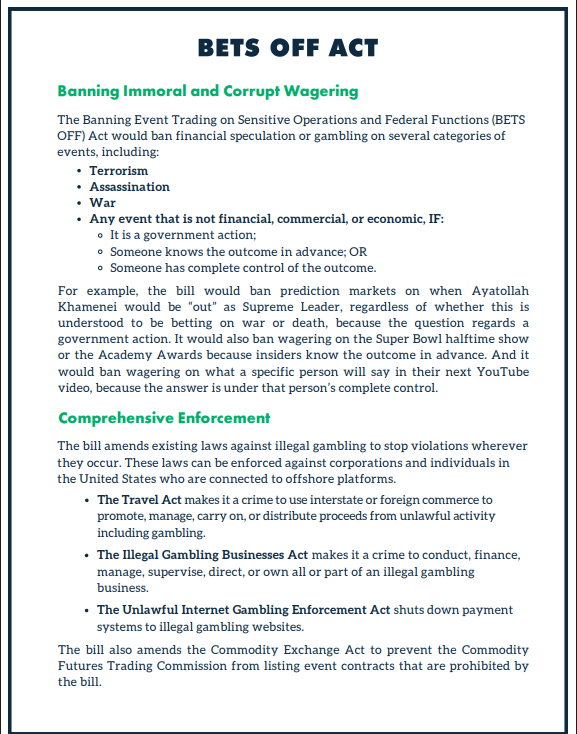
Meanwhile, the states, those sovereign factions of our great union, have joined in this crusade against prediction markets. Reports indicate that eleven states have embarked on legal battles, while two more contemplate similar actions. Truly, the skies above Washington D.C. must be filled with the echoes of the lawmakers’ fervent discussions surrounding contracts that bear an uncanny resemblance to sports betting or the whims of a casino floor.
If enacted, the PREDICT Act would impose significant limitations on the ability to wager on political outcomes, thus tightening the reins on the risky business of insider information. Perhaps one day, the politicians will learn that governance is not a game of chance but rather a solemn duty-though, given the current state of affairs, that may be a distant dream.
Read More
- All Shadow Armor Locations in Crimson Desert
- Dark Marksman Armor Locations in Crimson Desert
- Sega Reveals Official Sonic Timeline: From Prehistoric to Modern Era
- How to Beat Antumbra’s Sword (Sanctum of Absolution) in Crimson Desert
- Genshin Impact Dev Teases New Open-World MMO With Realistic Graphics
- Where to Pack and Sell Trade Goods in Crimson Desert
- Top 5 Militaristic Civs in Civilization 7
- Best Weapons, Armor, and Accessories to Get Early in Crimson Desert
- Enshrouded: Giant Critter Scales Location
- The Limits of Thought: Can We Compress Reasoning in AI?
2026-03-26 13:06