It appears the American authorities – a somewhat ponderous, yet ultimately inevitable force – are finally preparing to impose a modicum of order upon the, shall we say, spirited world of stablecoins. Travis Hill, acting chairman of the Federal Deposit Insurance Corporation, has intimated that a first formal proposal regarding the operation of these… digital curiosities… is forthcoming. One wonders if anyone truly understands them, but that’s a question for philosophers, not regulators.
The rulemaking, a document no doubt filled with thrilling jargon and bureaucratic precision, is expected to arrive before the year’s end, landing upon the doorstep of the House Financial Services Committee with the subtlety of a falling samovar. A truly momentous occasion, wouldn’t you agree? 😒
The FDIC Tries to Corral the GENIUS Act
The Guiding and Establishing National Innovation for U.S. Stablecoins Act – a name so grand it almost begs for ridicule – was signed into law some months ago, creating a delightful committee of overseers from various agencies. One suspects a great deal of inter-agency correspondence, much of it politely disagreeing with itself.
Henceforth, only those who possess the proper licenses – presumably stamped with an official seal and sprinkled with a touch of regulatory dust – may offer these stablecoins to the American public. Oversight will be divided, naturally, amongst the FDIC, the Federal Reserve, the Treasury, and a host of others, ensuring that absolutely nothing slips through the cracks… or, perhaps, that everything gets hopelessly entangled.
Mr. Hill also informs us that the FDIC is crafting procedures and ‘prudential standards’ (a wonderfully vague term) for those institutions daring enough to issue these digital tokens. These standards involve such exciting concepts as capital requirements, liquidity expectations and, crucially, the diversification of reserve assets, all designed to prevent a catastrophic unraveling should the market experience, heaven forbid, a touch of stress.
Another proposal, apparently, is slated for release early next year – a veritable cornucopia of financial and operational requirements! One can almost smell the memoranda being drafted as we speak.
The Regulators’ Expanding Domain
The FDIC, it seems, is approaching digital-asset services with a caution that borders on suspicion, determined to ensure everything remains “safe and sound.” A laudable goal, to be sure, though one can’t help but wonder if they’re chasing shadows. They are also diligently responding to the pronouncements of the President’s Working Group on Digital Asset Markets. Truly, a bureaucratic ballet of the highest order. 🎭
Much attention, it appears, is focused upon ‘tokenized deposits’ – digital representations of actual money, floating ethereally on the blockchain. New guidance is being prepared to clarify their place within the existing banking framework. Fascinating, truly. Such innovation! Though one does suspect it will all end in more paperwork.
The Federal Reserve’s Michelle Bowman assures us they are collaborating on capital and liquidity standards, while the Treasury is currently sifting through a mountain of public feedback, attempting to strike a balance between innovation and… financial stability. A Sisyphean task, wouldn’t you say? 🤔
The Treasury’s Humble Consultation
The U.S. Department of the Treasury, never one to be left out, has released an Advance Notice of Proposed Rulemaking (ANPRM) – a phrase that sounds significantly more intimidating than it is. Public submissions are invited, ensuring that everyone, from industry experts to curious onlookers, has a chance to voice their opinion on the matter. Whether anyone will actually listen is, of course, another question entirely.
The Treasury, in its wisdom, believes that this consultation will lead to a ‘balance’ between innovation and financial stability. One can only hope they manage to navigate this treacherous territory with a degree of competence.
With the FDIC’s proposal looming, the federal agencies are settling in for what promises to be a protracted rulemaking process. Draft rules will be scrutinized, debated, and likely revised multiple times before final guidelines are adopted – a process that will undoubtedly involve countless hours of meetings, reports, and, of course, strongly worded letters. Such is the way of things.
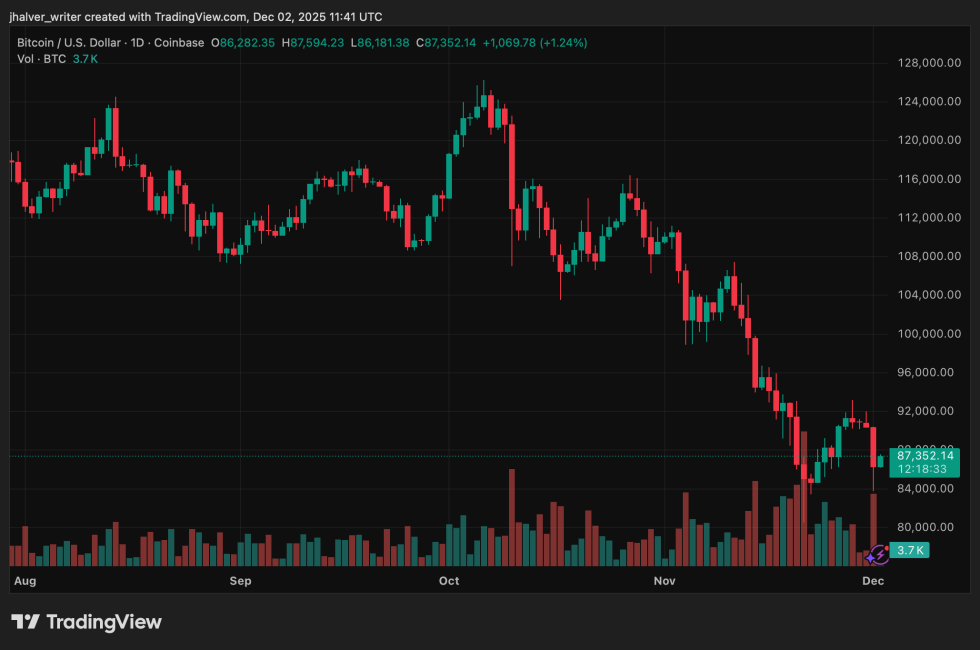
Cover image from ChatGPT, BTCUSD chart from Tradingview
Read More
- All Skyblazer Armor Locations in Crimson Desert
- All Shadow Armor Locations in Crimson Desert
- How to Get the Sunset Reed Armor Set and Hollow Visage Sword in Crimson Desert
- Marni Laser Helm Location & Upgrade in Crimson Desert
- All Golden Greed Armor Locations in Crimson Desert
- All Helfryn Armor Locations in Crimson Desert
- Best Bows in Crimson Desert
- Keeping Large AI Models Connected Through Network Chaos
- How to Craft the Elegant Carmine Armor in Crimson Desert
- All Icewing Armor Locations in Crimson Desert
2025-12-03 06:15