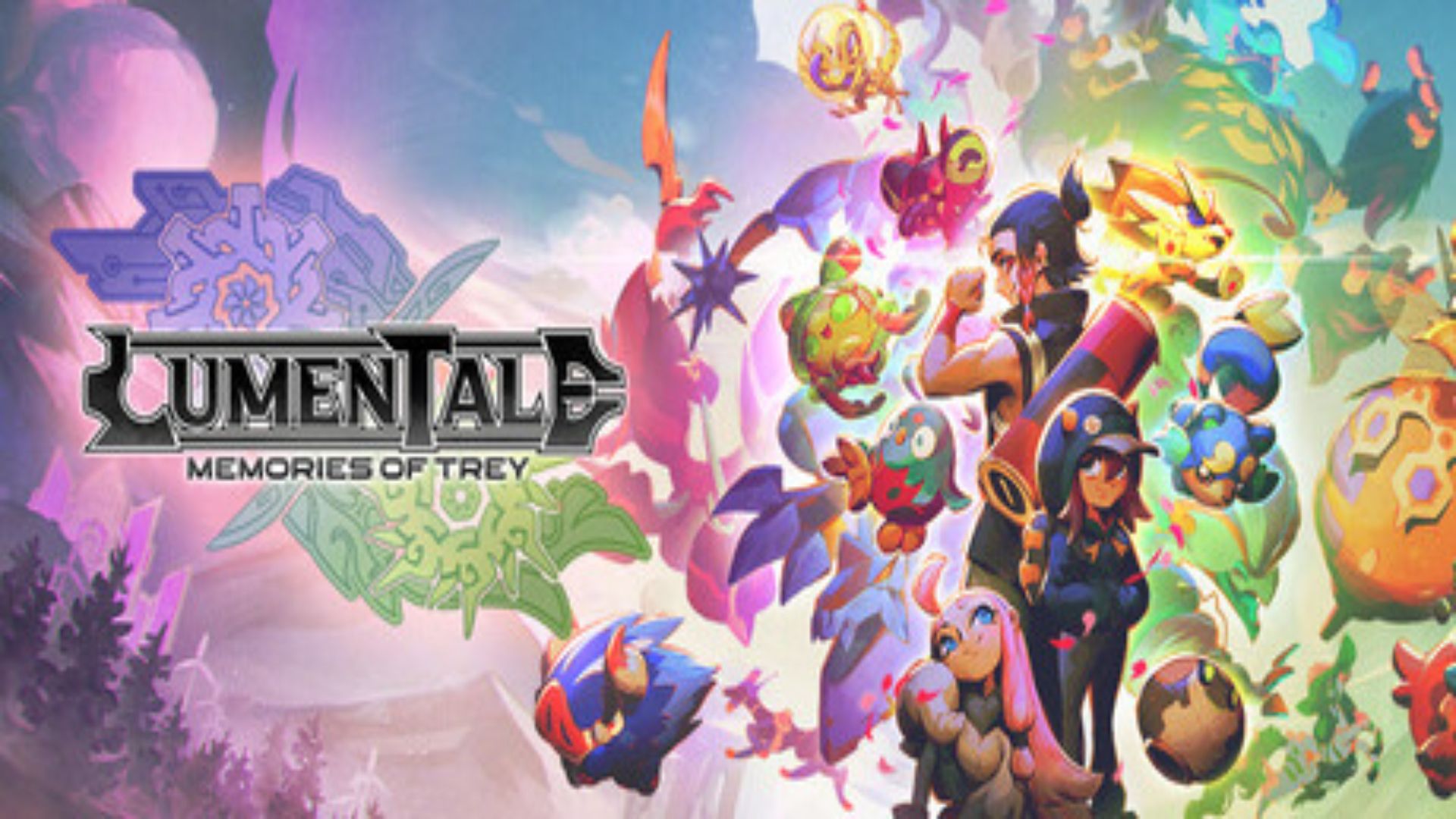
LumenTale: Memories of Trey is the latest type of monster catcher game to attempt to go up against some of the biggest games in the entire industry, and some upcoming ones like Aniimo. This sees players step into the role of Trey, a sarcastic but loveable protagonist, as they attempt to uncover the mysteries of the greater world around them.
Even after playing for dozens of hours, I felt like I had barely begun to experience everything this game had to offer. It’s clear from the start that the game is trying to be unique, and it definitely stands out from other games – whether that’s a good thing or not is up for debate.
I’ve always loved collecting creatures in games, but they often fall short in a few key areas. LumenTale actually addressed those specific weaknesses, which was a pleasant surprise. However, that wasn’t enough to overcome the many problems I experienced while playing on the Switch OLED. I’ll go into detail about these issues, but if you enjoy creature collecting games, I suggest playing it on Steam or waiting for a more stable version on the Switch.
What is LumenTale: Memories of Trey?
The game is straightforward: you play as Trey, a character trying to recover his lost memories. Unlike many monster-catching games, you’re not a young aspiring champion, but an adult unraveling a larger mystery. You’ll discover clues gradually as you journey across the world with your friends.
It works almost exactly how you’d imagine; go out, capture monsters, known as Animon, and do battle with other people and Animon. You actually don’t have to fight Animon to capture them, as you can use your Holoken to capture them using whatever Bilia you have. A small mini-game plays to determine your success rate, and failure means you’ll have to stun them by throwing your Holoken back at them, but with your Animon in them this time.
This feature also allows you to wipe out weaker Animon and collect whatever resources they drop, as well as gain easy XP. It isn’t the best way to level, but it does give you an easy way to grind levels for lower-level Animon. That’s not where things end, though, because, much like Pokémon, there are ways to interact with the world by using your Animon.
If you enjoy games like this, I suggest buying it on Steam or holding off until the Switch version is more polished.
Every Animon has a main type. Once you unlock the special ability for that type, you can use it to explore the world – for example, breaking rocks or jumping over gaps. This is a key way to uncover hidden secrets and find items throughout each area. To unlock these abilities, you’ll need to advance the story and have an Animon of that specific type selected when you use your Holoken.
You’ll mainly advance the story by battling, facing off against both other players’ Animon and huge, powerful boss Animon. I encountered around ten of these bosses, one in each section of the map. During battles, you can control up to four Animon simultaneously.
The more Animon you play with, the more SP you have to spend on moves between turns. Each Animon has moves that cost a different amount of SP, so you have to plan accordingly. If you manage to crit or use a move the enemy is weak to, you’ll earn a TP. Earn as many of these as you have Animon on the field, and you’ll get a TP Action, which allows you to attack with any Animon for now SP cost.
The Beauty of Being Different
LumenTale clearly operates fairly differently from most other games in the genre. It makes the game incredibly interesting from a strategy standpoint. This only grows as you progress in the game and continue to find new, more powerful Animon. The depth of combat offers pretty significant flexibility to develop your own playstyle.
Deciding how you want to build your team and what roles you might want your mons to take on plays a pivotal role in success. This is what really attracted me personally. It was something relatively simple that removed some aspects of previous incarnations that I didn’t like while giving me something to work towards.
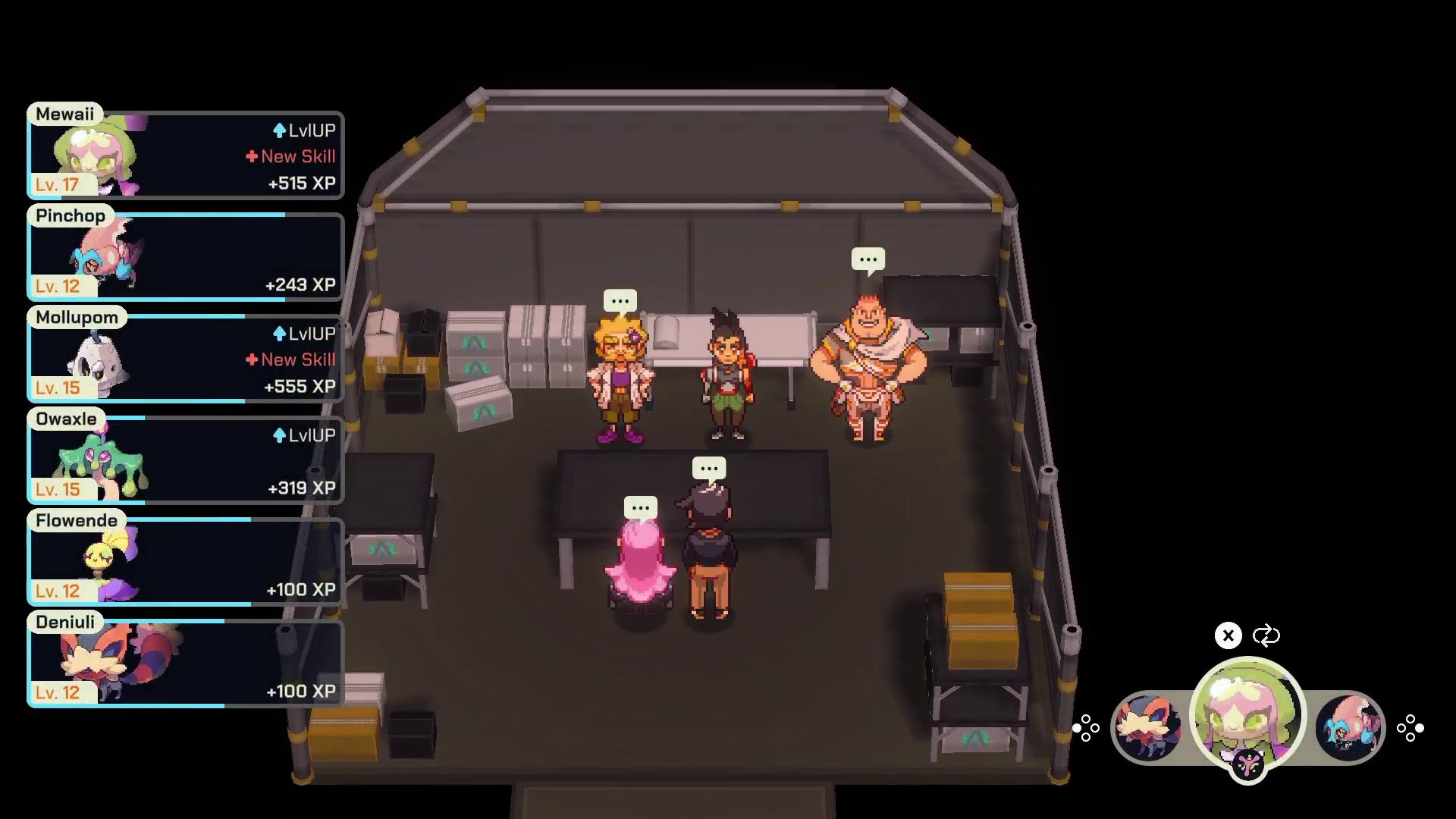
As I caught more Animon and started figuring out how to build a good team, that feeling of getting really into the game just grew. What was even cooler was that I could actually level up their abilities and stats using points or special food. It let me customize them to play specific roles, kind of like in a classic RPG, which was awesome!
Implementing those changes gave me incredible control over my Pokémon, which was great. However, it also meant opponents benefited from the same advantages. I quickly noticed this in battles, as Pokémon were surviving attacks they shouldn’t have and the order of turns was changing unpredictably.
Too Much Complexity Without Explanation
This is a detailed game with a lot to learn! I’ve barely scratched the surface of the combat and capture systems. There are tons of details – like unique traits for every creature and hidden level mechanics – that make it feel like you need a guidebook to keep everything straight.
The game intends to teach you how to play – it looks like tutorials are included – but a bug seems to be preventing them from appearing. This unnecessarily complicates things and makes the game less fun than it could be.
Let’s talk about traits and how monsters are captured. Traits are really important in the game – they can heal your team or add extra damage to attacks, but using them costs 1 extra SP. There are seven different traits, and each monster gets one randomly when it appears. Unfortunately, the only way to see what trait a monster has is by going through the tutorial, and you can’t access the tutorial during battles.
From traits that every mon possesses one, to unknown mons levels for capture mechanics, there’s just so much here that you can’t account for without feeling like you have to memorize an entire guidebook.
It takes time to learn this, and you’ll eventually figure it out, but it would be so much better if the game reminded you how things work. It feels like the developers intentionally made it difficult, forcing you to learn through hours of gameplay, which is frustrating for something so important to the game.
Let’s talk about how capturing works. You can try to defeat a monster with your Holoken, and if you don’t knock it out in one hit, you’ll start a battle with the remaining monsters already damaged. It sounds fantastic, and it mostly is! However, there’s a catch: you won’t know which monsters will be instantly defeated and which ones will survive.
If you’re grinding an earlier area and wiping out mons left and right, then all of a sudden, you get into several fights that slow your game way down. It isn’t something that feels like it should be that annoying, but it quickly becomes frustrating because you have no idea which ones you’ll drop immediately and which ones you won’t.
It feels like there’s too much information that isn’t readily available as a player to have a strong grasp of what’s going on. In the early game, it feels like a new world to learn, but about ten hours in, it just becomes frustrating. What’s more frustrating is that I actually love the game and what it has to offer, including a gorgeous world and interesting creatures.
An Unbelievably Creative World
Despite its simple graphics, this game is truly beautiful. I’ve played many games, but the colors and design here are striking and will likely impress most people. Both the landscapes and the creatures are visually stunning, and that alone makes the game worth experiencing.
The game is set in a future world split between two distinct societies: Logos, which embraces technology, and Mythos, which values tradition. This setup is common in Japanese role-playing games, but the game becomes more engaging as you discover each area’s unique landscapes and creatures, called Animon.
What’s more, the Animon are visually appealing. They strike a nice balance between feeling original and recognizable, and you can usually tell what type they are at a glance—though a few are cleverly disguised. The consistent design throughout makes the world feel lived-in and authentic, rather than just a game setting.
The game is truly beautiful, both in its worlds and the creatures that inhabit them, making it a rewarding experience.
The game wasn’t just visually impressive; the story was truly the heart of the experience. While it did involve traveling between locations, the narrative and characters were what really stood out. I particularly loved the character Trey – he’s got a fantastic personality and a lot of attitude!
The writing is good and feels mostly aimed at a younger audience, but that doesn’t stop it from covering some pretty significant topics like overzealous religions and human sacrifice. I was always hungry to discover more and see what exactly the problem would be in the next location I arrived at. This was coupled with the overarching story that really grabbed me as well.
Poor Performance in a Weird Way
There’s no simple way to say this; this game ran miserably on my Switch OLED. Now mine in particular isn’t as youthful as it once was, so this could be entirely individual, but I doubt that it is. Screen stutters, FPS drops, and straight-up crashing were not uncommon occurrences in the 20 hours I played.
Combat seemed to cause my Switch to simply explode once every turn as animations started and then froze, followed by the next Animons’ turn. It wouldn’t have been so frustrating if it hadn’t happened in almost every single combat. At one point, I just had to put the game down before I nearly broke my Switch.
Subscribe for deeper LumenTale coverage and expert takes
What became significantly more annoying was that the level design of the game was clearly based on much better hardware. For example, in the first town you visit, the last fight takes place at the top of a tower. Not uncommon for a game like this, but if you wanted to complete each floor’s challenge, it meant going through four or five loading screens at a time.
Screen stutters, FPS drops, and straight-up crashing were not uncommon occurrences in the 20 hours I played.
The game was just endless hallways and loading screens. You’d climb the stairs, wait for one screen to finish, enter a room, and immediately hit another. Then you’d unlock a door, go through another loading screen to leave, and another to enter the next room. This went on for three or four floors, and it was incredibly frustrating.
The game’s performance really needs to be significantly improved. Currently, players will likely spend a frustrating amount of time waiting through menus and loading screens instead of actually playing.
There’s Just Too Much Going On
I’ve covered a lot, but there’s still plenty more to explore in this game – which is both exciting and a little overwhelming! Let me quickly list a few remaining features. There’s the Aniverse, where you can store and even train your Animon, but the game doesn’t really explain how to set that up or what furniture you need.
The game features collectible cards, a crafting system, a bestiary for looking up creatures, and various challenges. It’s a lot to manage, and I’m probably leaving something out! Each of these systems needs some tweaking. For example, the bestiary doesn’t automatically fill with information when you catch a creature. You actually have to scan them in battle – sometimes up to four times – to unlock their complete details.
The collectible cards don’t seem to serve a purpose, and neither do the challenges, as neither provides anything in return except another menu to rifle through. Instead of creating those systems, that time could’ve gone to tying up the loose ends in gameplay and performance. They are cool to have, but that’s as far as those systems go.
There are still things like weather effects and a lack of fast travel that cause the game to suffer. You do eventually get a hoverboard that makes you significantly faster, but going back through so many areas before reaching the next destination feels like it should be unlocked earlier in the game.
Closing Comments
LumenTale: Memories of Trey is among the best creature collector games we’ve gotten in years. That doesn’t stop the game from feeling like it’s collapsing under the pressure of just how different it’s trying to be. Whether it’s bug issues or performance issues, the game just reaches a point where it feels like work to play. There are a lot of genuinely great ideas here, and hopefully, things can get ironed out to be an experience that everyone on any platform can enjoy. If you enjoy creature collector games and want one that’s going to be hours upon hours of learning and fun, then this one is for you.
Read More
- NTE Drift Guide (& Best Car Mods for Drifting)
- All Aswang Evidence & Weaknesses in Phasmophobia
- Diablo 4 Best Loot Filter Codes
- Conduit Crystal Location In Subnautica 2
- Where to Find Prescription in Where Winds Meet (Raw Leaf Porridge Quest)
- Boruto: Ikemoto Has Already Hinted At Sasuke’s New Eye After Return
- Best Burst & Full Auto Builds for the M16A4 in BF6
- USD RUB PREDICTION
- Deltarune Chapter 1 100% Walkthrough: Complete Guide to Secrets and Bosses
- Brent Oil Forecast
2026-05-22 16:10