In a turn of events that would make even the Auditors of Reality scratch their heads, the Pyth Network-that trusty purveyor of financial whispers for the decentralized finance crowd-decided to take an unscheduled nap on May 22, 2026. Four hours of blissful slumber, during which its core infrastructure said, “Not today, thank you very much.”
The disruption, as it turns out, wasn’t just a case of the Mondays. Pythnet, the blockchain backbone with a name that sounds like a mythical serpent, and its sidekick Hermes (not the Greek god, alas) both threw in the towel. Price feeds? Halted. Sponsored feeds? Also halted. It was like the entire network decided to join a silent disco, but forgot to hand out the headphones.
According to Pyth’s status page-which, let’s be honest, probably had more traffic than a Lancre market day-validators on Pythnet stopped producing blocks faster than a wizard losing his staff. Fresh price data? Gone. Poof. Like a banana in the hands of a certain hat-wearing wizard.
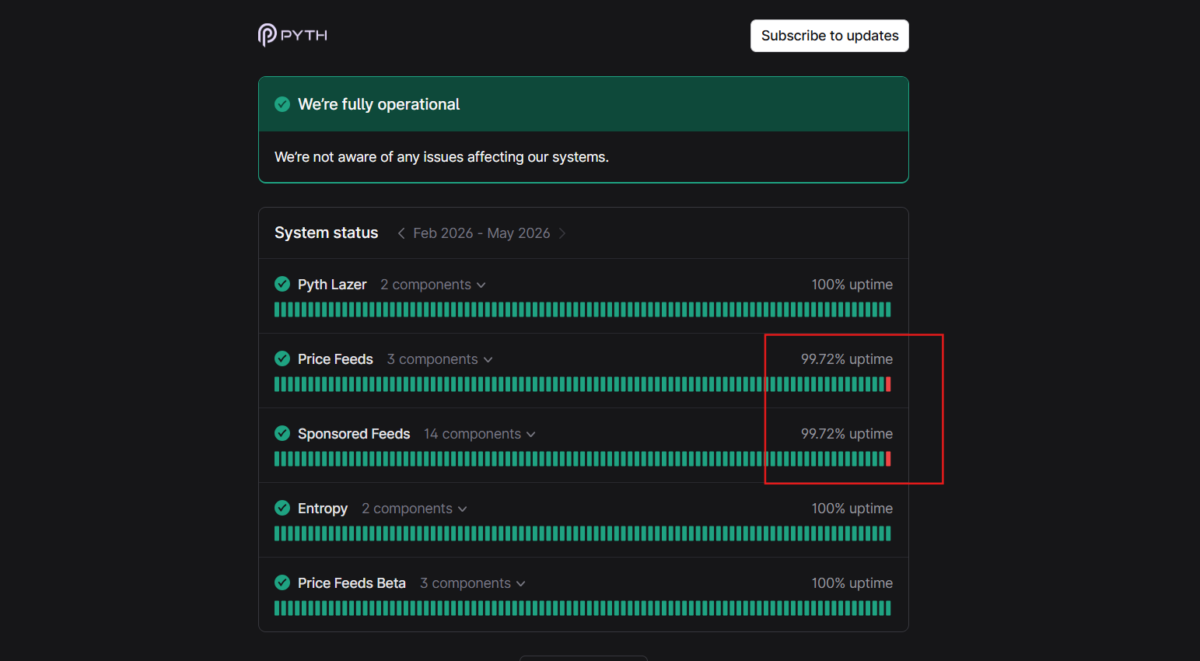
The Pyth team, bless their hearts, sprang into action faster than a troll under a bridge. They identified the root cause (likely a misplaced semicolon or a disgruntled validator) and began the arduous task of restarting the network. Initial estimates had it back up by 12:30 PM UTC, but Hermes endpoints-those poor things-were still sulking well into the afternoon. Pyth Pro and Lazer, however, remained as steadfast as a dwarf with a grudge.
This little hiccup shone a lantern on the fragility of oracle-dependent DeFi protocols. Pyth, you see, is the go-to gossip for price information, especially on high-speed chains like Solana. Trading, lending, borrowing, liquidations-all of it relies on Pyth’s whispers. Without them, it’s like trying to navigate Ankh-Morpork without a map: chaotic, confusing, and likely to end in tears.
During the downtime, users were left twiddling their thumbs, wondering if their trades would go through or if their liquidations would turn into financial calamities. Volatile markets, after all, wait for no oracle.
Pyth, for its part, has always been the belle of the ball, pulling data from more institutional sources than there are wizards in Unseen University. Its low-latency updates are the stuff of DeFi dreams. But this incident-centered on validator coordination and a single-network dependency-has everyone asking: “What if the ball stops?”
A postmortem is expected, of course, because nothing says “we’re taking this seriously” like a detailed report. The technical trigger, preventive measures, and probably a few apologies will be on full display. Meanwhile, the debate about oracle resilience has reignited, with calls for multi-oracle strategies louder than a troll’s burp.
Ironically, this outage came hot on the heels of Pyth’s shiny new Pyth Terminal launch on May 20. A sleek interface, live price feeds, real-time charts-it was all very impressive. But as they say in Lancre, “Pride Goeth Before a Fall,” or in this case, a four-hour nap.
At the time of writing, Pyth Network has remained as silent as a librarian in a crisis. No updates, no tweets, not even a carrier pigeon. This isn’t their first rodeo with downtime, mind you. Past incidents, often tied to underlying chain issues like Solana’s own outages, have occasionally put the spotlight on the oracle ecosystem’s vulnerabilities.
As the sector matures, the pressure is on to build stronger failover mechanisms-because when you’re dealing with billions in value, “oops” isn’t a good enough answer. Pyth’s recovery is being watched more closely than a wizard’s spellbook, with the network aiming to restore full service before anyone else loses their temper.
This is a developing story, and more information will be added as the event unfolds. In the meantime, grab a cup of tea and remember: even the most reliable systems need a nap now and then.
Read More
- NTE Drift Guide (& Best Car Mods for Drifting)
- All Aswang Evidence & Weaknesses in Phasmophobia
- Conduit Crystal Location In Subnautica 2
- Diablo 4 Best Loot Filter Codes
- Where to Find Prescription in Where Winds Meet (Raw Leaf Porridge Quest)
- Boruto: Ikemoto Has Already Hinted At Sasuke’s New Eye After Return
- Best Burst & Full Auto Builds for the M16A4 in BF6
- USD RUB PREDICTION
- Deltarune Chapter 1 100% Walkthrough: Complete Guide to Secrets and Bosses
- Starsand Island’s Rarest Achievements and How to Earn Them
2026-05-22 16:21