Finance

What to know:
- The $292 million crack in Kelp DAO did not merely empty a digital purse; it unmasked the lean, breathless corridors of DeFi where sound and fury signifying nothing passes for security, rattling the crypto lending markets and exposing a fragile equilibrium.
- Wall Street names like Apollo Global Management and BlackRock press forward into onchain finance, a parade march that doubles as pressure on DeFi protocols to harden their gates and tune their governance.
- Experts counsel a stricter baseline: zero-trust perimeters, sturdy collateral frameworks, and contracts that can be read and verified as if by a parish clerk-before the great tides of capital decide to test them.
The $292 million breach at Kelp DAO and the accompanying tremors in crypto lending arrive at a moment when the whole enterprise seems to walk a tightrope, with the wind of ambition howling in its ears.
Just as Wall Street players advance deeper into onchain markets, the incident lays bare the system’s fragilities and the stubborn truth that most institutions do not yet know how to measure or forget risk at scale.
In the days before the hack, Apollo Global Management, guardian of about $900 billion, parleyed with Morpho to back lending markets and even entertained the notion of governance tokens-an invitation to share in power, or perhaps to guard against the chaos of untested hands. In the same breath, BlackRock introduced its tokenized money market fund to Uniswap, as if to say, “We own the future, and we can tokenize it with a loyal smile.”
The breach, some insist, will not derail TradFi’s march into onchain finance; still, it shines a harsh light on what DeFi must mend if larger swaths of capital are to come to the feast.
‘Speed bump, not roadblock’
“DeFi platforms are pioneering new ways for investors to utilize their capital more efficiently,” said Nick Cherney, head of innovation at Janus Henderson, a manager of about $500 billion. “Pioneers will always incur risks.”
Failures like the Kelp incident can slow momentum, Cherney admits, yet they also pry open the doors for improvements. In his view, pressure points often yield stronger architectures-eventually.
“This is a speed bump for sure, but not a roadblock,” added Cherney.
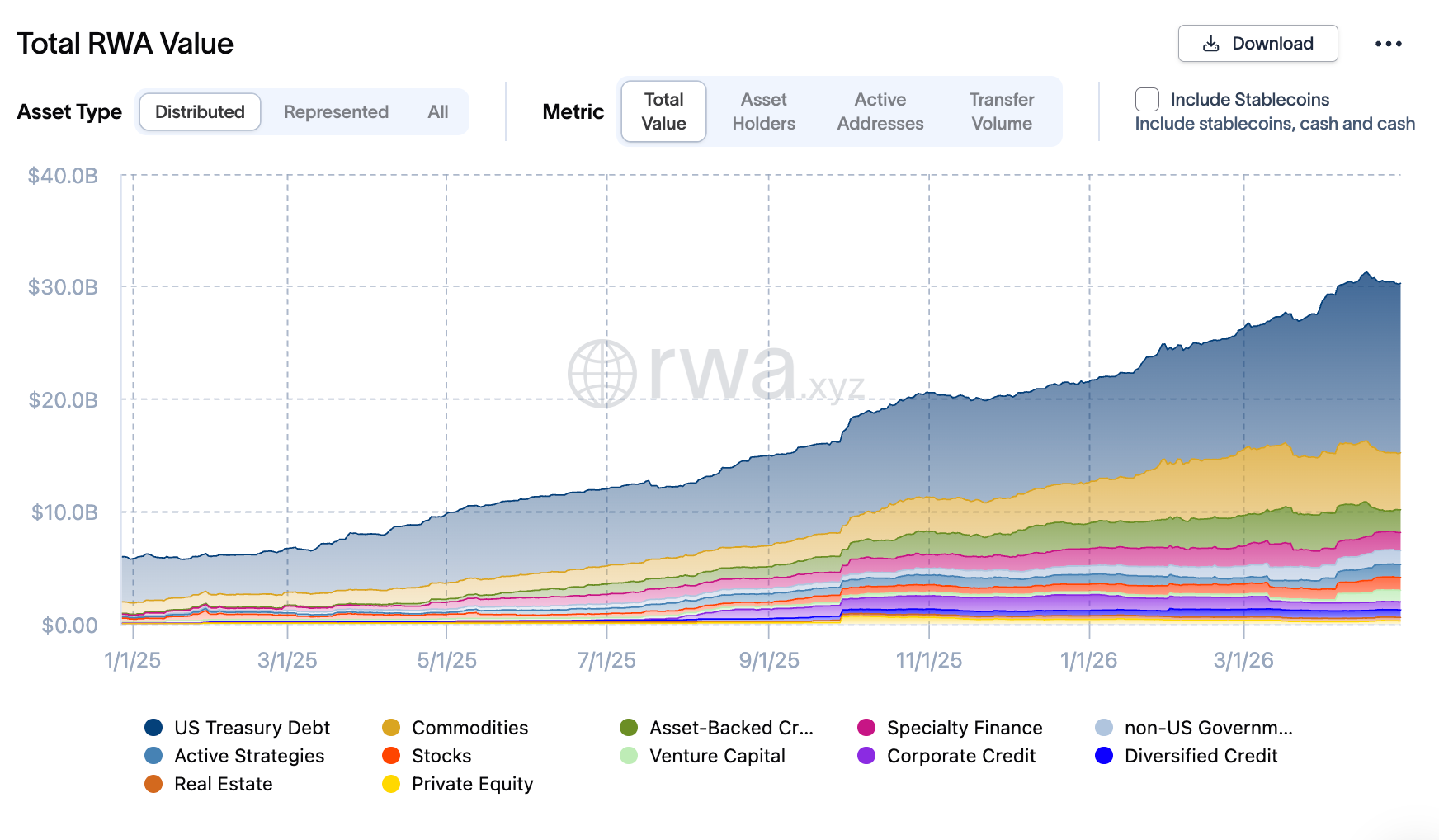
The longer arc, he suggests, is already visible. Tokenized real-world assets-funds, bonds, credit-are gradually anchoring DeFi markets, lending them the legal scaffolding and risk controls that traditional finance spent decades assembling.
Episodes like this one could hasten that transformation, he speculated.
Raising the security floor
For security specialists, the lesson lands with the thud of necessity: the current fortress is not impregnable.
“DeFi and onchain asset management inhabit an environment that is unraveling from every angle,” said Paul Vijender, head of security at Gauntlet. “Systems stand or fall by their weakest link.”
That grim realization pushes the industry toward more comprehensive defenses. Zero-trust architectures-the conviction that nothing is inherently safe-are becoming unavoidable, if not fashionable.
In practice, that means layering protections: continuous surveillance, stricter controls, redundancies built into the code itself. Do not place faith in a single safeguard; place bets on multiple, overlapping ones.
Evgeny Gokhberg, founder of Re7 Capital, argues that many so‑called best practices must become the baseline, not occasional recommendations.
That includes timelocks on key governance actions, tighter multi-signature controls, stricter collateral standards, and sturdier safeguards around bridges-the most common breach point in DeFi.
“The industry must treat them as baseline requirements, not optional features,” he insisted.
Toward institutional-grade DeFi
Bhaji Illuminati, CEO of Centrifuge Labs, views this shift as part of a broader, merciless sharpening of financial evolution.
“TradFi had decades to layer protections; DeFi is attempting something similar but at an accelerated pace,” she said.
For institutions to deploy capital at scale, she contends, a handful of conditions must be met.
First is clarity: investors must know precisely what they own, with verifiable collateral and legal structures that map onto real-world risk.
Second is reliability: smart contracts, oracles, and governance must behave in predictable, auditable manners.
Third is liquidity: capital should move without distorting markets, even under pressure.
“Open and secure are not mutually exclusive,” Illuminati claimed. “Trust should be explicit and verifiable.”
“Going forward, every layer of the DeFi stack must put security first,” she added. “This becomes even more urgent in an era of artificial intelligence.”
Read More
- Robinhood’s $75M OpenAI Bet: Retail Access or Legal Minefield?
- Lonely Player Anomaly Commission Guide In NTE (Wandering Puppet Locations)
- All Skyblazer Armor Locations in Crimson Desert
- All Hauntingham’s Letters & Hidden Page in New Super Lucky’s Tale
- All Nameless Hospital Endings Full Guide In NTE
- How to Complete Funny Blocks Game in Infinity Nikki
- Change Your Perspective Anomaly Commission Guide In NTE (Neverness to Everness)
- Riven Tides Classified Records Keycard Door Location in ARC Raiders
- How to Catch All Itzaland Bugs in Infinity Nikki
- Black Sun Shield Location In Crimson Desert (Buried Treasure Quest)
2026-05-02 15:58