Ah, the Bitcoin network-a realm where shadows dance and whispers of intrigue echo through the digital ether. Behold, a surge of IP addresses, like a horde of masked revelers crashing a ball, has sent the cryptosphere into a frenzy of speculation and mirth.
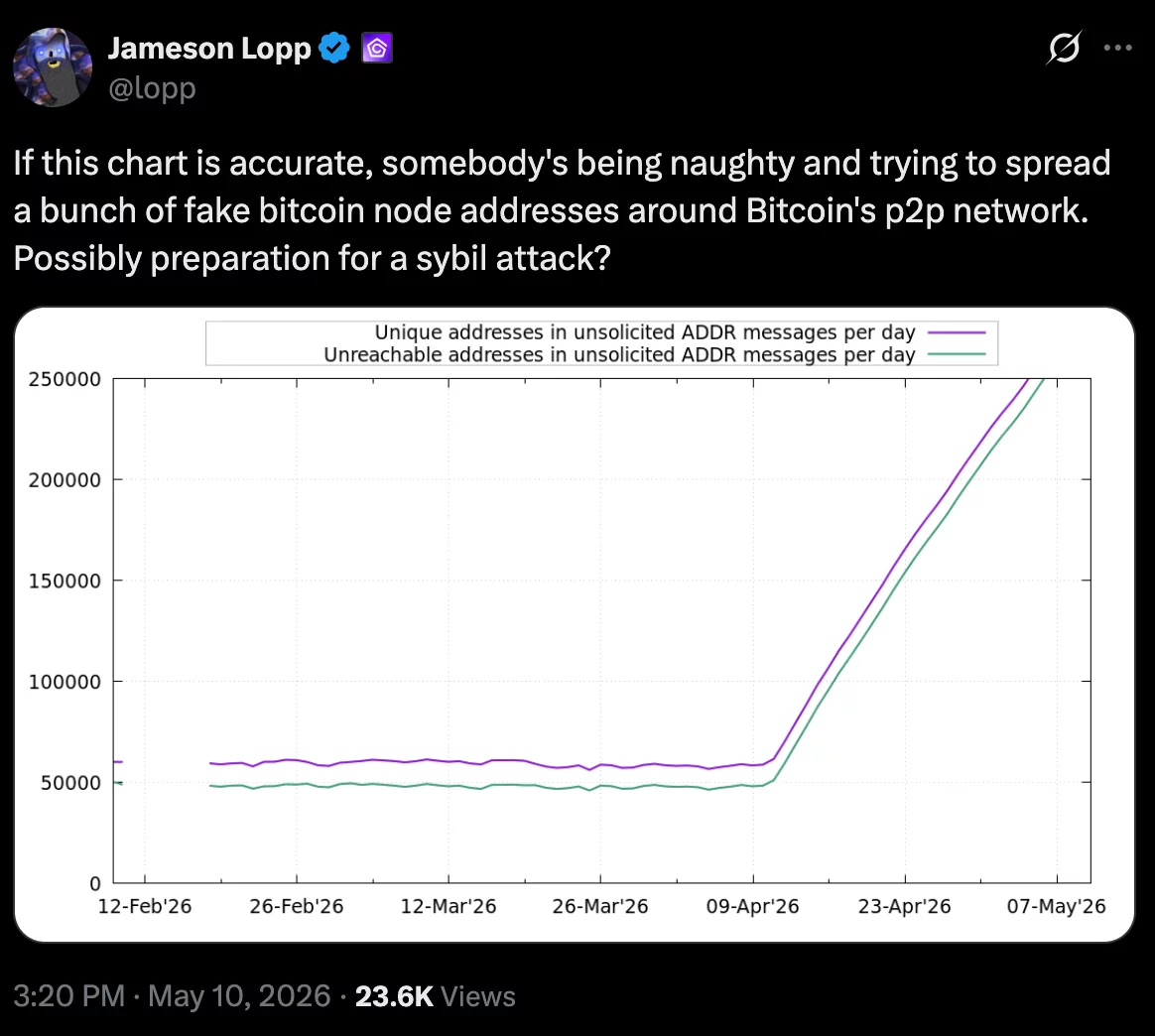
- The gossip layer, that fickle minx, has seen daily unique ADDR entries leap to 250,000, after years of languishing below 65,000-a scandalous affair indeed.
- Jameson Lopp, ever the vigilant sentinel, raised an eyebrow and wondered aloud if these nodes were but phantoms, a prelude to a Sybil attack-a digital masquerade ball gone awry.
- Or perhaps, in this theater of the absurd, it is but surveillance, IP rotation, genuine growth, or a public signaling spectacle-who can say?
A live monitor, tended by the industrious minds at Karlsruhe Institute of Technology, revealed this dramatic ascent to 250,000 daily unique addresses, a figure that had slumbered below 65,000 for years. What awakening!
The tumult began in mid-April 2026, catching the eye of Bitcoin developer Jameson Lopp. With a wry smile, he mused whether these addresses were but illusions, spread across the P2P network like rumors at a provincial tea party. “Possibly preparation for a Sybil attack,” he quipped, leaving the cryptosphere to ponder the implications.
ADDR Messages: The Matchmakers of the Network
ADDR messages, those digital cupids, assist Bitcoin nodes in finding their peers. The developer documentation, a dry tome of wisdom, declares that these messages relay peer connection information, fostering decentralized peer discovery. A noble endeavor, yet fraught with peril.
For in this realm, poor or false peer information is the stuff of nightmares. Unauthenticated control messages, like mischievous imps, may carry incorrect or harmful tidings. A network built on trust, yet vulnerable to deceit-a paradox most profound.
And what of the Sybil attack? A specter that haunts all peer-to-peer systems, where one actor dons many masks to seize influence. Crypto.news reminds us that such an attacker may flood the network with false nodes, isolating the honest participants like wallflowers at a grand ball.
The eclipse attack, too, looms large. An attacker, with cunning and guile, surrounds a node with controlled peers, offering it but a narrow glimpse of the blockchain. Bitcoin Core, ever vigilant, has fortified itself with address-table bucketing and ADDR rate limits, yet no open network can claim absolute immunity from such subterfuge.
Yet, All Is Not Lost in This Farce
The surge of addresses, dramatic though it may be, does not prove malice. Protos, ever the voice of reason, suggests it could be genuine node growth, routine network changes, or mere IP rotation. Bitcoin, after all, is open and permissionless-a stage where anyone may play their part without explanation.
Surveillance, too, casts its shadow. Crypto.news recalls that researchers have delved into deanonymization attacks on Bitcoin’s networking layer, seeking to link transactions to source IP addresses. A game of cat and mouse, played out in the digital shadows.
And let us not forget the past dramas. In September 2025, a claim of fake Bitcoin Knots nodes sent ripples through the community, only to be partly retracted when Start9 revealed many were but regular customer devices. A comedy of errors, indeed.
Read More
- NTE Drift Guide (& Best Car Mods for Drifting)
- How to Get the Wunderbarrage in Totenreich (BO7 Zombies)
- How to Beat Turbines in ARC Raiders
- Change Your Perspective Anomaly Commission Guide In NTE (Neverness to Everness)
- NTE Fan Shows Off Mint Cosplay
- Diablo 4 Best Loot Filter Codes
- Deltarune Chapter 1 100% Walkthrough: Complete Guide to Secrets and Bosses
- Top 8 UFC 5 Perks Every Fighter Should Use
- Danganronpa 2: A Complete Guide To Gifts
- All Fish & How to Catch Them in NTE
2026-05-12 12:20