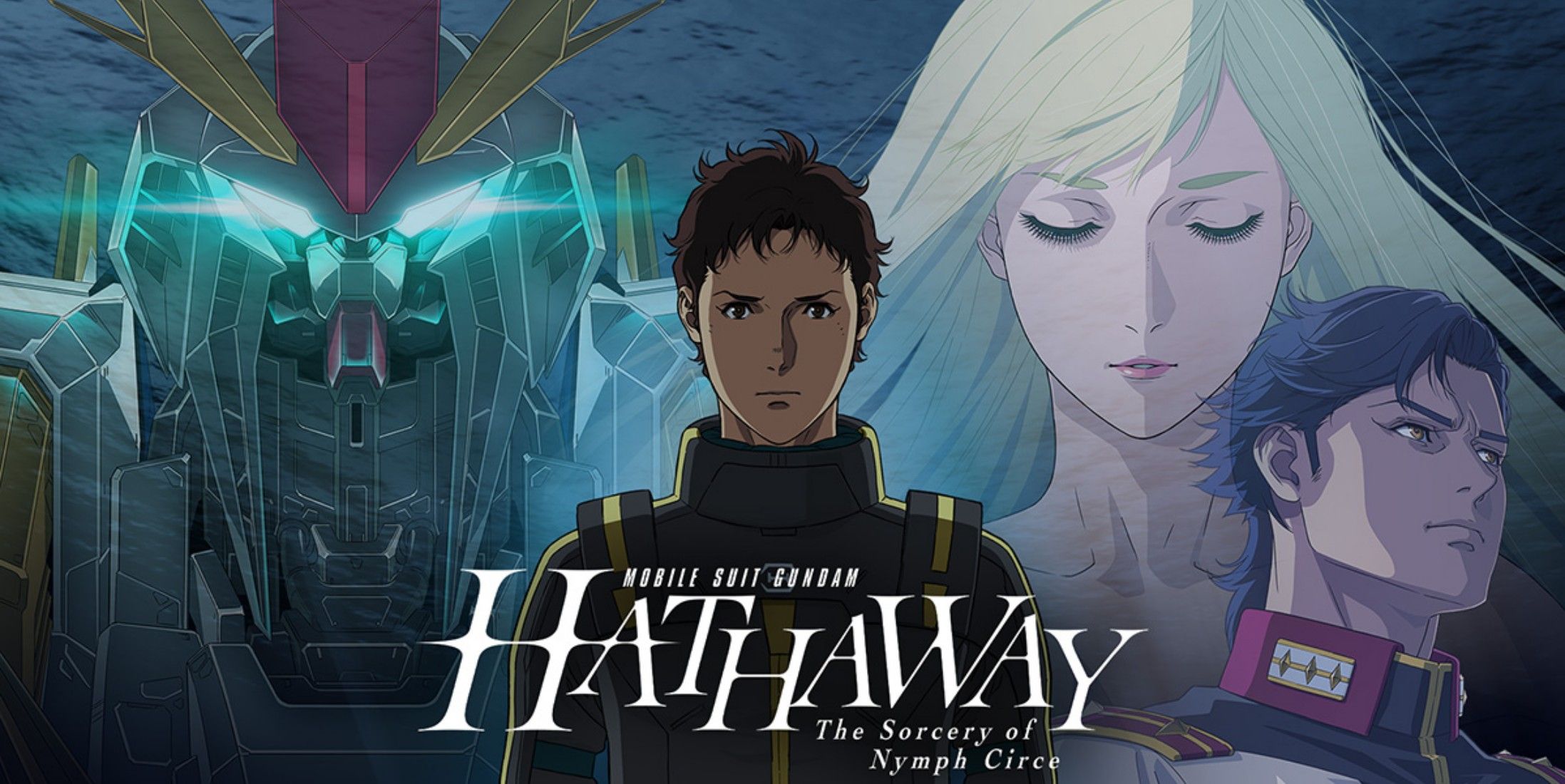
The Mobile Suit Gundam series is a legendary anime and manga franchise that has profoundly influenced many different types of media. It’s become timeless through constant updates, reinterpretations, and thoughtful explorations of its core ideas, evolving into a true work of art.
It’s easy to see why we were thrilled when TopMob received an invitation to a press event for the new movie, Mobile Suit Gundam Hathaway: Sorcery of Nymph Circe, which premiered in Japan on January 30th. We were lucky enough to interview Shūkō Murase, the film’s director, who has a long history with the Gundam franchise, starting back in 1991.
The director was asked about the choice of SZA’s “Snooze” and Guns N’ Roses’ “Sweet Child O’ Mine” for the opening and closing songs of The Sorcery of Nymph Circe, and what those choices meant for the film.
Shūkō Murase discussed the music in the film, noting that the beginning of SZA’s “Snooze” aligns with a scene where Hathaway is sinking into the ocean, symbolizing his past trauma. He felt the song effectively sets the mood for that flashback. He also highlighted how Guns N’ Roses’ “Sweet Child O’ Mine” beautifully captures Hathaway’s internal state at the end of the movie, with Axl Rose’s vocals being particularly impactful in conveying his emotions.
Hathaway’s character exists in a gray area between the ideals of Amuro and Char. What core message or thought do you hope viewers will be left with after watching the film?
We’ll get a clearer understanding of Hathaway’s character and what I want the audience to feel about him in the third chapter. He doesn’t have the answers himself in the second movie. Chapter two explores his inner world, and the story reaches its turning point when those feelings are revealed. Ultimately, the third chapter focuses on the situations he faces and the choices he makes as a result.
I don’t think he falls neatly between Amuro and Char. I expect his position will become clearer after the third film is released.
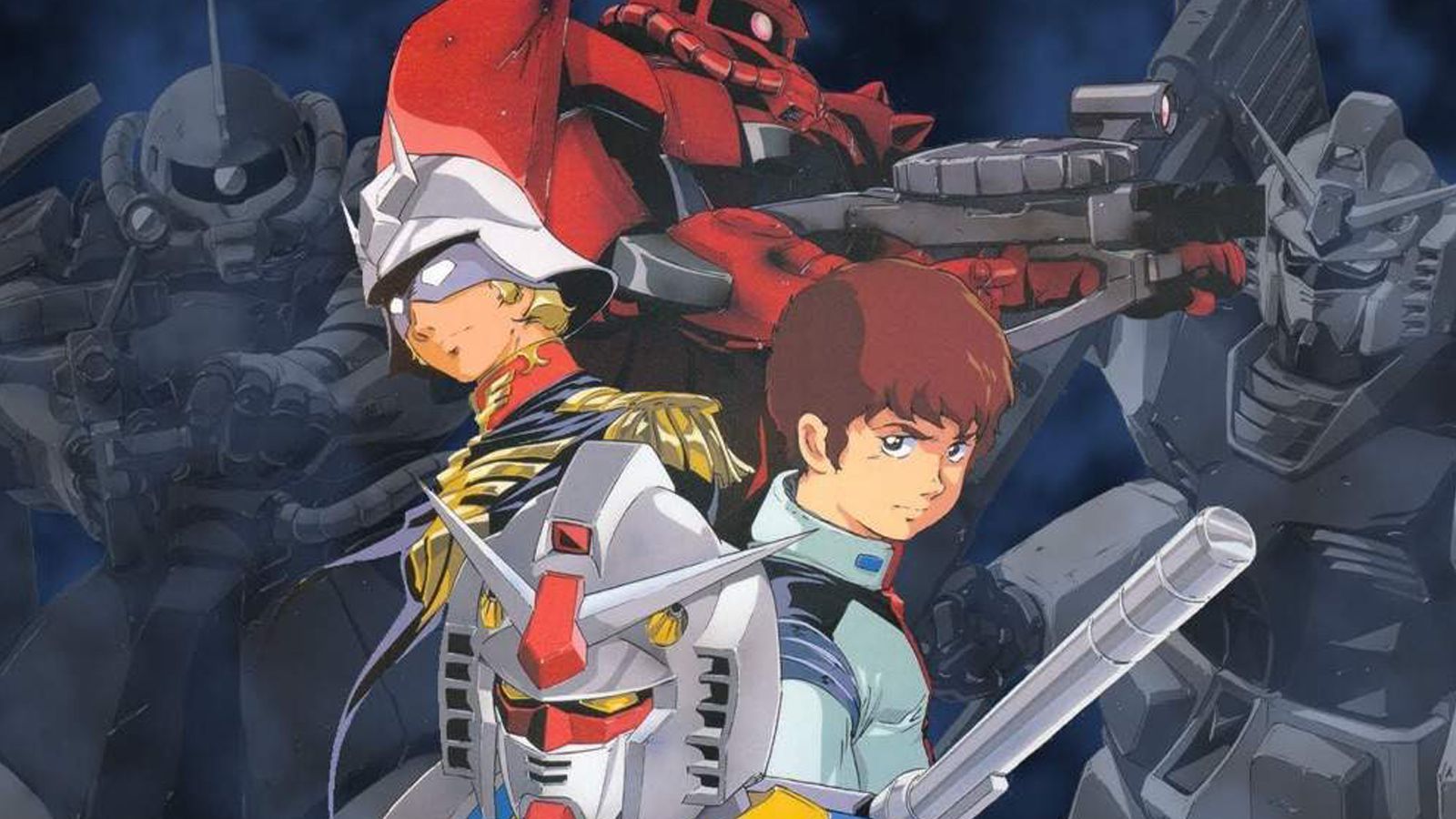
I believe a Gundam story loses its essence if it’s made too easy to follow. The complex world Tomino-sensei built is central to what makes Gundam special, and simplifying it for everyone would be a real challenge. It’s the intricacies that define it.
Given that the original Hathaway’s Flash novels came out in 1989 and 1990, what significant updates or changes did you make to bring the story into a modern context for the film?
It’s a bit of a tangled history, but the original drafts Tomino-sensei wrote weren’t directly connected to Char’s Counterattack. Actually, Char’s Counterattack was adapted into a novel twice, and the Hathaway story picks up from the second version. This movie continues that novel, but on a slightly altered timeline – it gets complicated! Visually, we really based things on the look and feel of the Char’s Counterattack movie. Also, the crime Hathaway commits in the novel is different from what we see here, so we had to rework things to make it all fit together.
We didn’t need to update the story to feel modern. Tomino-sensei created a world with timeless and realistic themes that resonate no matter the era – that’s a key strength of his work. We focused on improving the visuals, but left the core story untouched.
The Hathaway trilogy continues the story from Char’s Counterattack and is very much shaped by what happened in that film. But can someone who hasn’t seen the original three Mobile Suit Gundam anime series still understand and enjoy these new movies?
That’s a great question, but a tough one. I haven’t seen Star Wars, but I wonder if I watched one of the newer movies, would I be able to follow along and enjoy it? I think that’s the core issue. Probably not, and the reason is that the creator, Tomino, has a very distinctive style of naming things. It’s often unclear if a name refers to a person, a machine, or an organization. Someone unfamiliar with the Gundam universe wouldn’t be able to tell. For example, I heard that the name “Anaheim” is well-known to Gundam fans, but a random person wouldn’t have any idea what it means – it’s the name of a company. There are a lot of these kinds of references throughout the Gundam world, so you really need to be familiar with it, and probably watch several movies, to fully understand everything.
If we made a Gundam movie that was easy for anyone to follow, it wouldn’t really be Gundam. The complex world Tomino-sensei built is central to the story, and making it universally accessible would be a huge challenge.
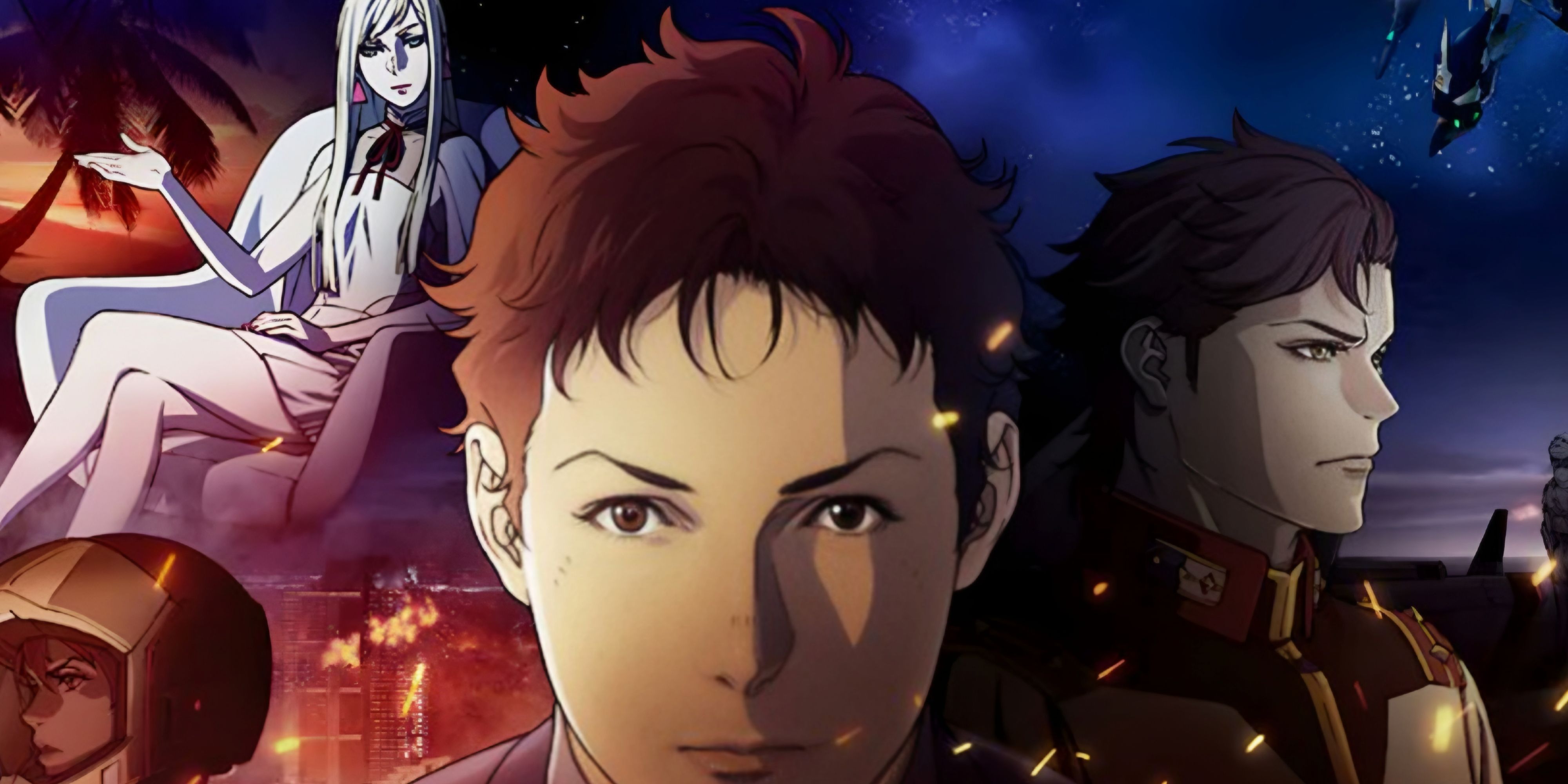
I’ve noticed the Hathaway films really delve into complex and thoughtful character studies, which is a bit different for the Gundam series. It makes me wonder how the filmmakers manage to blend those intense dramatic moments with all the exciting action that Gundam fans are used to seeing.
Watching this trilogy, I noticed it felt like there was less focus on the giant robot battles compared to other entries in the series. The story actually started as a novel, and we really wanted to stay true to that original work when creating the visuals. Our main goal wasn’t to just throw in action for the sake of it. When action did happen, we were careful to make it feel impactful and to really showcase the power of the Mobile Suits.
Honestly, one of the things I was really hoping to deliver with this Gundam movie was that feeling of weight – you know, seeing those massive Mobile Suits really feel substantial on screen. I wanted people to watch it and think, ‘Okay, that’s Gundam!’ But beyond the visuals, the characters were always my priority. I really focused on developing their stories and the relationships around them – that was what I was aiming for with this project.
Shūkō Murase is a highly respected Japanese animator, character designer, and director with a long and impressive career in anime. He’s best known for his contributions to the popular Gundam series, including Gundam Wing, Zeta Gundam, and the recent Hathaway films. As a key member of the renowned Sunrise studio, Murase has worked on numerous projects since the late 1980s. He directed titles like Witch Hunter Robin, the sci-fi favorite Ergo Proxy, Genocidal Organ, and Gangsta, Manglobe’s final anime. Beyond directing, he’s lent his skills as a character designer, key animator, and storyboard artist to acclaimed shows and movies such as Cowboy Bebop, Vision of Escaflowne, Samurai Champloo, Michiko & Hatchin, Wolf’s Rain, and several Gundam installments including Mobile Suit Fighter G Gundam, Gundam 0083, and Gundam F91. Murase frequently handles character design for his projects as well.
Read More
- Change Your Perspective Anomaly Commission Guide In NTE (Neverness to Everness)
- How to Get the Wunderbarrage in Totenreich (BO7 Zombies)
- All Nameless Hospital Endings Full Guide In NTE
- How to Beat Turbines in ARC Raiders
- NTE Drift Guide (& Best Car Mods for Drifting)
- Beware! Phishing Emails Are Deceiving Robinhood Users in a Sneaky Plot!
- Robinhood’s $75M OpenAI Bet: Retail Access or Legal Minefield?
- NTE Banners (Current, Next, And Upcoming Banners)
- NTE Fan Shows Off Mint Cosplay
- All the Free Games You Can Claim in May 2026
2026-05-09 22:09