According to Morgan Stanley’s Amy Oldenburg, it’s possible major banks could eventually include Bitcoin on their balance sheets. She highlighted progress in regulation, but cautioned that banking rules and international cooperation are still important factors to consider.
At the Bitcoin 2026 conference, Oldenburg discussed what it would take for a traditional bank like Morgan Stanley to start holding Bitcoin directly, rather than just offering ways for customers to invest in it.
She suggested that adding Bitcoin to the company’s balance sheet is a possibility, but depends on continued progress in regulation over the next several months. She emphasized it’s not an unrealistic idea.
Morgan Stanley And Bitcoin?
The significance of that response isn’t that a change is likely to happen soon, but rather that it suggests such a move is technically feasible. For a long time, the question of banks holding Bitcoin on their balance sheets has been considered the final frontier of institutional adoption – something that would need to happen *after* things like ETFs and secure custody solutions were in place, and would require navigating complex issues related to financial regulations, accounting standards, liquidity management, and the risk tolerance of bank boards.
Oldenburg cautioned that the limitation wasn’t a simple, straightforward rule. She initially highlighted SEC accounting guidance SAB 121, which previously made it challenging for banks to securely hold large amounts of crypto assets, but then broadened her perspective to consider other factors.
She explained that while the potential rollback of SAB 121 regarding capital treatment is a factor, it’s not the only obstacle. Guidance from the Federal Reserve and Basel regulations also play a significant role, as large banks are overseen by multiple agencies, not just one.
As a researcher following firms like Morgan Stanley, I’ve found the biggest challenge isn’t just understanding Bitcoin’s market risk. Because they’re globally important banks, they have to navigate a complex web of regulations, capital requirements, and different legal jurisdictions simultaneously. As Oldenburg pointed out, these large banks have numerous oversight groups they need to satisfy, and they really need to ensure everyone is on the same page with the various agencies involved.
The Backdrop
The Basel standard is particularly significant for cryptocurrency. The Basel Committee’s rules are strictest for cryptocurrencies like Bitcoin that aren’t backed by assets, and some in the industry believe the 1,250% risk weighting makes it impractical for banks to hold these assets directly. In February 2026, the Committee announced it was speeding up a review of these rules, with updated guidelines expected later in the year.
As a researcher following the development of Bitcoin regulation, I’ve been watching the Bitcoin Policy Institute’s efforts to influence the US regulatory process. Recently, they announced their intention to analyze and provide feedback on the Federal Reserve’s upcoming Basel proposal. Their main argument is that the current regulations unfairly penalize banks that hold or work with Bitcoin by assigning it a high risk weighting.
The United States is also making progress with Bitcoin, though not with a direct push for banks to own it. In April 2025, the Federal Reserve revised its rules regarding banks and cryptocurrencies, aiming to balance innovation with managing potential risks. Similarly, the FDIC and OCC shifted away from requiring banks to get permission before engaging in crypto activities, but emphasized that banks must still have strong risk controls in place.
US banking regulators recently confirmed that tokenized securities meeting certain criteria will be treated the same as traditional securities for capital requirements, emphasizing that their rules apply regardless of the technology used. While this doesn’t change how Bitcoin is handled on bank balance sheets – as it isn’t a tokenized version of a standard investment – it does demonstrate that regulators are beginning to distinguish between the underlying risks of an asset and the blockchain technology used to manage it, rather than grouping all digital assets together.
This explains why Oldenburg responded as he did. It’s not enough for regulators to simply become more accepting of cryptocurrency for banks to start holding Bitcoin. A key issue is the Basel framework: if Bitcoin is treated as a high-risk asset requiring significant capital reserves, even large global systemically important banks (G-SIBs) won’t find it financially worthwhile to hold it, even if their customers want them to.
Another key issue is how the Federal Reserve oversees large banks. Even with some recent changes, these banks need clear guidelines on how their involvement with Bitcoin will be evaluated, specifically regarding financial stability, managing cash flow, operational security, and capital reserves.
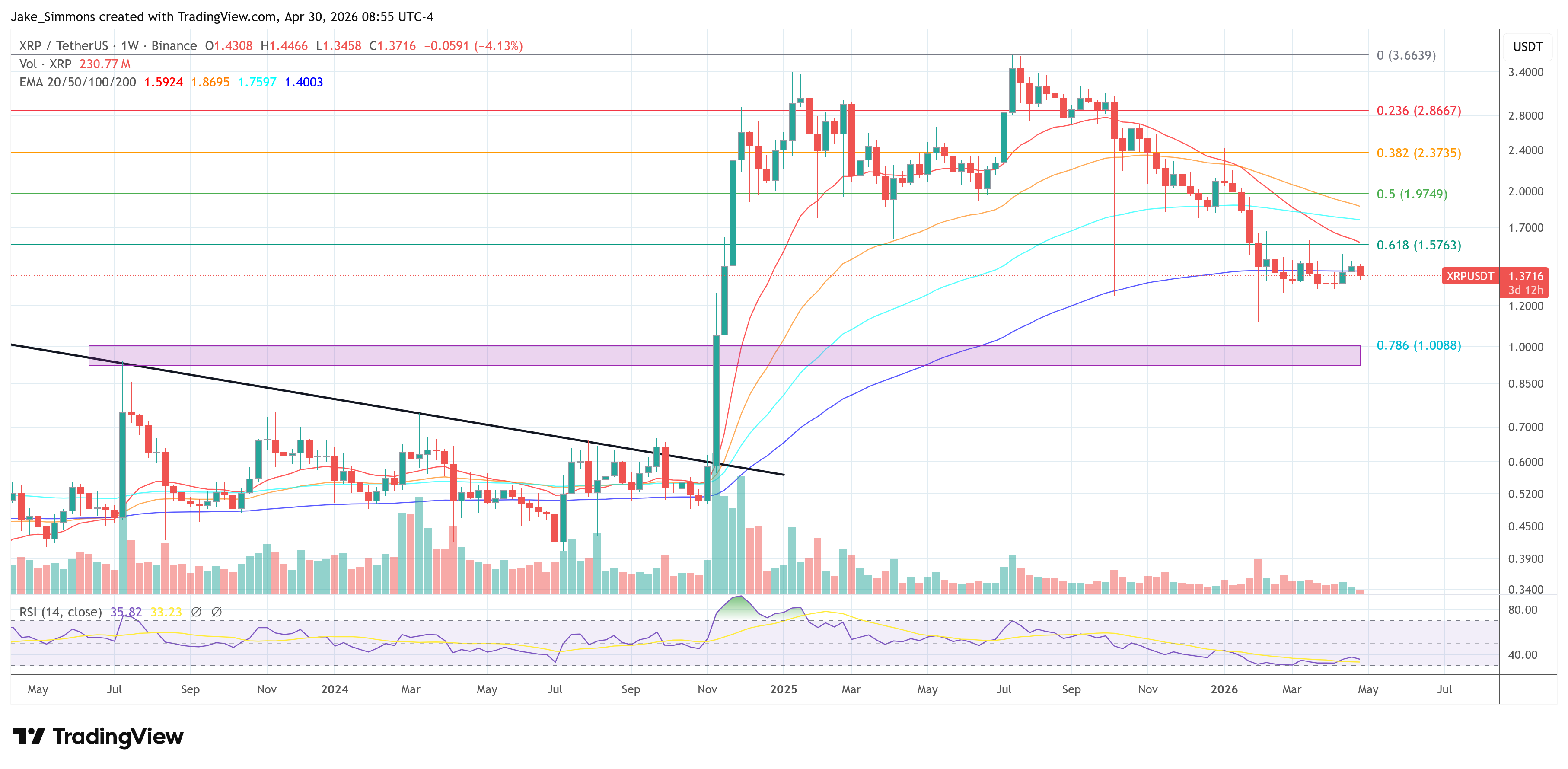
At press time, BTC traded at $1.3716.
Read More
- NTE Drift Guide (& Best Car Mods for Drifting)
- All Aswang Evidence & Weaknesses in Phasmophobia
- Where to Find Prescription in Where Winds Meet (Raw Leaf Porridge Quest)
- Conduit Crystal Location In Subnautica 2
- Diablo 4 Best Loot Filter Codes
- How to Get Necrolei Cyst & Strong Acid in Subnautica 2
- Best Burst & Full Auto Builds for the M16A4 in BF6
- How to Get the Wunderbarrage in Totenreich (BO7 Zombies)
- Boruto: Ikemoto Has Already Hinted At Sasuke’s New Eye After Return
- USD RUB PREDICTION
2026-05-01 01:00