Over the last day, Bitcoin’s price stayed fairly stable, finishing around $80,800 to $81,000. This happened as investors reacted to new inflation data from the U.S. and reduced their investments in Bitcoin ETFs.
On Wednesday, the cryptocurrency began trading around $80,900. This followed a relatively calm Tuesday where it decreased slightly, about 0.5%, from the previous day. Trading activity remained low, and the price couldn’t break past the $82,000 level, which has limited price increases recently.
Investors were hesitant to make big moves after the latest inflation report showed prices remained high, contributing to a general sense of caution in the market.
As of today, Bitcoin was trading at approximately $81,000, a slight increase of 0.6% over the last 24 hours. Trading volume reached $30.65 billion in the same period.
ETF Outflows Signal Renewed Institutional Caution
On May 12, 2026, U.S. Bitcoin ETFs experienced a net outflow of $233.25 million, representing one of the biggest single-day drops in recent weeks. This was a change from the strong investment seen in March and April, where the funds had attracted almost $2 billion and $2.44 billion respectively.
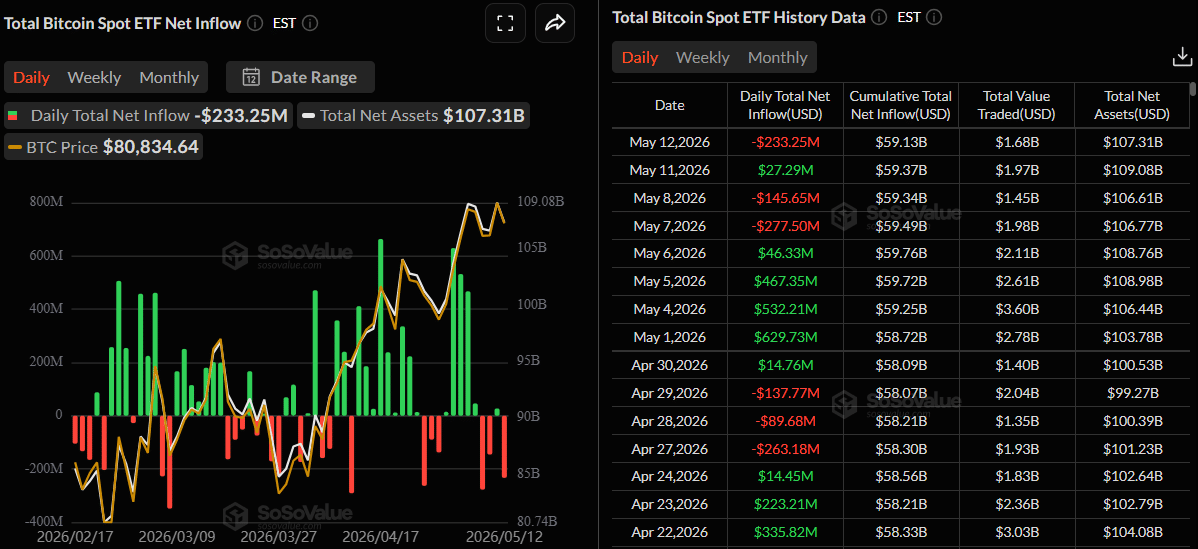
U.S. spot Bitcoin ETFs continue to manage a substantial $107.31 billion in assets, holding over 1.33 million BTC – about 6.35% of all Bitcoin in circulation. Since launching in early 2024, these funds have seen over $59 billion flow in from investors.
The BlackRock iShares Bitcoin Trust (IBIT) remains the leader in terms of assets under management, with Fidelity’s FBTC and Grayscale’s GBTC following behind. This shows that strong institutional support for Bitcoin continues, even when some investors sell their holdings.
Just like Bitcoin ETFs, Ethereum ETFs also experienced a drop in demand, losing around $130 million on the same day. However, some investors shifted their money into smaller cryptocurrency products focused on coins like Solana and XRP, leading to slight gains for those. This decrease in buying activity follows a brief period of recovery earlier in 2026.
After significant amounts of money flowed out of the market following Bitcoin’s drop from over $126,000 in late 2025 to around $60,000 in February, institutions started showing interest again.
Experts note that some investors are selling Bitcoin around the $81,000 mark, and money is generally moving away from Bitcoin due to economic concerns. While Bitcoin ETFs have seen over $50 billion in investments since their launch, recent daily fluctuations, like the one on Tuesday, show how quickly they can be affected by major economic news.
Grayscale’s Bitcoin Trust (GBTC) is still experiencing consistent outflows of money, likely due to its higher fees, and this has been happening for several months now.
As a crypto investor, I noticed a significant sell-off happened right when the latest inflation numbers came out. The CPI report for April showed prices went up 0.6% for the month, which wasn’t a surprise. But the yearly inflation rate jumped to 3.8% – that’s the highest it’s been in almost a year, and a little higher than what most people were expecting. It definitely spooked the market.
U.S. CPI: +3.8% YEAR-OVER-YEAR (EST. +3.7%)
U.S. CORE CPI: +2.8% YEAR-OVER-YEAR (EST. +2.7%)— Tree News (@TreeNewsFeed) May 12, 2026
Excluding food and energy prices, which tend to fluctuate a lot, core inflation increased by 0.4% in the last month and 2.8% over the past year – both figures were higher than predicted. This suggests that inflation is proving to be persistent, reducing the likelihood of the Federal Reserve lowering interest rates soon and putting pressure on investments that benefit from low borrowing costs.
Macro Headwinds and Technical Outlook
After seeing some initial signs that the economy was slowing down, markets expected interest rates to decrease. However, recent data showing continued inflation suggests interest rates might stay high for a while longer. Historically, this puts downward pressure on Bitcoin, which is often seen as a risky investment that performs well when money is readily available and the economy is growing.
The U.S. dollar rose slightly after the news was released, and stock markets had a mixed start, suggesting investors are being careful across different types of investments.
Looking ahead to 2026, current market patterns are still the main focus. Bitcoin experienced a huge price increase leading into late 2025, reaching a peak of $126,198. Since then, the price has stabilized, though it did bounce back from a low of under $60,000 in February. However, it hasn’t been able to consistently stay above the $82,000–$85,000 range.
Bitcoin’s performance this year has been unsteady, with several attempts to rise in value that haven’t succeeded. Traders are now carefully monitoring important price points. Currently, Bitcoin appears to be finding support around the $78,000 to $80,000 range.
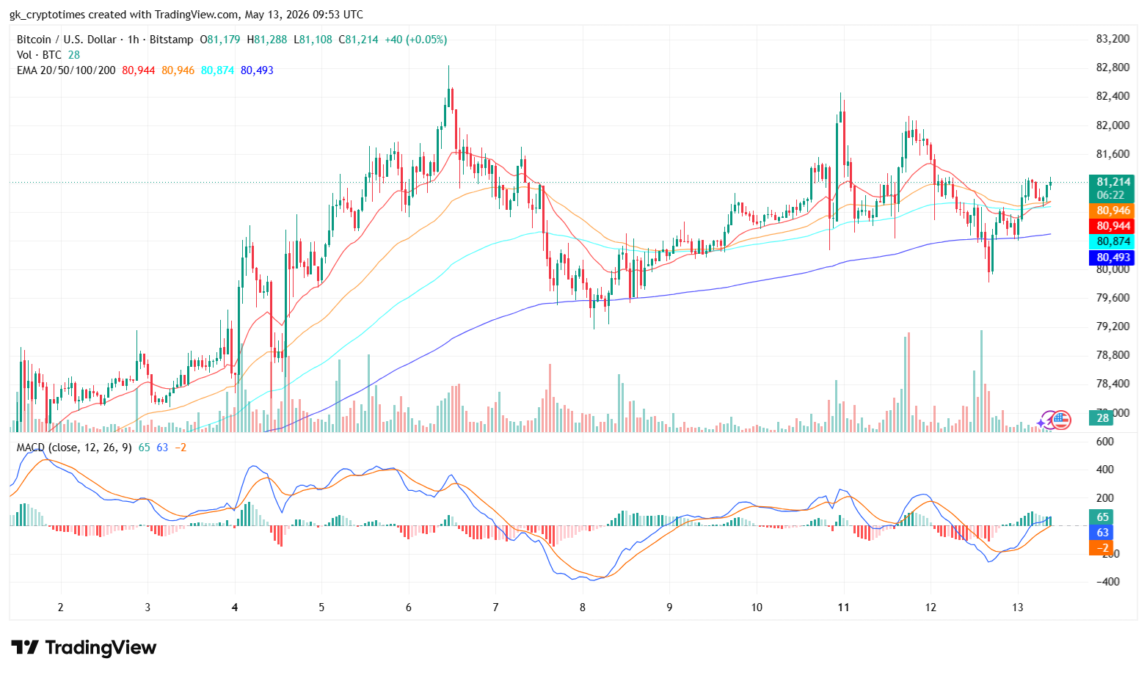
If the price drops significantly, it could lead to a faster sell-off, potentially reaching the 200-day moving average or even the lowest prices seen this spring. However, a strong move above $82,000 would need new positive news, like evidence that the recent increase in inflation was temporary, or favorable news regarding regulations for digital assets.
Right now, everyone is focused on what the Federal Reserve will do next. As Jerome Powell’s time as Chair comes to an end, people are wondering who will take over and how that person might approach the challenges of controlling inflation while also encouraging economic growth.
Changes to the Federal Reserve’s assets and any future decisions about buying or selling them will also be important. Historically, when there’s confusion about economic policy, Bitcoin prices tend to fluctuate wildly before settling into a clear pattern.
Looking at the blockchain data, the picture is a bit unclear. Long-term investors are still holding strong and even buying when prices drop. However, we’ve seen a small increase in the amount of cryptocurrency moving onto exchanges since the latest inflation report, which suggests some people are selling in the short term.
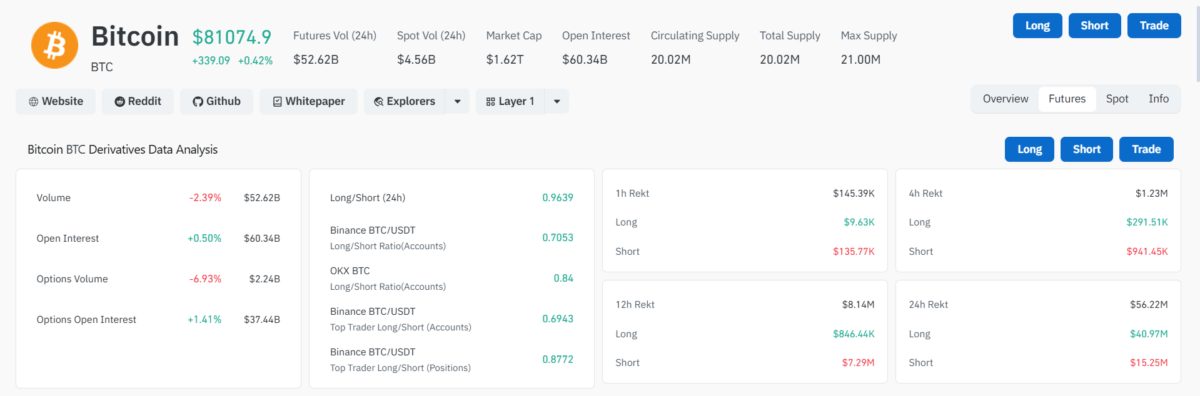
Trading in derivatives markets was quiet, with borrowing costs remaining stable and no strong bets being made on prices going up or down.
In the days ahead, new economic reports on things like producer prices and retail sales will give us a clearer picture of what the Federal Reserve might do next. Also, global events affecting energy supplies create additional uncertainty and could continue to cause market fluctuations.
Bitcoin’s future success likely depends on two things: whether inflation starts to come down and if larger investors begin buying Bitcoin again after this week’s economic reports are released.
Read More
- NTE Drift Guide (& Best Car Mods for Drifting)
- Re:Zero Season 4, Episode 6 Release Date & Time
- How to Get the Wunderbarrage in Totenreich (BO7 Zombies)
- How to Beat Turbines in ARC Raiders
- Change Your Perspective Anomaly Commission Guide In NTE (Neverness to Everness)
- Diablo 4 Best Loot Filter Codes
- Top 8 UFC 5 Perks Every Fighter Should Use
- Danganronpa 2: A Complete Guide To Gifts
- Brent Oil Forecast
- All Fish & How to Catch Them in NTE
2026-05-13 13:27